
 Search Articles


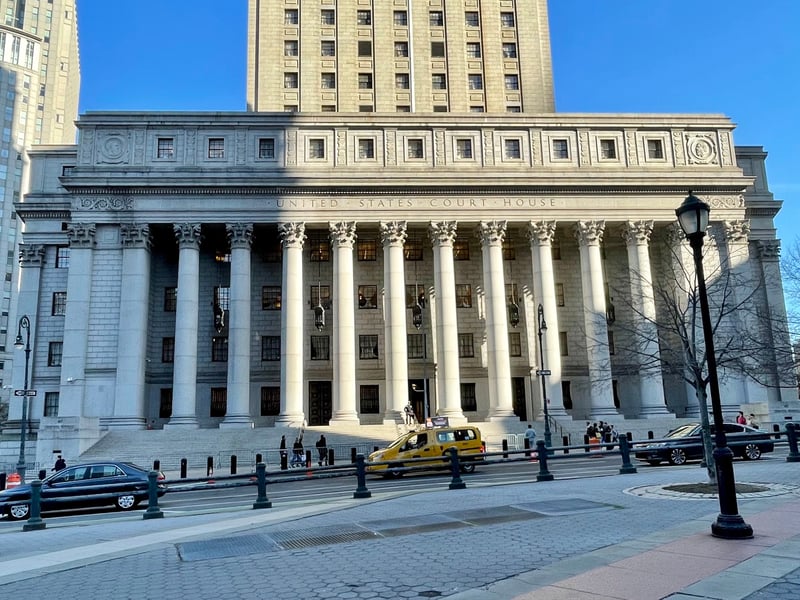
MANHATTAN (CN) — A coalition of New York City landlords, real estate brokers and industry associations who say a city law prohibiting landlords from passing brokers’ fees onto tenants violated their free speech rights looked to a federal appeals court on Monday morning to reinstate their civil suit.
Prior to the enactment of the Fairness in Apartment Rental Expenses Act in June 2025, renters in New York City were often forced to pay a mandatory fee to a broker hired by the landlord, typically equal to between 10 and 15% of their annual rent.
The Real Estate Board of New York, the New York State Association of Realtors and several brokerage firms sued the city in December 2024 to block the FARE Act from going into effect, claiming the legislation unconstitutionally violated their right to free commercial speech under the First Amendment and was preempted by New York state law.
Before a three-judge Second Circuit panel, the realtors and landlords asked overturn U.S. District Judge Ronnie Abrams’ June dismissal of the case, where she ruled the challenge was mostly rooted in policy disagreements, rather than constitutional questions.
The realtors and landlords argue in their complaint “both brokers and landlords will likely stop advertising ‘open listing’ apartments, which not only infringes on the First Amendment rights of brokers and landlords, but will have the net effect of reducing the level of advertising of open listings — making it even harder for consumers to find affordable apartments.”
“But it doesn’t prohibit the advertisement,” U.S. Circuit Judge Debra Ann Livingston said Monday. “I mean, it burdens the advertisement that may be enough to bring this within First Amendment scrutiny, but, but you can still go ahead and advertise; you just can’t get a fee from a tenant after you do so.”
“It may just be a burden, but if you hold constant legality of tenant pay brokerage services, you have banned the advertisement,” attorney Sean Marrotta of law firm Hogan Lovells US said on behalf of the realtors and landlords.
“But it’s not banning speech, right? It’s banning the who pays for the brokerage fee,” Livingston replied.
Marrotta said the enactment of the FARE Act as it stands requires “rigorous tailoring” to meet the city’s stated goals of addressing housing mobility and costs on renters, without unlawfully regulating the real estate industry’s commercial speech rights.
“What Thompson v. Western State Medical Center said is that if you can achieve the goal without burdening speech or burdening less speech, that’s what you have to do,” he told the panel, referring to a 2002 Supreme Court case over if the Food and Drug Administration Modernization Act’s prohibition on advertising compounded drugs violated the First Amendment.
New York City meanwhile urged the appeals court to affirm the lower court’s dismissal of the lawsuit, arguing that even though realtors consistently refer to the FARE Act provision they challenge as a “publication bar,” it does not bar the publication of anything by anyone.
“Instead, it merely provides that if a broker list an apartment with the landlord’s permission, the broker cannot, later on, engage in the conduct collecting the fees in the broker,” New York City Law Department lawyer Jamison Davies told the panel. “It’s a conduct regulation, not a speech regulation.”
Davies echoed Abrams’ opinion dismissing the complaint, telling the panel: “Plaintiffs lost the policy battle and now attempt to recast their policy objection as constitutional law.”
The law, introduced by Brooklyn City Council Member Chi Ossé, passed the City Council by a veto-proof count of 42 in favor to 8 opposed.
Livingston was joined on the panel by U.S. Circuit Judges Barrington Parker, a George W. Bush appointee, and Maria Araújo Kahn, a Joseph Biden appointee.
The three-judge panel did not immediately rule from bench on Monday.
The law went into effect June 11, 2025, one day after Abrams’ ruling. The realtors and brokers had claimed that the FARE Act would lead to higher rents, fewer properties advertised, and decreased overall transparency of the markets for consumers.
 Follow @jruss_jruss
Subscribe to our free newsletters
Our weekly newsletter Closing Arguments offers the latest about ongoing trials, major litigation and rulings in courthouses around the U.S. and the world, while the monthly Under the Lights dishes the legal dirt from Hollywood, sports, Big Tech and the arts.