
 Search Articles


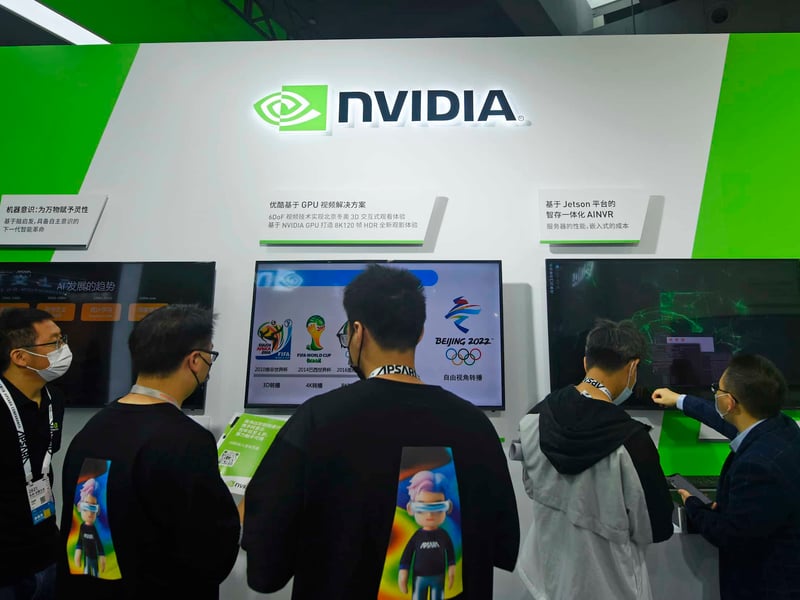
WASHINGTON (CN) — Chip systems titan Nvidia struggled to convince the Supreme Court Wednesday that a shareholder fraud suit against it wasn’t up to snuff.
Nvidia says that a class action from investors fell below federal pleading standards, but the justices were skeptical that the case belonged before them.
“It just seems to me that you’re asking us to engage in a kind of analysis that we’re not very good at and weren’t expecting when we took this case,” Justice Elena Kagan, a Barack Obama appointee, told the chipmaker.
Nvidia said that the U.S. Court of Appeals for the Ninth Circuit incorrectly applied the standard for fraud cases set out by the Private Securities Litigation Reform Act. The company claimed the appeals court encouraged the investor’s fraud by hindsight claims, negating Congress’ goal of preventing investor fishing expeditions.
“The Ninth Circuit’s decision creates an easy roadmap for plaintiffs to evade the Reform Act,” Neal Katyal, an attorney with Hogan Lovells representing Nvidia, said. “When a stock drops, all they have to do is find an expert with numbers that contradict a company’s public statements, then allege the company keeps records that executives look at, and then argue those records would have matched the hired expert’s numbers. That’s a recipe for fraud by hindsight.”
During the hour-and-a-half oral argument session, the high court examined the credibility of witnesses and an expert report claiming that Nvidia CEO Jensen Huang misled investors about sales revenue from crypto miners. The inquiry made several justices question if the court should have declined to hear Nvidia’s case.
“We normally don’t grant cert to error correct,” Justice Sonia Sotomayor, a Barack Obama appointee, said.
The class action was filed after the 2018 cryptocurrency crash. Investors filed a class action, claiming that Huang led them to think its revenues derived from gaming — not volatile crypto sales.
A lower court dismissed the case, but the Ninth Circuit reversed that decision on appeal.
Shareholders said Nvidia had returned to fact-bound arguments, forcing the justices into the role of a federal court. But Nvidia framed its request as a contextual rule, asking for the level of detail needed to meet the Private Securities Litigation Reform Act standard.
“Why isn’t that error correction?” Justice Amy Coney Barrett, a Donald Trump appointee, asked Nvidia. “If we think your bright-line rule fails … why isn’t your answer simply to go through the complaint and explain why it’s not good enough?”
Several justices expressed frustration with Nvidia, claiming the company had shifted its arguments since the court agreed to hear its case.
“I am worried about what I see as the delta between what you’re asking for here today and what you asked for in your petition and what you argued in your brief,” Justice Ketanji Brown Jackson, a Joe Biden appointee, said.
To meet federal pleading standards, shareholders need to show that Huang reviewed internal company reports and then chose to issue public statements to the contrary. Nvidia said the evidence didn’t meet scienter requirements because it was not detailed enough.
The justices spent the majority of arguments trying to decide what ‘enough’ meant.
“We shouldn’t lose sight of the fact that the PSLRA had very particular objectives in mind,” Chief Justice John Roberts, a George W. Bush appointee, said. “It seems to me if you’re using words like ‘enough,’ it’s not clear to me that that’s going to be very effective.”
Justice Samuel Alito, a George W. Bush appointee, questioned shareholders’ theory based on motive.
“A gigantic company with highly sophisticated officers is engaging in a Ponzi scheme?” Alito asked.
Nvidia strongly rejected the suggestion that its CEO would intentionally deceive shareholders.
“We’re talking about one of the most respected CEOs of a dramatically important company,” Katyal said. “And there is nothing that ever answers why he would act this way.”
Kagan said that Ponzi scheme was a bad term for the shareholders’ theory. She suggested that if the crypto market hadn’t crashed, investors wouldn’t have known about Nvidia’s dishonesty.
“Nvidia is now the company that’s sending the stock market into the stratosphere, we would never have known about this,” Kagan said. “So Mr. Huang might have been making a pretty good bet here.”
Justice Brett Kavanaugh, a Donald Trump appointee, seemed swayed by the potential fallout from the appeals court ruling. He suggested that investors might be encouraged by Nvidia’s suit and start filing complaints any time a stock price falls.
“It’s our role to make sure that we have policed the lines Congress drew so that the economy is not harmed,” Kavanaugh said.
By the end of the session, the justices appeared most comfortable with the federal government’s position. The Justice Department sided with the shareholders, arguing that there was no need for broad changes to securities fraud litigation.
 Follow @KelseyReichmann
 Follow @kelseyreichmann.bsky.social
Subscribe to our free newsletters
Our weekly newsletter Closing Arguments offers the latest about ongoing trials, major litigation and rulings in courthouses around the U.S. and the world, while the monthly Under the Lights dishes the legal dirt from Hollywood, sports, Big Tech and the arts.