
 Search Articles


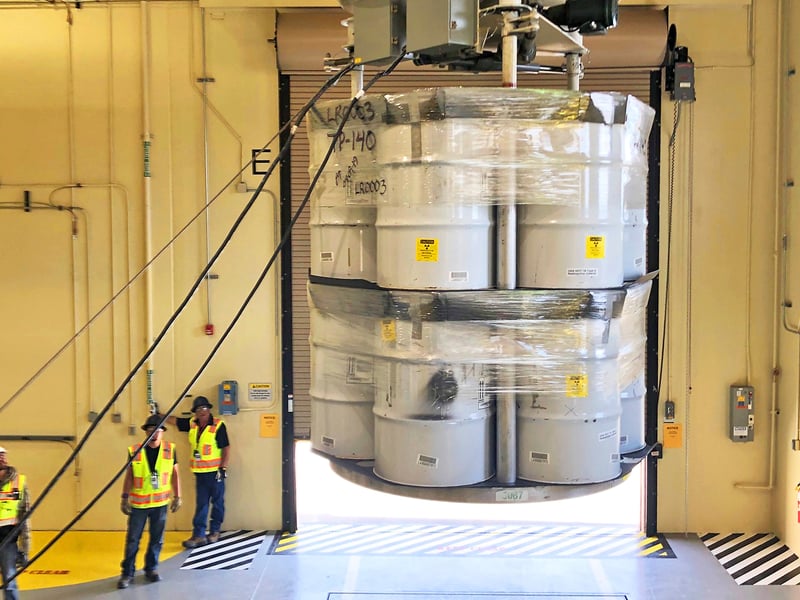
WASHINGTON (CN) — A decades-old quagmire over nuclear waste storage remerges at the Supreme Court next week as the justices’ latest chance to curb bureaucratic governance.
On the chopping block is the Nuclear Regulatory Commission — an independent board created by Congress to regulate the civilian possession and use of radioactive materials. For over 40 years, the commission has relied on regulatory authority to license storage for spent nuclear fuel — until the Fifth Circuit intervened.
The conservative appeals court dredged up a rarely used circuit-exclusive judicial doctrine allowing Texas to upend a storage facility for spent fuel. The decision allowed the Lone Star State to circumvent the yearslong administrative process.
Interim Storage Partners — who invested millions in the licensing process — said with a belated stroke of a pen, the Fifth Circuit disregarded the adjudicatory proceedings that businesses rely on. Without the protections of that process, ISP warned that rational businesses won’t invest in nuclear energy.
“The impacts for a crucial, capital-intensive industry, at a critical time of new technologies and opportunities, would be potentially catastrophic,” ISP wrote in its brief before the court.
Yucca out, Andrews County in
ISP wants to build a temporary waste site for civilian nuclear power facilities in Andrews County, Texas, near an existing low-level radiological waste disposal facility. The project would store thousands of tons of spent nuclear fuel above Texas’ Permian Basin — a productive oil field and the only source of safe water for hundreds of miles.
The facility is pitched as a temporary solution to the standstill on Nevada’s Yucca Mountain repository.
In the 1980s, Congress designated Yucca Mountain as one of two future locations to permanently store the thousands of tons of spent nuclear fuel generated by the U.S. reactor fleet.
The project was laid out in the 1982 Nuclear Waste Policy Act, a measure infamously deemed the ‘Screw Nevada Bill’ by the Silver State’s congressional delegation.
Decades of political pressure from Nevada lawmakers eventually saw Yucca Mountain put in suspended animation in 2010, when then-President Barack Obama pulled the proposed repository’s funding. Despite an attempt by the Trump administration to restart the project, Yucca Mountain has remained little more than a hole in the ground for more than a decade.
ISP applied to license its proposed Andrews County facility in 2016. At the time, there was strong support for the project across Texas, including by then-Governor Rick Perry.
However, the proposed license faced multiple challenges for environmental advocates and other parties after the commission published its consideration with the federal register — a step in the administrative procedure allowing interested parties to weigh in on agency actions. Opponents claimed the license violated the Nuclear Waste Policy Act.
The board denied all of the challenges. The D.C. Circuit dismissed their petitions on appeal, finding that the commission was permitted to license and regulate the storage and disposal of spent nuclear fuel.
Under a new administration, Texas now opposed the Andrews County facility too. Instead of intervening in the administrative adjudication, Texas passed a law prohibiting the storage of spent nuclear fuel in the state.
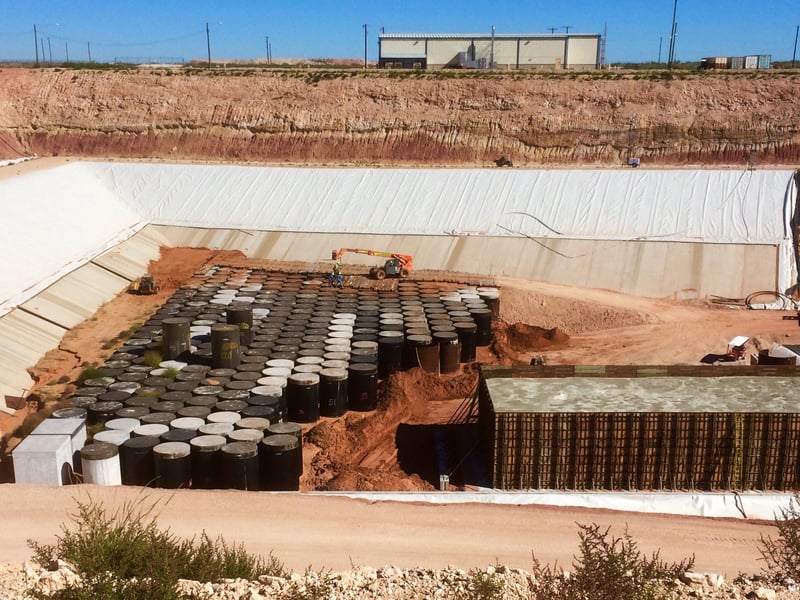
Fifth Circuit drops a bomb
The Lone Star State then filed for review before the Fifth Circuit. The Nuclear Regulatory Commission claimed that Texas didn’t have jurisdiction because the state did not participate in the administrative process.
The Fifth Circuit sided with Texas under the “ultra vires exception.” Based on a 1982 ruling from the circuit, this exception allows litigants to override traditional review prohibitions if they claim an agency exceeded its legal authority.
No other circuit has adopted the exception and four circuit courts have rejected it outright.
Roberts court & the gutted administrative state
After finding that Texas had jurisdiction, the Fifth Circuit turned to a recent Supreme Court ruling to throw out the ISP’s license.
Texas argued that the Nuclear Regulatory Commission didn’t have the authority to license private interim, offsite storage facilities.
“Congress answered that ‘major’ question, both as to interim offsite storage and permanent disposal,” Texas wrote. “Congress’s clear answer was Yucca Mountain or interim federal facilities — not a private facility in Texas.”
In a 6-3 ruling in 2022, the Supreme Court said that federal agency actions that are “major” must be specifically designated by lawmakers. The relatively new doctrine has yet to be fully tested before the justices, creating questions over how to categorize major actions versus those implicitly allowed by legislation.
The commission says regulation of nuclear materials is a core agency function — not an edge case stretching administrative authority.
“There was nothing ‘unprecedented’ nor any way that ‘things changed’ when the NRC exercised its decades-old, completely transparent licensing authority,” the federal government wrote.
Battered agencies prepare for further scrutiny
Over the last few terms, the Supreme Court has ruled to diminish federal agency authority, creating more opportunities to thwart government regulations. Last term, the justices overturned a landmark ruling that gave agencies deference to interpret regulations and opened up the timeframe for when rules can be challenged.
If the court endorsed the Fifth Circuit’s “ultra vires exception,” the ISP warned of a sea change in long-settled congressionally mandated review schemes.
“The ‘risk for judicial aggrandizement when courts can pick and choose when to abide by Congress’ limits’ is obvious,” ISP wrote.
The Supreme Court will hear arguments on March 5.
 Follow @KelseyReichmann
 Follow @kelseyreichmann.bsky.social
Subscribe to our free newsletters
Our weekly newsletter Closing Arguments offers the latest about ongoing trials, major litigation and rulings in courthouses around the U.S. and the world, while the monthly Under the Lights dishes the legal dirt from Hollywood, sports, Big Tech and the arts.