
 Search Articles


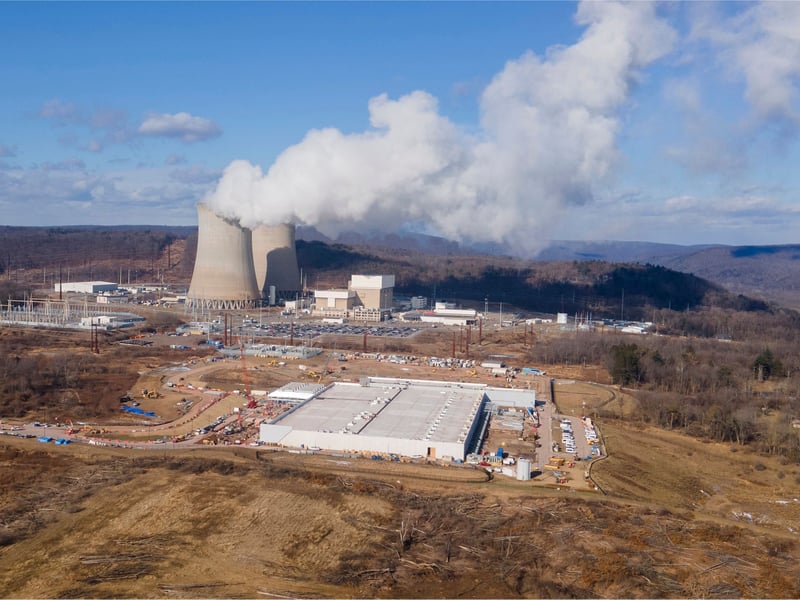
(CN) — Employees of the country’s 26 commercial nuclear power plant operators claim in a Friday class action the companies schemed to increase their own profits by suppressing their employees’ wages.
In their complaint, the employees claim the owners of all 54 commercial nuclear power plants in the U.S. conspired together to “fix and suppress the compensation” paid to their employees since at least May 2003.
Describing a common salary and benefits procedure shared between the nuclear operators, the employees say that “regimented process for determining compensation allowed the nuclear defendants to compare compensation rates — and collectively suppress compensation — across their workforces.”
The nuclear power plants targeted in the lawsuit collectively produce all the nuclear-generated electricity sold to consumers in the United States and have over 100,000 employees, according to the employees. Among the named defendants are Constellation Energy Corporation, which owns over a quarter of the nation’s power plants, Exelon, Entergy and Pacific Gas & Electric.
The employees say that, through their collective market power, these operators conspired to increase their profits by reducing labor costs through paying employees below competitive levels.
The plaintiff employees worked in various positions in nuclear power generation, including as nuclear operators, nuclear engineers, and nuclear technicians.
They claim this scheme was played out through regular compensation information exchanges, in violation of federal antitrust laws designed to combat monopolies and promote fair competition in the marketplace.
“Each nuclear defendant was a member of the Nuclear Human Resources Group, which … provided the organizational structure through which the nuclear defendants and coconspirators implemented the conspiracy, including facilitating information exchanges, organizing conferences, and maintaining contact lists,” the plaintiffs say.
While the agreements to share information are not illegal, the employees argue they are still subject to civil antitrust liability when they could have an anticompetitive effect.
“Even without an express or implicit agreement on terms of compensation among firms, evidence of periodic exchange of current wage information in an industry with few employers could establish an antitrust violation because, for example, the data exchange has decreased or is likely to decrease compensation,” the employees write.
The agreement to exchange compensation information eliminated a major incentive for the plant operators and consultants to increase compensation for nuclear power generation workers throughout the country, the employees add.
They argue the advantage of raising compensation is to retain and attract more such workers by exceeding the compensation paid by competing nuclear power companies.
Workers are viewed as “fungible,” the employees argue. Those within the same positions are generally interchangeable, permitting the plant operators to readily compare and match each other’s compensation.
“A slight decrease in compensation to nuclear power generation workers in the United States from a competitive level could be imposed collectively by the nuclear defendants without causing too many such workers to switch employment to non nuclear occupations,” the employees write.
Two consulting companies, Accelerant Technologies LLC and Human Resource Consultants, LLC are also accused of helping the nuclear operators exchange compensation data and conduct in-person meetings to align compensation rates.
The employees claim the exchanged information consisted of highly sensitive compensation data, including the amount and dates of planned future wage increases, through a digital repository of union collective bargaining agreements.
According to the employees, the consult companies created and dispersed spreadsheets comparing nuclear power companies’ compensation rates that included “disaggregated and deanonymized information” about their current wages and future wage increases.
During project meetings, the plant operators went over information from these reports to coordinate compensation increases and suppress their employees’ wages, the employees write.
The employees ask in the suit filed in Maryland federal court for the plant operators to be permanently restrained from continuing the sharing of highly sensitive competitive information concerning compensation, benefits, or the hiring or recruiting of employees. D.C.-Based firm Handley Farah & Anderson firm represents the class member employees.
 Follow @Megwiththenews
Subscribe to our free newsletters
Our weekly newsletter Closing Arguments offers the latest about ongoing trials, major litigation and rulings in courthouses around the U.S. and the world, while the monthly Under the Lights dishes the legal dirt from Hollywood, sports, Big Tech and the arts.