
 Search Articles


(CN) — Norway remains in shock amid revelations that a number of its top political figures and a royal house member kept extensive contact with Jeffrey Epstein, even after his conviction for procuring a child for prostitution.
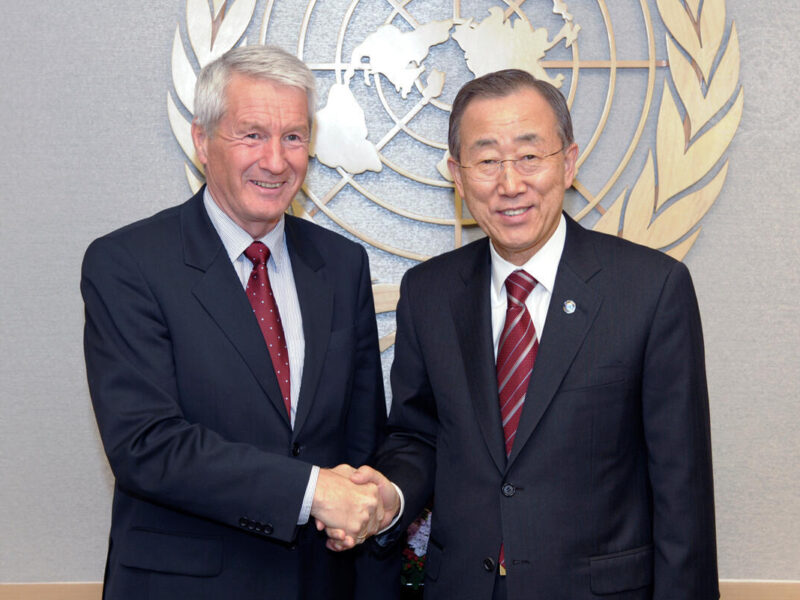
Norway’s National Authority for Investigation and Prosecution of Economic and Environmental Crime, locally known as Økokrim, charged former Prime Minister Thorbjørn Jagland with gross corruption and searched his apartment in Oslo, another residence and a cabin on Thursday. The high-profile politician saw his immunity revoked by the Council of Europe, an institution he previously served as secretary general from 2009 to 2019.
Økokrim is looking into “whether gifts, travel and loans were received in connection with his position” based on the politician’s correspondence with Epstein, the agency said last week. Jagland denies any breach of law connected to Epstein.
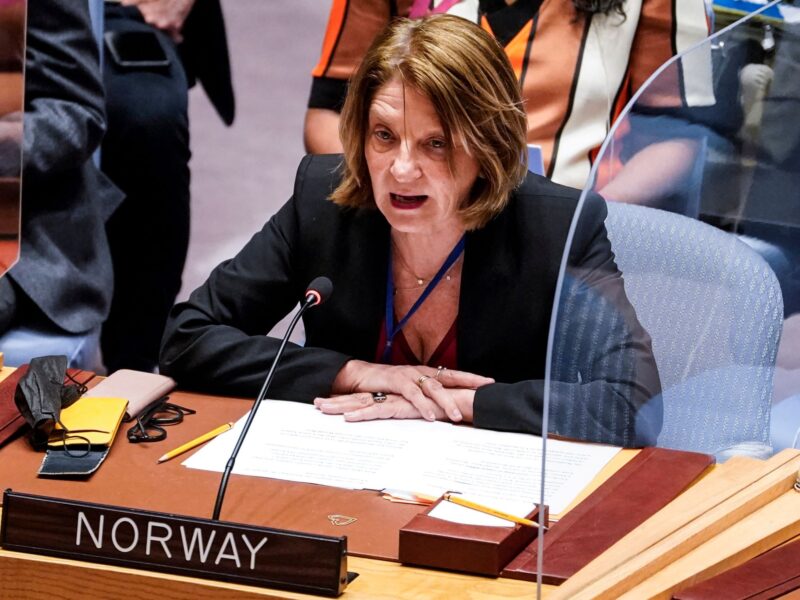
Norwegian diplomatic power couple Mona Juul and husband Terje Rød-Larsen are also under investigation. Juul stepped back as ambassador to Jordan and Iraq last week, after Norwegian media reported her children would receive $5 million each from Epstein, according to an apparent will signed by the deceased sex offender.
Emails released in the Epstein files suggest Rød-Larsen had dinner with Epstein in 2019, just weeks before his arrest in the U.S. on new sex trafficking charges.
The files have also revealed Børge Brende, former foreign affairs minister of Norway and current president and CEO of the World Economic Forum, and Norwegian Crown Princess Mette-Marit both communicated with Epstein following his sex offense conviction in 2008.
With a population of barely 6 million people, Norway has a tight political-administrative system in which elites often rub shoulders. Several members have been indirectly linked to Epstein, which is why the storm is taken very seriously by the political system according to Kristoffer Kolltveit, professor at Oslo University’s Institute for Political Science. In essence, Norway’s image has been shattered not only domestically, but also globally.
“It will have some bearing on our reputation," Kolltveit said in an email. “Norway has long seen itself as a small but important player in international diplomacy and a country with high ethical standards. Now I guess some of our somewhat naive self-image has taken a blow.”
The high-level Norwegian political figures involved are also well-known international actors. Juul and Rød-Larsen took part in a diplomatic group that negotiated the 1993-1995 Oslo Accords, seen as a breakthrough in the conflict between Israel and Palestine at the time.
The universal trust within the Norwegian social fabric has also been tattered. Mistakes can be made, but lying is a different beast. The Norwegian public wants to know why it took an international exposé for politicians to openly acknowledge their relations to Epstein if they’ve done nothing wrong.
“Rule number one in crisis communication is to come clean with everything at once. The press will always find out, so no need to under-communicate the wrongs you have done. Rather, apologize and hope for forgiveness," Kolltveit said. “In this case, the Norwegian actors involved have not been honest about either the intensity or the intimacy of their Epstein contacts. My guess is that they thought it would never come out.”
The Scandinavian countries of Denmark, Sweden, and Norway all have “quite egalitarian” images, consisting of high-trust societies and well-functioning institutions and low corruption according to Johan Strang, professor at the Centre for Nordic Studies at the University of Helsinki.
“But there’s something special about Norway,” Strang said in a video interview. “Norwegian self-image is even stronger on this point of view of being anti-elitist with no hierarchies, and always mentions that they have never had any nobility or anything like that. They have this strong image of being super, super democratic and egalitarian.”
Norway’s current royal house stems from a Danish prince who was installed by its parliament in 1905, seeing benefits to sustain a monarchy rather than turning into a republic. In Denmark and Sweden, the royal torch has been handed down in a direct family line for hundreds of years.
Unlike its neighbors, Norway is not a European Union member. The country has prioritized global policy-making through other channels, such as the United Nations, giving it a slightly different international image.
While all Nordic countries have been generous with foreign aid, both Norway and Sweden might have had a stronger kind of idea of themselves as “do-gooders” or “moral superpowers,” said Strang, noting the Epstein storm sweeping Norway’s elite has upended the nation’s self-image.
“If Norwegians have had an image that they don’t have an economic or social, cultural elite, that image has been kind of deteriorated or been blown into pieces. If they have an image of their own elites being more moral or less opportunistic in some way, that has also been shattered,” he said.
On Friday, the Norwegian Library Association joined a growing number of organizations that have either cut ties or paused Crown Princess Mette-Marit’s protectorates over her continued contact with Epstein as late as 2014, contradicting previous statements of having broken off contact with the sex offender earlier.
“Mette-Marit’s contact with Epstein appears to have been much closer than previously disclosed, and more damaging still, she has provided inaccurate information about when their communication was terminated. So, it’s hard not to see the whole course as one long whitewashing campaign. The Norwegian royal brand is in very deep trouble,” said Jannek K. Sommer, lecturer with a specialty in royal branding at the University of Southern Denmark, in an email.

To make matters worse, her son Marius Borg Høiby is on trial facing 38 charges including sexual assault, domestic violence and drugs. Despite holding no official title within the Norwegian royal house, his official distance from the monarchy is a technicality, Sommer said.
The court case, along with Mette-Marit’s connection with Epstein, has tarnished what the monarchy is supposed to stand for in Norway: stability, certainty and decency.
Still, Norway took the fourth spot in Transparency International’s Corruption Perceptions Index update this week, based on information from 2025. And Strang noted the country still has its strong democratic institutions, which will appoint proper commissions to handle the crises, and will likely come out stronger on the other side.
“Nobody in Norway was prepared for this, to the extent that it rocks their self-image as being more moral or egalitarian. I think it’s about time and that it’s a healthy kind of development. I do think most Norwegians realized that there was something deep down before, but now it’s in their faces and I think that is a good thing,” he said
Courthouse News correspondent Lasse Sørensen is based in Copenhagen, Denmark.
 Follow @LasseSrensen13
Subscribe to our free newsletters
Our weekly newsletter Closing Arguments offers the latest about ongoing trials, major litigation and rulings in courthouses around the U.S. and the world, while the monthly Under the Lights dishes the legal dirt from Hollywood, sports, Big Tech and the arts.