
 Search Articles


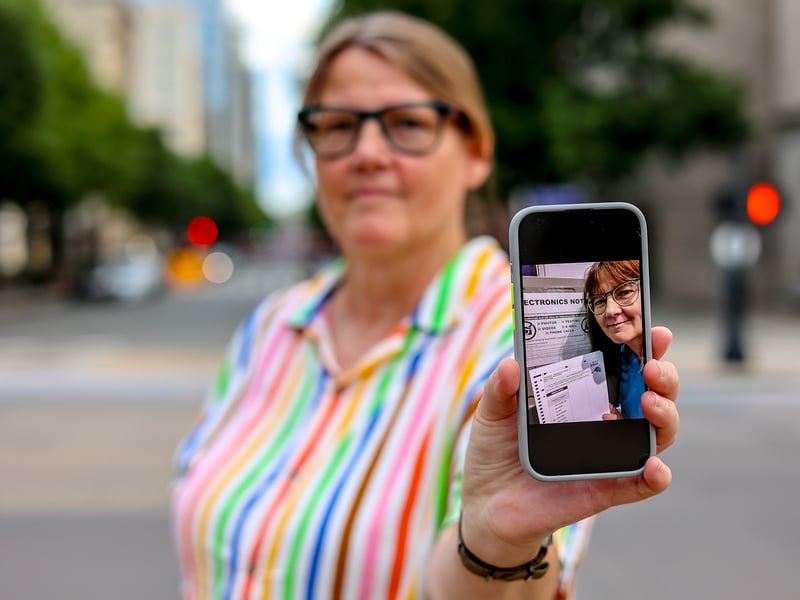
RALEIGH, N.C. (CN) — A North Carolina woman sued members of the State Board of Elections after she posted a photo of her voting and they threatened to criminally prosecute her.
On March 5, Susan Jane Hogarth posted a selfie of herself on X, formerly called Twitter, holding her ballot up while voting in the Libertarian primary. Behind her in the voting booth is an electronics notice, banning — among others — voters from taking photos, videos, or making phone calls. In the caption she targeted laws against ballot selfies and endorsed Libertarian candidates for governor and president.
The State Board of Elections responded with a letter: they were notified that she had posted a photo of her ballot, in violation of state law, a Class 1 misdemeanor. The investigator asked Hogarth to take the post down.
Hogarth, who is running as the Libertarian Party candidate for state Senate District 13, said she intends to also photograph herself holding her completed ballot in the general election on Nov. 5.
While legal in 31 states, voters who take ballot selfies in North Carolina face criminal prosecution. There are several provisions in state law that ban taking or sharing photos of a completed ballot, which Hogarth targets in her suit as unconstitutional under the First Amendment, because she says they are not narrowly tailored to further a compelling government interest.
These restrictions extend to absentee ballots as well — a voter cannot take a picture of their completed ballot, even if they are voting from the privacy of their home. There are no exceptions if the ballot you are photographing is your own.
You also cannot take pictures of voters in the voting room without permission from an election official — even if you’re taking a picture of yourself, unless you are a political candidate.
“It would have been easier to just take the post down,” said Hogarth. “But in a free society, you should be able to show the world how you voted without fear of punishment. Privacy is good for those who want it, openness should be available to those who prefer it.”
She said she does not plan to take down her post, and intends to continue taking and posting ballot selfies during future elections.
The board’s investigator told Hogarth that photographing her ballot could be punishable as a Class 1 misdemeanor, punishable by fines, probation or jail time. The investigators refer voters who shared photos of completed ballots to district attorneys for prosecution.
In her suit, Hogarth says she takes ballot selfies to express her pride in voting and to encourage civil participation. She also wanted to show voters they can support third-party candidates, and to express her disagreement with the state ban on ballot selfies.
She claims the photography provisions chill the free speech of reasonable people by preventing voters from taking pictures of themselves while voting, without permission from an election official. She points to the letter telling her to take the photo down as a burden on her First Amendment rights.
North Carolina’s ballot photo restrictions exist prevent vote-buying schemes, but Hogarth calls them overly broad and unconstitutional content-based restrictions on speech that penalize innocent voters.
“There is no legitimate reason why Hogarth needed consent from the chief judge of the precinct to take a ballot selfie on March 5, 2024, but will not need that consent in November 2024 just because she will now be a candidate,” Hogarth says in her lawsuit.
North Carolina could enforce laws against buying or selling votes without also curtailing voters who are taking photos of themselves and their ballots, Hogarth says. Instead, ballot photography is treated as its own, distinct offense by the state board, even when unconnected to vote buying schemes.
“Ballot selfie bans turn innocent Americans into criminals for nothing more than showing their excitement about how they voted, or even just showing that they voted,” said Jeffrey Zeman, an attorney for Foundation for Individual Rights and Expression who is representing Hogarth. “That’s core political speech protected by the First Amendment.”
A representative for the North Carolina Board of Elections said the board does not comment on pending litigation.
 Follow @SKHaulenbeek
 Follow @shaulenbeek.bsky.social
Subscribe to our free newsletters
Our weekly newsletter Closing Arguments offers the latest about ongoing trials, major litigation and rulings in courthouses around the U.S. and the world, while the monthly Under the Lights dishes the legal dirt from Hollywood, sports, Big Tech and the arts.