
 Search Articles


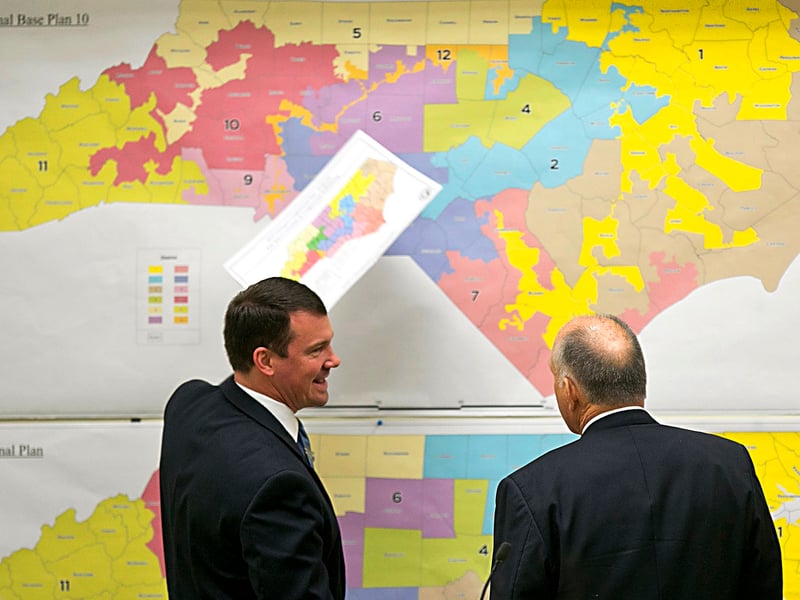
RALEIGH, N.C. (CN) — Voters challenging North Carolina’s 2025 congressional map — which is expected to net Republicans an additional seat in the U.S. House — voluntarily dismissed their legal case Friday evening.
The parties had been awaiting an order from the three-judge panel presiding over the case — which included Fourth Circuit Court of Appeals Judge Allison Rushing, a Donald Trump appointee, and U.S. District Court Judges Thomas Schroeder and Richard Myers, George W. Bush and Trump appointees — who had yet to rule on the merits of the plaintiffs’ claims over a revised congressional district.
The panel had, however, struck down a request to prevent the 2025 map from being used for the 2026 midterm elections, with the panel writing that they did not feel as though the voters and advocacy groups who sued were likely to succeed on the merits of their claims.
The dismissal responds to that order, the Southern Coalition for Social Justice said, and there will be no appeal.
“We are proud to have stood up for our clients and all voters harmed by this congressional map,” said Hilary Harris Klein, senior counsel for voting rights at the Southern Coalition for Social Justice. “While it is disappointing that the courts have not protected voters from ongoing harm, our commitment to these communities does not end here. We will continue advocating for equal representation and the right of all voters to cast a ballot in districts free from this kind of harmful manipulation.”
The dismissal prevents the plaintiffs from refiling claims over the 2025 election map again.
“After months of grandstanding about the new congressional plan, these partisan actors have now wisely given up,” defendant and Senate President Pro Tempore Phil Berger said in a post Friday evening. “With this lawsuit out of the way, we can keep delivering results and fighting for President Trump and the America First Agenda!”
The plaintiffs — two separate groups of voters and organizations who had first challenged the state’s 2023 congressional map — filed new complaints after the state’s Republican-controlled General Assembly greenlit a new map in October 2025 intended to give the GOP an additional U.S. House seat in 2026.
They had gone to trial over the state’s 2023 redistricting and were awaiting a final judgment when Republican leadership in the state legislature decided to respond to President Donald Trump’s redistricting call.
The 2025 map changed two congressional districts, moving additional Republican voters into Congressional District 1, a seat currently held by U.S. Representative Don Davis, a moderate Democrat.
The General Assembly unlawfully targeted Black voters, the North Carolina NAACP claimed, adding that it worsened the racial dilution the voters initially sued over. The plaintiffs also said that the state legislature’s mid-decade redistricting process frustrated their legal case by changing the district lines before the judges issued their final judgment in the case.
The plaintiffs had argued that the legislature was attempting to create an “infinity loop,” continually changing the electoral lines to avoid a final judgment on any one plan, preventing their grievances from being redressed.
The parties argued before the panel in November, where the plaintiffs asked for an injunction to prevent the 2025 map from being in play during the 2026 midterm elections. The judges did not appear swayed by their arguments.
Berger and fellow defendant Speaker of the House Destin Hall have vehemently argued throughout the redistricting process that no racial data was used in the drafting process and that the General Assembly took up the process solely to benefit the Republican party.
The 2025 map author, state Senator Ralph Hise, was called to speak and told the panel that the goal of the process was partisan advantage and that he did not use any racial data in drafting the map.
In November, the Republican panel upheld the state’s 2023 congressional map, quashing the plaintiffs’ constitutional and voting discrimination claims, and finding that politics — not race — is why polarized voting is present in the state. The state did not act to disadvantage Black voters, they said, adding that plaintiffs failed to prove mapmakers had access to racial data, let alone that it was used in the redistricting process.
 Follow @SKHaulenbeek
 Follow @shaulenbeek.bsky.social
Subscribe to our free newsletters
Our weekly newsletter Closing Arguments offers the latest about ongoing trials, major litigation and rulings in courthouses around the U.S. and the world, while the monthly Under the Lights dishes the legal dirt from Hollywood, sports, Big Tech and the arts.