
 Search Articles


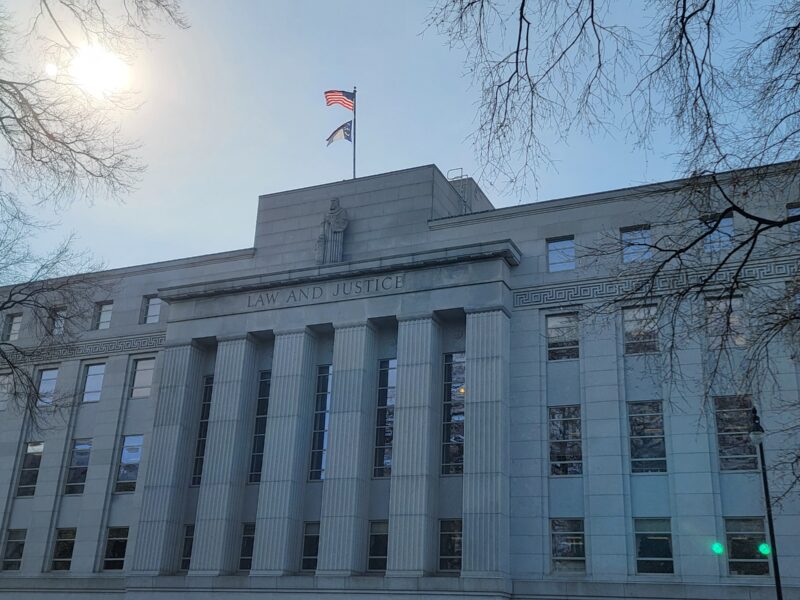
RALEIGH, N.C. (CN) — The North Carolina Supreme Court may decide who its next associate justice will be after a federal judge sent a lawsuit challenging the results of the election to the state’s highest court on Monday.
Jefferson Griffin, a North Carolina court of appeals judge, challenged the results of his race for a Supreme Court seat against Supreme Court Associate Justice Allison Riggs after she secured a lead over him more than a week after the election.
This is his first win in several legal challenges he has filed over the race, protesting the processing timeline and claiming that the state is counting ballots he considers to be unlawfully cast.
Chief U.S. District Judge Richard Myers II found that Griffin’s challenges do not raise an issue of federal law, and remanded the merits of Griffin’s request to the Supreme Court.
“Should a federal tribunal resolve such a dispute?” Myers, a Donald Trump appointee, wrote in his order. “This court, with due regard for state sovereignty and the independence of states to decide matters of substantial public concern, thinks not.”
Griffin originally asked the state Supreme Court to intervene and keep the state board of elections from counting the disputed ballots and prevent it from certifying the election. Attorneys for the elections board moved the case to federal court, but Griffin is expected to have a much higher chance of success with his arguments now that they have returned to the Supreme Court, where Republicans hold a 5-2 majority.
The challenge raises unsettled questions over state constitutional and statutory law, Myers said, that the court is choosing to abstain from deciding.
“The court ends as it began: a sitting state court judge seeks a writ of prohibition (a form of judicial relief authorized by the state constitution) from the state supreme court that would enjoin the state board of elections from counting votes for a state election contest that were cast by voters in a manner allegedly inconsistent with state law,” Myers said.
Riggs — who was appointed to the court in 2023 by former Governor Roy Cooper, a Democrat — has said that she plans to recuse herself from the case if the state Supreme Court hears it. She has announced her win, but Griffin has not conceded the race.
Riggs has maintained a lead over Griffin in the election by 734 votes, and has retained her majority through two recounts in the race. Over 5.5 million votes were cast in the statewide race during the general election.
Griffin first preemptively sued the state board of elections over the release of election records and followed up with post-election protests with the state board of elections, petitions in local court and the state court of appeals and started the existing case with a request filed directly with the state Supreme Court.
Griffin — who requested both recounts in the race — also filed hundreds of election protests with the state elections board, joined by several Republican candidates lagging in their respective races, claiming that over 60,000 votes cast are invalid and should be discarded. The state elections board threw out the protests, and Griffin’s legislative colleagues had their races certified Monday, resulting in Republican lawmakers losing their veto-proof majority in the state General Assembly.
The protests were not valid because the affected voters did not receive adequate legal notice necessary for them to come before the board and defend their voting status, the board decided.
Griffin’s disputed ballots center around voters who are U.S. citizens who have never lived in the states, but who vote in North Carolina because their parents once had residence, and overseas voters who did not provide a photocopy of their photo identification with their ballot.
He also challenged votes by those who registered with the state over a span of 20 years using an older voter registration form that didn’t require them to provide their driver’s license number or the last four numbers of their Social Security number. These votes may have been cast by ineligible voters, Griffin has said, and the state should have confirmed their eligibility before they were allowed to vote.
The challenge echoes one made by the Republican National Committee before the election, asking the courts to purge more than 225,000 voters from the voter roll who registered with the older form. The state elections board argued that removing voters from registration lists weeks before the election would violate the National Voter Registration Act.
Last week, Republican voters filed their own lawsuit under the same premises, arguing that until the registration status of voters who filled out the outdated form are rectified, non-citizens may have been able to cast a vote in the presidential election, which may have diluted their votes. They asked that the court require the elections board to segregate the disputed votes and remove them from final election courts for all state office elections.
Myers found Monday that case’s legal issues are dependent on Griffin’s outcome.
The North Carolina Democratic Party has also sued over the issue, asking for a judgment to keep the elections board from invalidating ballots, which they claim would be conducting post-election voter roll maintenance.
The Supreme Court justice race is expected to be certified by the state board of elections on Friday.
Griffin and a representative for Riggs’ campaign did not respond to a request for comment made outside of normal business hours. A representative for the North Carolina State Board of Elections said that the agency is reviewing Myers’ decision.
 Follow @SKHaulenbeek
 Follow @shaulenbeek.bsky.social
Subscribe to our free newsletters
Our weekly newsletter Closing Arguments offers the latest about ongoing trials, major litigation and rulings in courthouses around the U.S. and the world, while the monthly Under the Lights dishes the legal dirt from Hollywood, sports, Big Tech and the arts.