
 Search Articles



RALEIGH, N.C. (CN) — North Carolina state Senator DeAndrea Salvador has filed suit against Whirlpool and Omnicom Group over an AI-manipulated ad featuring her.
The suit, which was filed Wednesday evening, takes aim at Omnicom Group, Whirlpool Corporation and DDB Worldwide Communications Group LLC over an ad promoting energy-efficient appliances in Brazil. The three-term state senator recorded a TED Talk in 2018, discussing making energy more affordable for low-income families in the U.S.
But DM9, a subsidiary of the DDB network, used copyrighted footage from Salvador’s talk to create the “Efficient Way to Pay” campaign to urge Brazilian consumers to upgrade to Whirlpool’s Consul appliances.
The ad artificially manipulated CNN’s Brazil broadcasts and Salvador’s TED Talk, she said in the suit, and “notwithstanding the completely false and manipulated content,” the defendants submitted the ad to the Cannes Lions International Festival of Creativity, where it won the 2025 Grand Grand Prix in the Creative Data category.
The win has since been withdrawn after an investigation found the agency used AI-generated content in the video, which violates the festival’s rules. CNN Brazil also filed a formal complaint against DM9 and Whirlpool after altered footage from a broadcast was used in the ad, but said it would not pursue any additional action after DM9 publicly apologized.
In a LinkedIn post, DM9 issued a public statement announcing it had removed three of its entries — including the “Efficient Way to Pay” ad — due to “serious inconsistencies related to the veracity or legitimacy of the works presented” and would return the prizes won by these ads. It also announced the immediate removal of chief creative officer Icaro Doria, apologized to the festival’s judges and announced a plan to create an AI ethics committee.
Cannes Lions has also announced new standards for “creative integrity” including confirmation that all submissions are factually accurate, responsibly sourced and representative of real-world events and outcomes. A verification system will be instituted to prevent brands from submitting content that includes “material misrepresentation.”
The defendants used plaintiff’s footage to place her likeness and voice in a commercial context, Salvador said, and fabricated statements and visuals to appear as though she had created them. Her TED Talk explored energy costs for families in the U.S., but the ad included a graphic showing income spent on energy in São Paulo, Brazil, after featuring her speaking.
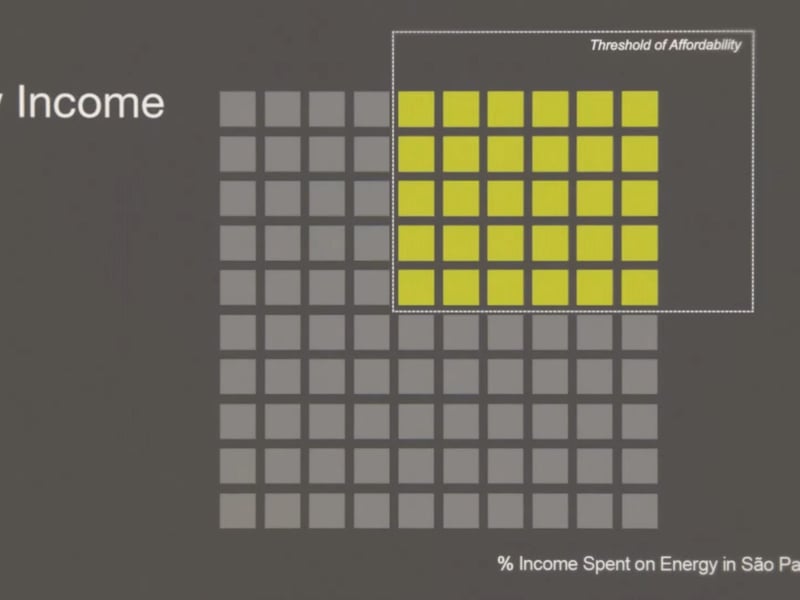
“It is well known that any unauthorized use of a person’s name, image, likeness and persona, particularly in a high-profile campaign exhibited at Cannes Lions, is likely to cause reputational and commercial harm in the United States, and especially in North Carolina, where plaintiff resides, is professionally and politically active, and is well-known,” Salvador said in her suit.
The ad “wrongfully manipulated” Salvador’s knowledge, statements and policies, she said, and made it appear as though she endorsed Whirlpool’s products and services. The ad has caused her reputational harm and severe emotional distress, she said.
“The manipulated version of plaintiff’s TED Talk changed her voice and visuals without her permission, and placed plaintiff’s name, image, likeness and persona in a context plaintiff did not authorize. The result is a distortion of not just plaintiff’s message, but of the public’s understanding of what plaintiff stands for,” she said. “This is particularly troubling given plaintiff’s role as a public official, plaintiff’s involvement in shaping responsible technology policy and plaintiff’s commitment to maintaining clear ethical boundaries.”
Salvador felt violated and deeply unsettled after discovering the ad, and was concerned about the impact it may have on her public perception, she said. Salvador is the founder and CEO of the Renewable Energy Transition Initiative.
Salvador’s suit claims the defendants misappropriated her likeness, used unfair and deceptive trade practices and violated the Lanham Act through false advertising and unauthorized uses of her image, likeness and persona.
A bipartisan House bill was introduced in the North Carolina General Assembly during the 2025 session, which would regulate deepfakes and deceptive advertising in elections, and protect the public from misuse of generative AI and synthetic media.
Under the measure, creators would be barred from sponsoring, creating or distributing a message that the person knows is deceptive or a deepfake of a candidate, unless the advertisement contains a note saying it contains content generated by AI during each segment. Political communications would also need to have a disclosure if an image, video or audio clip has been manipulated to be materially deceptive. The bill has thus far failed to gain sufficient traction to become law.
The measure follows North Carolina’s first fully AI-generated political ad, which was used in the 2024 governor’s race and featured AI-generated audio of Republican candidate Mark Robinson saying statements that the candidate made on social media and in church. The ads — which costaround $1 million and were on billboards and TV — were intended to use satire to drum up political involvement.
Representatives for the defendants did not immediately respond to a request for comment.
 Follow @SKHaulenbeek
 Follow @shaulenbeek.bsky.social
Subscribe to our free newsletters
Our weekly newsletter Closing Arguments offers the latest about ongoing trials, major litigation and rulings in courthouses around the U.S. and the world, while the monthly Under the Lights dishes the legal dirt from Hollywood, sports, Big Tech and the arts.