
 Search Articles


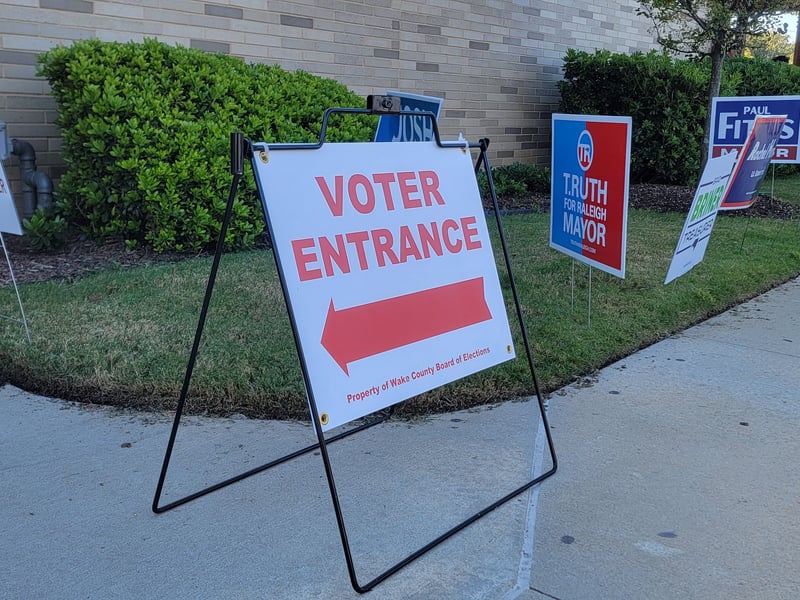
RALEIGH, N.C. (CN) — North Carolina has launched a plan to collect identification information from over 100,000 voters in the state’s voter rolls.
The plan follows a lawsuit from the Trump administration, which pushed for the state to correct its voting roll discrepancies and turn over a copy of all corrected voting roll records to the Department of Justice.
The measure aims to ensure the state’s voter rolls are complete, directing the state’s 100 county boards of elections to begin searching election records to attempt to locate identification information that may not have been properly entered into the state’s system. In August, the state board will begin mailing letters to affected voters with return envelopes and directions to update their information online.
The state is first attempting to collect missing information from 103,270 voters, state election officials said Thursday. The state has no record of these voters ever providing their driver’s license number or the last four digits of their Social Security numbers, which is required to confirm citizenship before a voter is included on the state’s voting roll. These voters will still be able to vote in upcoming municipal elections but will be required to vote using provisional ballots, as the state has to validate their identification information to be compliant with federal law.
The error stemmed from a voter registration form that had unclear instructions, which was used for almost a decade before being corrected in January 2024.
After the initial mailing, the state will then attempt to update voter information from an additional estimated 89,000 voters who have previously supplied federally required identification information but whose information is missing from the voter roll database. Those voters will be able to continue voting as usual while the state asks for them to update their information, and they will be contacted later in the year.
The program should help the state to settle the lawsuit, state board Executive Director Sam Hayes said, but it will not result in the removal of eligible voters from the database.
“It will result in cleaner, more complete voter rolls and full compliance with state and federal laws,” Hayes said. “We have gone to great lengths to make this process as straightforward and transparent as possible for the affected voters.”
Last week, counsel for the Democratic National Committee sent the state board a letter claiming the board’s plan would “effectively remove” 98,000 voters from the voting rolls. Doing so would violate the National Voting Rights Act, it warned, saying if the violations are not corrected, it plans to sue.
“No duly registered voter is going to be removed because of this project,” Hayes said.
The Trump administration sued the North Carolina State Board of Elections in May over the missing information, claiming the board violated federal voting law in how it handled voter registration records before the 2024 election. The government asked the board to develop a plan to remedy violations of the Help America Vote Act, including contacting all registered voters to obtain a driver’s license number or the last four digits of their Social Security number and updating the statewide registration list with that information.
Ann Webb, policy director of North Carolina Common Cause, a nonpartisan organization focused on upholding values of democracy, said that while some voter data is public, the state has sensitive data that it should safeguard. Should the state decide to provide voter roll data to the federal government, it should do so in a manner that protects residents’ data, she said — for example, by confirming that Social Security number and driver’s license number checks have been completed without providing the numbers themselves.
“Even if you assume that perhaps various government agencies already have that information in various forms, having it all together in one place is something that we are trusting the state board to hold close and make sure is not hacked or leaked or otherwise used in a way that would be harmful to individuals who are registered to vote,” she said. “I think when we see a request like this, the question that is really raised is why does the federal government need to see this? And what data are they expecting to be included?”
“If they’re talking about pulling a list that includes all that additional, more sensitive data, a data set that includes your name, you voter history, your race, your phone number, your Social Security number last four, your driver’s license number, all in one place, then we’re talking about a high risk activity,” she said.
Around the time the lawsuit was filed, the Department of Justice began asking states to provide voter registration lists. At least nine states have been contacted so far, and in Colorado, the Justice Department has issued an expansive request for the state to turn over all records pertaining to the 2020 and 2024 federal elections, which could include voter registration materials, ballots and voting equipment.
A White House consultant asked county clerks in Colorado if they would allow federal officials or a third party to inspect voting machines, The Washington Post reported, which has caused concerns on the local level over potential federal interference in the upcoming 2026 midterms, as elections in the United States, including those for federal offices, are administered by each state and its local officials.
President Donald Trump has continued to maintain that the results of the 2020 election were fraudulent, posting on Truth Social over the weekend that “the 2020 Election was rigged and stolen, and they tried to do the same thing in 2024.” In a March executive order, Trump directed Attorney General Pam Bondi to enter into election information-sharing agreements between states and the federal government, saying the move would uphold election integrity.
The Department of Justice, which has also shifted its priorities away from voting rights lawsuits and toward cracking down on voting fraud, has also accused several states, including Arizona, Wisconsin and Oregon, of not adequately complying with federal law in verifying voters’ identities and maintaining voter rolls.
 Follow @SKHaulenbeek
 Follow @shaulenbeek.bsky.social
Subscribe to our free newsletters
Our weekly newsletter Closing Arguments offers the latest about ongoing trials, major litigation and rulings in courthouses around the U.S. and the world, while the monthly Under the Lights dishes the legal dirt from Hollywood, sports, Big Tech and the arts.