
 Search Articles


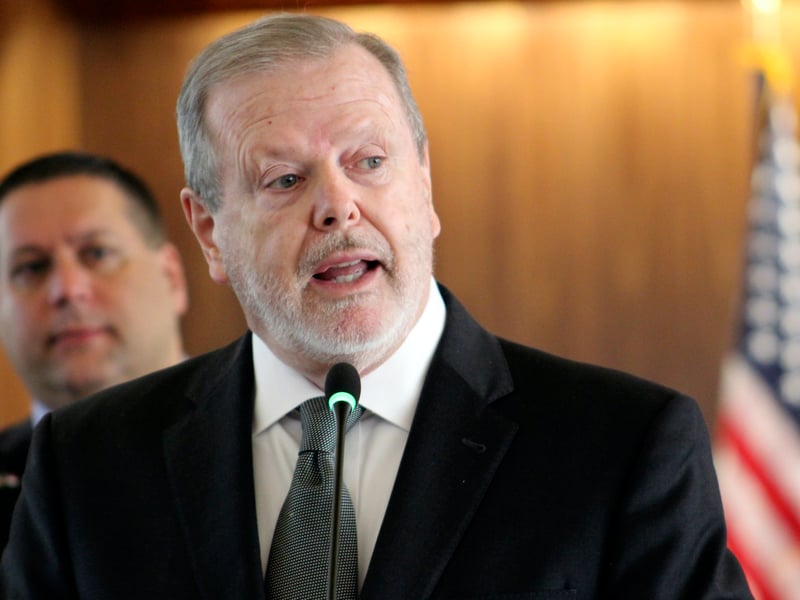
RALEIGH, N.C. (CN) — North Carolina Republicans in the state Senate overrode several of Democrat Governor Roy Cooper’s vetoes Monday, agreeing on a modified bill passing additional funding for private school vouchers that they are now pushing to pass in advance of upcoming elections.
In the 20-page bill, the state Senate passed $248 million in funding to clear the waitlist for private school vouchers, called opportunity scholarships. They also allocated over $215 million in recurring scholarship funds for the next fiscal year, and a little under $25 million for a public account program that helps students with special needs pay for private schools and educational technology.
The bill also provides additional funding for broadband, Medicare and requires sheriffs to comply with U.S. Immigration and Customs Enforcement. The House will take it up on Wednesday, and is expected to pass it.
No democrats supported it, and votes were split along party lines.
Democrats have long opposed the voucher program, saying that it diverts funds from rural public schools to wealthier urban areas, and into schools who aren’t held accountable to meeting accreditation or learning standards.
Democrat Senator Graig Meyer, who spent almost two decades working in schools, argued against funding the private school vouchers in lieu of providing additional funding to public schools.
“If those families can afford private schools, and they want to choose one, they may do so, but it shouldn’t come out of the education of the rest of the children when our public schools could do so much with just the $248 million that we’re appropriating today,” Meyer said.
“What happens to the child left behind?” Senator Michael Garrett said on the senate floor Monday. “Proponents of this voucher program claim that it’s about school choice. But let’s examine that claim for a moment. Who really gets to choose in this scenario? Is it the struggling mom working two jobs to make ends meet? Is it the family living paycheck to paycheck in rural North Carolina? No. The real beneficiaries are the people who can already afford and who often already have their children in private schools.”
Senate President Pro Tempore Phil Berger said his focus was to give parents more of a say in their children’s education, and that the amount of funding for traditional public education has increased annually.
“At this point, we are relying on parents to make decisions as to what’s best for their children,” he said, calling the voucher program a “talking point” for democrats.
The general assembly, which finished its chief working session at the end of June, left multiple issues unresolved: a budget adjustment, and additional funding for the vouchers.
North Carolina families reliant on the vouchers were left in limbo at the start of the school year, as the general assembly had failed to come to an agreement. Once this bill passes, schools receiving scholarship funds are instructed to refund parents the amount of tuition that is covered under the vouchers.
The House and Senate reached a stalemate earlier this year despite having very similar priorities, as the Senate wanted gross spending decreased and the House wanted additional raises for state employees.
Berger said Monday that a deal was finally reached after he had a conversation with Representative Destin Hall, who is expected to take over as House Speaker. The current speaker, Tim Moore, is pursuing a congressional career after 11 years in the state Legislature.
Also included in the bill was a requirement to force sheriffs to hold non-citizens charged with a crime for 48 hours and contact ICE. It will also shield local law enforcement from criminal and civil liability for detaining prisoners and contacting ICE.
Republicans have been trying to pass a mandatory compliance bill since 2019 since several sheriffs have been holding out from contacting ICE and holding prisoners for longer.
“Their failure to look at that aspect of public safety is something that makes everybody less safe,” Berger said.
Earlier in the session, one sheriff argued against it, saying that the bill would hinder their department’s ability to build relationships with the community.
Berger said they expect Cooper to pass their bills, but if he vetoes them, the assembly will likely take up overrides in October or November. Cooper has said he opposes the opportunity scholarships — he urged lawmakers last Thursday to fund public schools instead of vouchers.
Republicans have a supermajority in North Carolina, and have the numbers to pass legislation, regardless of whether Cooper supports it.
 Follow @SKHaulenbeek
 Follow @shaulenbeek.bsky.social
Subscribe to our free newsletters
Our weekly newsletter Closing Arguments offers the latest about ongoing trials, major litigation and rulings in courthouses around the U.S. and the world, while the monthly Under the Lights dishes the legal dirt from Hollywood, sports, Big Tech and the arts.