
 Search Articles


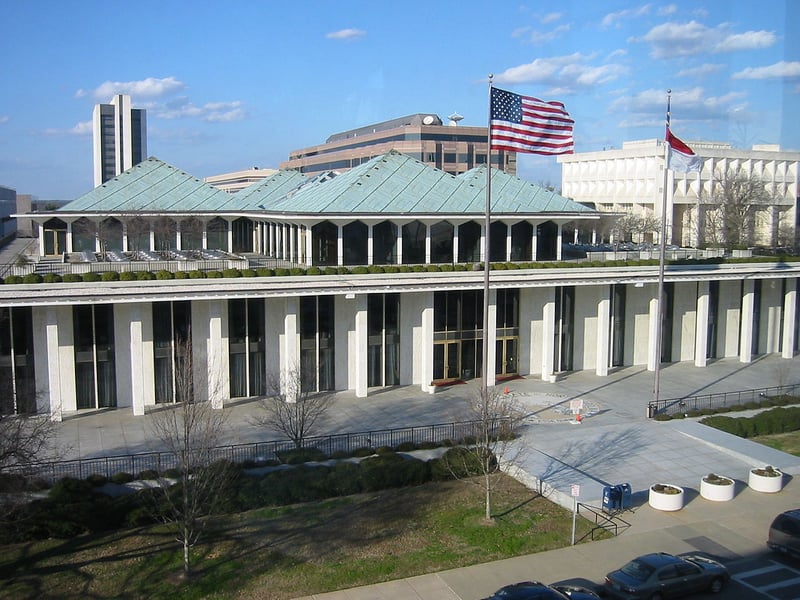
RALEIGH, N.C. (CN) — North Carolina lawmakers passed a bill Wednesday, labeled as disaster relief, that would make sweeping changes to the responsibilities of governor, attorney general and school superintendent after Democrats won the positions in the November 5 election.
The 131-page bill, which was intended to be the third disaster relief bill in the wake of devastation in North Carolina from Hurricane Helene, moves $227 million to a designated Helene fund, where it will remain unspent until the General Assembly passes additional legislation allocating it. It also makes drastic changes to the responsibilities of multiple government positions following Republicans’ down-ballot losses.
The measure, which passed in the House Tuesday, passed along party lines in the Senate after Republican Lieutenant Governor Mark Robinson evicted members of the public, following hissing and clapping in support of Democrats’ comments.
Republicans, who currently hold a supermajority, are scrambling to pass the bill to try to regain political ground, as current election results indicate that they’ll lose the necessary number of seats to override legislative vetoes by the governor. The assembly has passed multiple bills into legislation during this year’s short session despite opposition from Democratic Governor Roy Cooper, but with another Democratic governor, Josh Stein, coming in to fill the role in January, and election recounts ongoing, Republicans will be far less likely to pass partisan legislation without the support of some Democrats next year.
In the disaster relief bill, Republicans transferred the state board of elections to the Department of the State Auditor, granting incoming Republican auditor Dave Boliek the ability to appoint members and fill vacancies, responsibilities that previously belonged to the governor. They also reduced the number of members on the county board of elections, from five to four, and also granted Boliek appointment powers for those local boards.
Incoming Attorney General Jeff Jackson also is being limited by the General Assembly, due to an included provision preventing the attorney general from taking legal positions that differ from the General Assembly’s stance. Stein, who is the current attorney general, has been outspoken about not defending abortion legislation he felt was unconstitutional.
In addition, county election boards will now be required to count all absentee ballots on Election Day. In North Carolina, the election certification process lasts 10 days. As that period came to an end on November 15, several counties required more time, and continued to count provisional and absentee ballots on Monday, Nov. 18. The delay impacted a narrow race for a Supreme Court seat, with such a small margin that Republican Judge Jefferson Griffin preemptively sued the state elections board Monday, claiming that it wasn’t turning over data quickly enough, and cutting it close to the deadline to request a recount.
In future elections, all county election boards— including those that took additional time to count absentee ballots — will be required to count absentee ballots on election day, and count continuously until completed.
The county boards will also be required to validate and count provisional ballots by 5 p.m. three days after the election, a significant time compression compared to the 10-day window they currently have.
“Of course we all want ballots to be counted faster, and final results to come sooner. But this isn’t Amazon Prime,” said Senator Mary Wills Bode, who voted against the bill. “This is the administration of our elections, upholding constitutional rights, which requires due process, thorough review and time to ensure that every valid vote is counted and every invalid vote is not.”
The General Assembly also granted itself the power to fill two Superior Court judge positions, removing two existing elected judges at the end of their term in 2029.
“We’re replacing two judges elected by the people of Wake and Forsyth County, with appointments by this body, directly usurping the power of the people of Wake and Forsyth County,” said Senator Lisa Grafstein, who called the bill a threat to judicial independence. “The only conclusion I can draw from that is that we want to have judges — or some of us want to have judges — who will be nicer to this body in litigation,” she said.
Cooper has sued over similar legislation in the past, after the General Assembly passed a bill in 2023 increasing the number of seats on the state election board, and granting itself the ability to fill positions. The make-up of the board is based on the governor’s political party, so as long as Democrats have maintained the governorship, they have held the controlling majority. The courts have thus far held that the General Assembly does not have that authority.
In the same session, lawmakers circumvented Cooper’s veto of a bill requiring local sheriffs to hold non-citizens charged with a crime for 48 hours, and contact U.S. Immigration and Customs Enforcement. Also included in the bill was $248 million in funding to clear a waitlist of private school vouchers, and $215 million in recurring voucher funds for the next fiscal year. No Democrats supported the measure when it first passed the Senate, with the bill passing along party lines due to Republicans’ majority.
Lawmakers are scheduled to return for votes in December, but Republicans may face some difficulties if Cooper vetoes the bill. While all Republicans in the Senate supported the measure, three Republicans in the House voted against it, leaving Republicans short of the three-fifths majority in both chambers that they need to overturn a veto, which requires all Republicans to vote along party lines, or obtain votes from across the aisle.
President Pro Tempore Phil Berger said he expected Cooper to sign the bill.
 Follow @SKHaulenbeek
 Follow @shaulenbeek.bsky.social
Subscribe to our free newsletters
Our weekly newsletter Closing Arguments offers the latest about ongoing trials, major litigation and rulings in courthouses around the U.S. and the world, while the monthly Under the Lights dishes the legal dirt from Hollywood, sports, Big Tech and the arts.