Search Articles


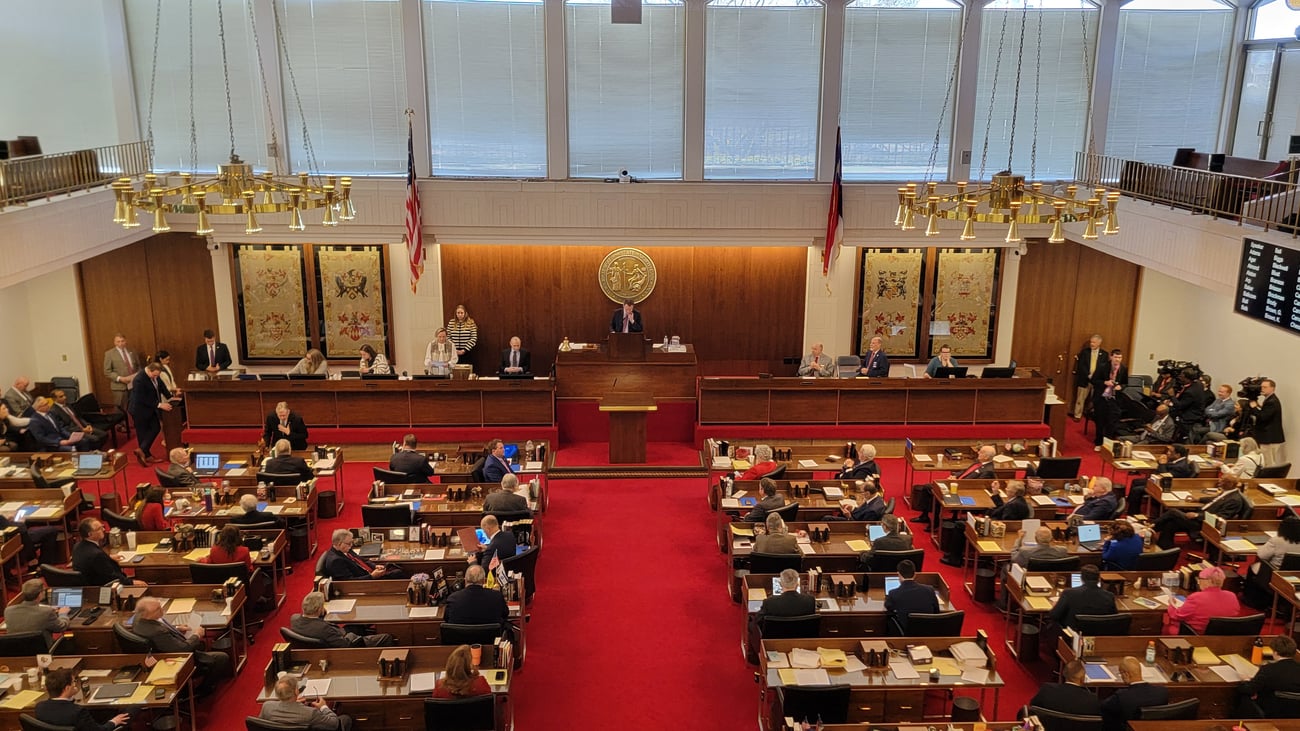
RALEIGH, N.C. (CN) — North Carolina Republicans successfully passed into law several bills Wednesday despite opposition from the state’s Democratic governor.
The Republican Party narrowly lost a veto-proof majority in the state legislature in 2024, when a critical seat in the state House was filled by a Democrat. But with the absence of two representatives in the state House Wednesday, the GOP was able to override Governor Josh Stein’s vetoes on several controversial bills with a three-fifths majority.
The legislature passed a bundle of bills targeting diversity, equity and inclusion initiatives in state and local government, public schools and public colleges, along with an immigration initiative.
Many of the DEI bills had been stationary for months following Stein’s vetoes, left over from the 2025 session, where the House majority had been unable to secure the necessary three-fifths majority, despite Speaker of the House Destin Hall telling reporters that the party feels as though it has a functional supermajority.
Among the new laws is Senate Bill 227, which targets DEI initiatives in K-12 public school systems and prevents public school employees from teaching or being taught about “divisive concepts,” which it defines as one race or sex being presented as superior to another, a person being labeled as inherently racist, sexist or oppressive due to their race or sex, or teaching students that the United States was created for the purpose of oppressing members of another race or sex.
Public schools cannot advocate for discriminatory practices, the bill says, or compel students or staff to affirm divisive concepts or teach them to students. Schools are also barred from developing a diversity, equity and inclusion department or including the concepts in professional training for staff.
“The bills that are eliminating DEI in the state simply seek to take race and all of those things out of the decision-making process for government,” Hall said after the successful overrides. “Private businesses, they want to have DEI policies, that’s up to them, but taxpayer-funded entities should not be engaging in DEI practices.”
Stein had condemned the bill, saying the state should value diversity.
“Rather than fearing differing viewpoints and cracking down on free speech, we should ensure our students can learn from diverse perspectives and form their own opinions,” he said in his veto message.
A similar law greenlighted Wednesday eliminates DEI in higher education — despite the North Carolina university system moving to repeal DEI policies in 2024 — barring state universities from having a DEI office, endorsing “divisive concepts” or teaching that values and privileges should be “ascribed to a race or sex or to an individual because of the individual’s race or sex.”
“How dare you say that you want this state to be the best that it can be, and then spend this time trying to figure out how to stop our best and brightest minds, who may be white, who may be Black, who may be female, who may be male, who may be Latino, who may be Asian,” House Democratic Leader Robert Reives II said in response to the bill Wednesday. “If you want true competition and progress, you got to let folks learn, be healthy and have opportunities.”
And House Bill 171 — which will still face a final vote in the Senate to become law — would prevent state agencies from supporting DEI, factoring it into hiring and employment or offering inclusion training. State employees could be fined up to $5,000 for violations and would be subject to removal from office or termination.
The measure restores “common sense,” said House Majority Leader Brenden Jones before the House vote. “Government hiring should be based on qualifications. Contracts should be based on merit,” he said. “Government services should be open and equal to every citizen.”
“We make our most effective decisions when there is a diverse set of perspectives around the table,” Stein condemned in his veto message. “House Bill 171 is riddled with vague definitions yet imposes extreme penalties for unknowable violations.”
The last successful override, named the “North Carolina Border Protection Act,” directs state law enforcement agencies to enter into an agreement with ICE and designate law enforcement officers to perform immigration enforcement functions. These agencies must make an effort to determine the citizenship of people in their custody and contact ICE if they’ve detained an unlawful resident.
Democrats had pushed back on the measure, saying it worsens community cooperation with law enforcement because of deportation fear and dumps additional responsibilities onto already burdened local law enforcement.
Hall limited discussions of the bills to three minutes for both parties Wednesday. All four measures passed along party lines, 71 to 47.
Missing during votes was Carla Cunningham, a former Democrat who recently changed her political affiliation to unaffiliated, after receiving pushback from her colleagues for voting alongside Republicans on some key votes. Also missing was Democrat Shelly Willingham. Both had been present for committee meetings earlier in the day.
House Democratic Leader Robert Reives said the absent members had made a decision and understood that their absence would lead to the bills becoming law. The one bill that has yet to pass into law — which would prevent state agencies from supporting DEI — will go to the Senate, where Republicans hold a 30-20 majority.
The state has been in session for several months, and Republican leadership is slowly trudging toward a biennial budget. Democrats have been publicly condemning the majority party for the delay, pointing out that over 1,000 days have passed since the last state budget, which was approved in September 2023.
Despite both chambers being governed by Republicans, spending disagreements have led to extended delays as the two chambers have struggled to come to a comprehensive agreement.
“As the legislature leaves teachers and law enforcement officers waiting for hard-earned and desperately needed pay raises, members of the General Assembly are stoking the culture wars that divide us rather than fulfilling their long-overdue responsibility of passing a budget,” Stein said in a statement after the veto overrides.
 Follow @SKHaulenbeek
 Follow @shaulenbeek.bsky.social
Subscribe to our free newsletters
Our weekly newsletter Closing Arguments offers the latest about ongoing trials, major litigation and rulings in courthouses around the U.S. and the world, while the monthly Under the Lights dishes the legal dirt from Hollywood, sports, Big Tech and the arts.
Additional Reads
 Sanctioned ICC judges sue Trump in New York June 24, 2026
 Detainee in Maine granted habeas relief June 24, 2026