
 Search Articles


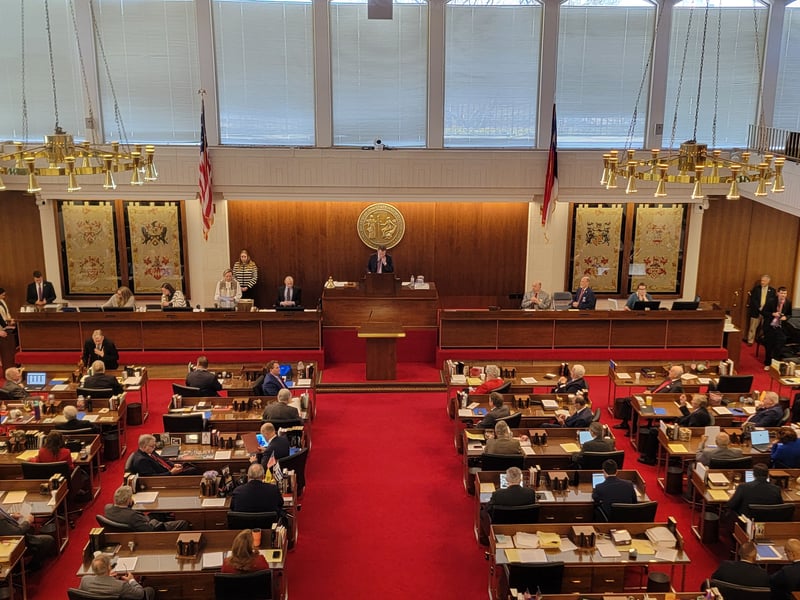
RALEIGH, N.C. (CN) — The North Carolina House passed a measure tackling diversity initiatives and hiring in state and local government on Wednesday after hours of pushback from Democrats.
The move comes after President Donald Trump has pushed for the dismantling of DEI, resulting in several large companies, including Walmart, Target and Meta, preemptively dismantling their inclusion initiatives and institutions of higher education pushing back against federal funding contingent on compliance, while Harvard yields to renaming its DEI office in an attempt to regain millions in research funding.
The bill, which passed along party lines, will now go to the state Senate, which has supported similar anti-DEI initiatives in public schools and higher education.
State agencies couldn’t implement or maintain diversity, equity and inclusion programs, the bill directs, nor are they allowed to “utilize DEI” in hiring and employment. They also cannot maintain diversity, equity and inclusion offices or offer DEI training. If passed into law, the bill would also impact employees of the University of North Carolina system, which includes 16 state universities.
North Carolina’s measure defined diversity, equity and inclusion as a program or policy that influences hiring or employment decisions “with respect to race, sex, color, ethnicity, nationality, country of origin, or sexual orientation” that go beyond federal antidiscrimination laws. Public servants are also prohibited from providing special benefits to employees due to their protected, non-merit-based characteristics.
Any violation would subject an employee to removal from public office or employment, and employees who violate this measure would be subject to civil liability and a penalty of $5,000. Any person living in the same county would be able to sue over violations.
The government has moved toward “checking boxes instead of resumes,” dividing people by race, sex and background and calling it progress, said primary bill sponsor Representative Brenden Jones. Republicans emphasized that the measure was intended to reprioritize merit in hiring processes.
“Can you do the job? Did you earn it? Are you qualified? This is not controversial,” he said. “This is common sense.”
North Carolina also isn’t earmarking funds for inclusion efforts, with the bill barring any schools, local governments or state agencies from using any state money to support or fund any diversity and inclusion initiatives or programs, killing any existing programs unless their continuation is required by federal law. Excluded from these limitations are classes, scholarly research and student organizations.
State agencies, local governments and schools are directed to publicly post a report including all the steps they took to comply, and the State Auditor Dave Boliek, a Republican who the General Assembly is working to grant DOGE-like powers, will oversee compliance audits.
The measure isn’t intended to impede free speech or federal antidiscrimination laws, said bill sponsors, who noted it shouldn’t prevent compliance with Title IX, the Americans with Disabilities Act or Title VI of the Civil Rights Act of 1964, among others.
But Democrats warned that this may deter public agencies from hiring diverse candidates out of fear of litigation.
“There are a whole lot of people who some might think are DEI hires,” said House Democratic Leader Robert Reives II. “A whole lot of people who are qualified as dickins to hold their jobs, and to look them in the faces and tell them they’re less than, you don’t matter, we think your time is over, breaks my heart.”
“The policy of this state is zero discrimination,” said Republican Representative John Blust, who said that the state shouldn’t use anti-racism to discriminate against candidates. “Base everything on merit.”
Republicans may struggle to see the measure become law, as the vote Wednesday in the House was along party lines, 68-45. House Republicans would need to secure one Democratic vote if Governor Josh Stein vetoes the bill to overcome his veto and pass it into law.
 Follow @SKHaulenbeek
 Follow @shaulenbeek.bsky.social
Subscribe to our free newsletters
Our weekly newsletter Closing Arguments offers the latest about ongoing trials, major litigation and rulings in courthouses around the U.S. and the world, while the monthly Under the Lights dishes the legal dirt from Hollywood, sports, Big Tech and the arts.