
 Search Articles


RALEIGH, N.C. (CN) — North Carolina Republicans are moving forward with bills mirroring federal priorities, with the state Senate providing initial approval on Tuesday of the state’s own version of the White House’s Department of Government Efficiency.
DOGE has faced heavy pushback in the courts since President Donald Trump tasked the organization with reducing federal spending. It has faced challenges over its access to the Education Department, the Treasury Department, the Office of Personnel Management and Consumer Financial Protection Bureau, along with lawsuits over USAID and Social Security.
But Republicans in purple North Carolina are seeking to mirror his goal to reduce waste and cut down on unnecessary spending.
The DAVE Act, named as a nod to Republican State Auditor Dave Boliek, would create a division of “accountability, value and efficiency” within the department of state auditor. The auditor already has the authority to perform fiscal audits, but the measure will embolden the office, increase its staff, and allow it to recommend the dissolution of jobs and state agencies.
The bill directs every state agency to report to the new division, explain how they utilize public funds and detail job positions that have gone unfilled for six months. The new accountability division would then determine the “continued need for each state agency” and its open positions and make recommendations to the General Assembly.
The auditor’s division is also granted the ability to require an annual report from state agencies. Built into the bill is an expiration date — the division, and its powers, expire at the end of Boliek’s term.
The measure also will allow the department to use artificial intelligence while analyzing data, including the effectiveness of spending, which several senators were skeptical of.
“I think that if you talk to most North Carolinians, what they have seen coming out of Washington D.C. from Elon Musk and his DOGE commission is not something we want to see here,” said Democratic state Senator Michael Garrett. “This piece of legislation, I think, is particularly dangerous. Most North Carolinans don’t want artificial intelligence deciding if their department or their job is efficient and effective. I think that is the job of the legislature, the governor’s office and the council of state.”
But representatives from the auditor’s office have praised the measure in committee, saying it gives the office additional tools to increase effectiveness.
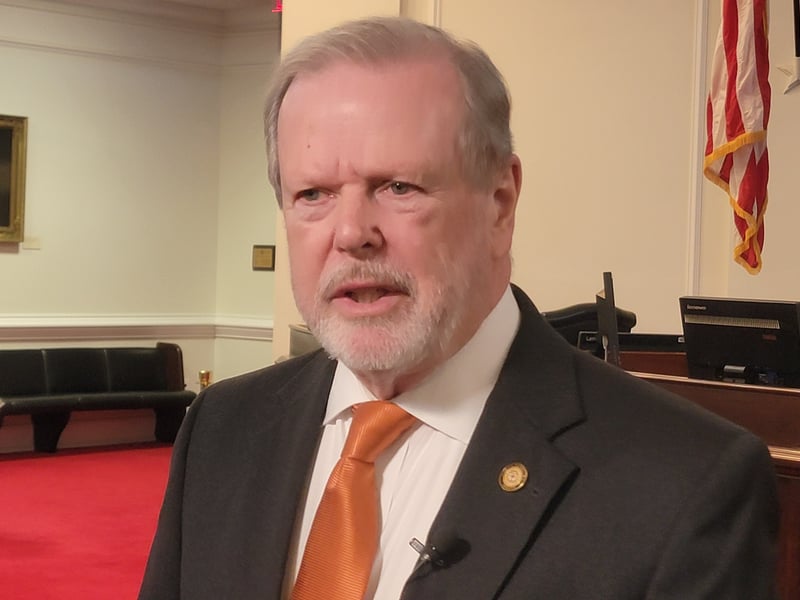
Boliek is the right person to do this job, Senate President Pro Tempore Phil Berger, a primary sponsor of the measure, said.
“Funds sent to state agencies come out of the pockets of North Carolinians,” Berger, a Republican, said. “Requiring a review of state agency operations and staffing is the right thing to do to ensure that those tax dollars are not wasted.”
Democrats have been critical of the move, saying that the auditor is taking on the heavy lifting of cutting state government in advance of an upcoming fiscal cliff without Republicans having to acknowledge any responsibility in their approved spending.
“We’re hurtling towards a fiscal cliff, there’s no support coming from the federal government, and they’re going to have to make cuts, and they’re not going to rehire these employees,” said Democratic state Senator Terence Everitt.
The General Assembly is going to take Boilek’s recommendations and follow them, Everitt added.
“At the end of the day, if nothing else, we need to take responsibility for our actions and they need to take responsibility for the last 14 years," he said.
In the state House, Speaker of the House Destin Hall has formed a DOGE-inspired committee on government efficiency to target government waste. The committee has yet to meet. Berger said Tuesday that the chambers have different approaches to the issue, which passed the Senate 29-17 and was sent to the House.
Both chambers have picked up federally-inspired priorities this session, including expanding access to guns, an emphasis on bolstering state law enforcement assistance with ICE and several measures tackling DEI in schools, universities and state agencies.
Berger said the bill is expected to be tucked into the state budget in order to increase the number of positions to tackle the task. This could increase the measure’s likelihood of success, as it would be less likely to face a veto from Governor Josh Stein.
Since losing multiple state races in November, state Republicans have zeroed in on the auditor position. During the lame duck session, lawmakers pushed through a bill grantingBoliek the ability to appoint members and fill vacancies on the state board of elections and local boards, responsibilities that previously belonged to the governor. Stein is currently challenging the change in court.
 Follow @SKHaulenbeek
 Follow @shaulenbeek.bsky.social
Subscribe to our free newsletters
Our weekly newsletter Closing Arguments offers the latest about ongoing trials, major litigation and rulings in courthouses around the U.S. and the world, while the monthly Under the Lights dishes the legal dirt from Hollywood, sports, Big Tech and the arts.