
 Search Articles


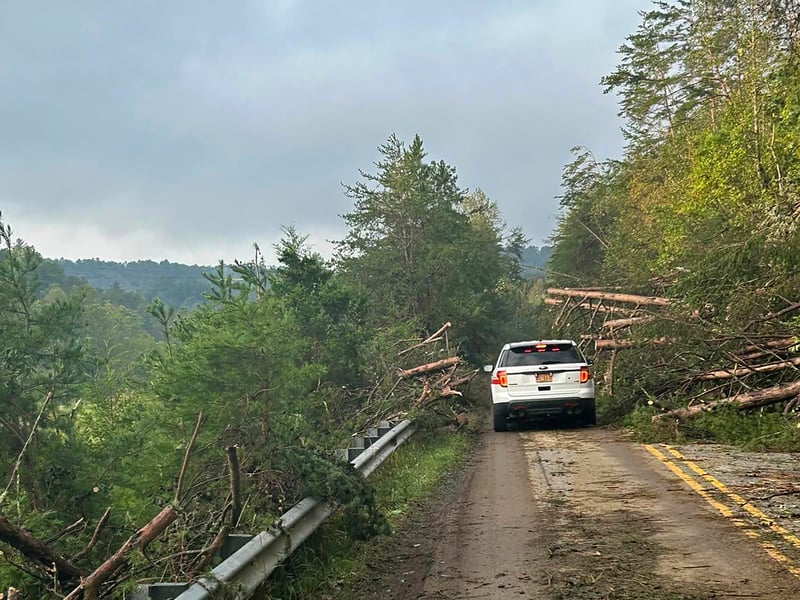
RALEIGH, N.C. (CN) — North Carolina continues to make progress with disaster recovery, as lawmakers in the state House moved forward funding for Hurricane Helene relief Tuesday, working to distribute $500 million to the ongoing rebuilding effort.
The bill, which passed unanimously, will next go to the state Senate. It moves $500 million out of a delegated Hurricane Helene fund established last year, and uses it to fund home repair and rebuilding, rental assistance and debris removal. It also funnels $100 million into repairing and replacing bridges and private roads, and $75 million into assisting farms with stabilizing and restoring streams and croplands.
“The important thing for folks to know is that this is just the next step in this process. This is not the first step. This is really the third step, this is our third bill. How many will we need? How many steps are going to be in this process?” Speaker of the House Destin Hall said in a House committee meeting addressing recovery. “It’s going to be as many as it takes for us to get it done, to rebuild western North Carolina, to make sure people can go back into their homes.”
Lawmakers passed several measures prioritizing recovery efforts last session, allocating about $900 million to help stabilization efforts in what the state estimates is nearly $60 billion in damage.
Also included in the funding was $10 million in rental assistance, which Democrats have pushed for amidst concerns that the workforce would leave the area as housing and employment options were limited.
The House also passed a bill affirmingan executive order made by former Governor Roy Cooper, to increase the maximum amount of unemployment per week to $450, up from $350, which will also go through the Senate.
Democrats have continued to push that not enough funding is reaching residents, while Republicans have insisted the state needs to be conservative in its funding and wait on federal assistance first.
“What we’re spending is still not enough. And for many folks, that’s too late,” said Representative Lindsey Prather, who represents southwestern Buncombe County, where Asheville falls within and which took the brunt of the hurricane.
“We talk about the risk of paying for things that FEMA is supposed to pay for because we’re worried about the match. We talk about getting ahead of federal money. What we don’t talk about is the risk of not spending that money. Every single day in western North Carolina, residents are making decisions about whether to stay, or return, or just make a life somewhere else,” Prather said.
The measure also extended certain regulatory provisions, extending the state of emergency through June 1 and extending deadlines for burning storm debris and flexibility in building permits.
In December, Congress approved a funding bill that included over $100 billion in disaster relief for states hit by natural disasters, with $9 billion earmarked for the southern state.
Governor Josh Stein requested an additional $19 billion in federal funds last week, asking President Donald Trump and Congress to assist the state in meeting residents’ needs. The funding is necessary, he said, to support infrastructure and home rebuilding, to keep businesses open and strengthen local governments.
The ask comes after Trump floated plans to cut the Federal Emergency Management Agency while speaking in Asheville, a particularly hard-hit area in the Blue Ridge Mountains, in January.
FEMA has said that over 150,000 households are being helped in North Carolina, with housing, rental assistance, temporary shelter and funds. Over 6,000 households are still displaced.
The hurricane, which is one of the deadliest in U.S. history, claimed the lives of more than a hundred people in North Carolina alone, hitting inland, western North Carolina where residents were unaccustomed to flooding. The damage done to the area crippled the local economy, which was dependent on tourism, and lawmakers have warned that rebuilding will not be a quick or easy process.
Lawmakers in the state House had been scheduled to take the matter up last week, but the schedule was disrupted by winter storm Kingston, which dropped several inches of snow and ice on the capitol city, cancelling voting sessions and committee meetings.
The Senate is expected to convene for votes on Wednesday.
 Follow @SKHaulenbeek
 Follow @shaulenbeek.bsky.social
Subscribe to our free newsletters
Our weekly newsletter Closing Arguments offers the latest about ongoing trials, major litigation and rulings in courthouses around the U.S. and the world, while the monthly Under the Lights dishes the legal dirt from Hollywood, sports, Big Tech and the arts.