
 Search Articles


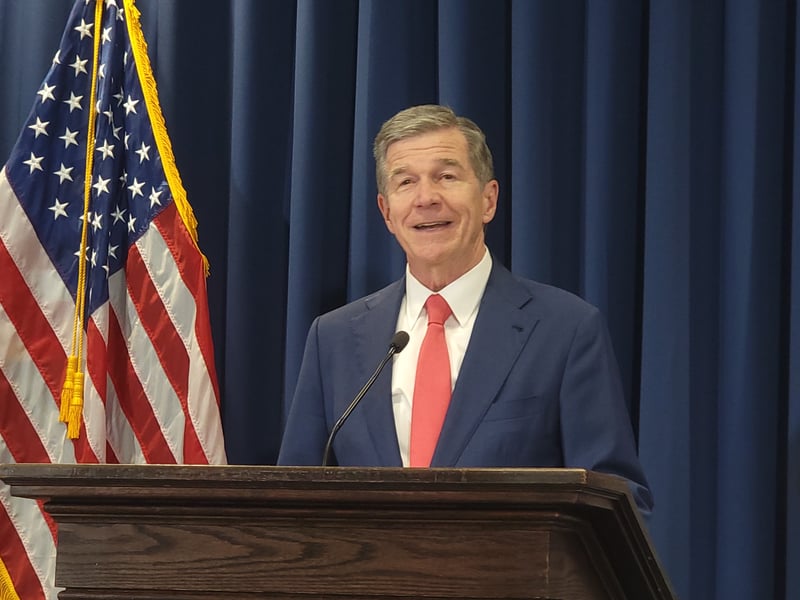
RALEIGH, N.C. (CN) — North Carolina Governor Roy Cooper and Governor-elect Josh Stein sued Republican leaders Thursday after they passed a bill targeting the governor’s and several other council of state members’ authority.
The bill — which passed into law on Wednesday despite Cooper’s veto — included changes to the responsibility of governor and attorney general, and changed two judgeship positions to be filled by leaders of the general assembly after their current terms expire.
Stein and Cooper, both Democrats, specifically challenged the General Assembly’s reorganization of the state highway patrol in a 69-page suit filed Thursday.
“It’s fundamental to our constitution that the legislature can not both make the laws and then choose the leaders who enforce them,” said Cooper in a statement accompanying the suit. “Breaking the executive branch chain of command in law enforcement or any other executive branch agency is unconstitutional and it weakens our ability to respond to emergencies and keep the public safe.”
Under Senate Bill 382, the state highway patrol is separated from the North Carolina Department of Safety and becomes its own stand-alone department, with the commander of the patrol becoming a member of Stein’s cabinet.
The legislature also selected highway patrol Commander Freddy Johnson Jr. to continue serving until July 1, 2025, followed by a five year term concluding in 2030.
The existing chain of command for state law enforcement was necessary for public safety and accountability, Cooper and Stein say, claiming that the changes the Assembly made will keep the highway patrol commander from being removed from his position for any reason, and by anyone.
“Senate Bill 382 threatens the safety of North Carolinians by eliminating the governor’s powers of supervision and removal over the commander,” the plaintiffs claim in their suit. “The legislatively-appointed commander may feel empowered to delay, modify, or flatly reject the direction that he receives from the governor, since he is legislatively mandated to serve until at least July 1, 2030.”
Johnson was appointed by Cooper in 2021, but did not have a designated term length, and could have been removed from his position for any reason.
Cooper and Stein also claim that the change violates the separation of powers by removing Stein’s supervisory ability over the leader of a newly-independent department. If the law stands, Johnson will serve through the end of Stein’s term.
While the governor will be able to put a name forward for a new commander after 2030, the position will need to be confirmed by the General Assembly. And should Johnson resign or be incapacitated, the General Assembly has granted itself the ability to confirm his replacement.
“Defendant Moore and Berger’s intent in enacting Senate Bill 382, just days after Governor Stein was elected, was to deprive the governor of the ability to faithfully execute the laws by selecting and supervising a commander who shares his policy views and priorities, thus thwarting the will of the majority of the electorate,” the plaintiffs said in their suit, referring to state House Speaker Tim Moore and state Senate Pro Tempore Phil Berger, both Republicans.
“By enacting the Legislative Commander Provision on the eve of Governor Stein’s inauguration, the General Assembly took for itself the power of deciding who would lead a newly formed cabinet-level department charged with executing and enforcing the laws governing public safety so that that commander would act in accordance with defendants’ views and priorities, rather than the governor’s," they added.
Requesting declaratory judgment, the governor and governor-elect claim that Johnson’s appointment violates the equal protection clause, exclusive privileges clause and the separation of powers under the state constitution.
Johnson’s appointment granted him special privileges and a $175,000 annual salary until 2030, they say, and the legislature lacked a specific public interest in giving him his position.
Johnson will be given responsibilities that previously fell under the Department of Public Safety, including protecting public safety, directing coordinated responses by state law enforcement agencies and handling cooperation between law enforcement agencies. He will also be tasked with ensuring the patrol operates as the coordinating agency against crime and that highways are regularly patrolled.
He will be expected to respond to support other law enforcement in responding to civil unrest, as well as states of emergency, and manage the protection of the governor and lieutenant governor.
The bill also affects Stein’s ability to appoint and remove members of the state board of elections and utilities commission. Incoming Attorney General Jeff Jackson has also had his authority impacted, as the measure prevents him from taking a legal stance contrary to that of the general assembly, a change that is presumably in response to Stein not supporting abortion restrictions he considered to be unconstitutional.
Cooper has been somewhat successful in lawsuits challenging the General Assembly’s appointment changes in the past, with the courts currently holding that the Assembly does not have the authority to increase the number of seats on the state elections board or choose board members. In another case, Cooper challenged appointment changes to several state commissions, several of which were upheld and two which were struck down. That case is still processing in the state appeals court.
More lawsuits are expected to come over Senate Bill 382, which had no public hearings and was introduced and pushed through by Republicans shortly after the general election. It was protested by the public twice in the Senate and in the House during a final veto-override vote, where protestors had to be removed from the building.
Representatives for Moore, Berger and the North Carolina Department of Public Safety did not respond to requests for comment made outside of normal business hours.
 Follow @SKHaulenbeek
 Follow @shaulenbeek.bsky.social
Subscribe to our free newsletters
Our weekly newsletter Closing Arguments offers the latest about ongoing trials, major litigation and rulings in courthouses around the U.S. and the world, while the monthly Under the Lights dishes the legal dirt from Hollywood, sports, Big Tech and the arts.