
 Search Articles


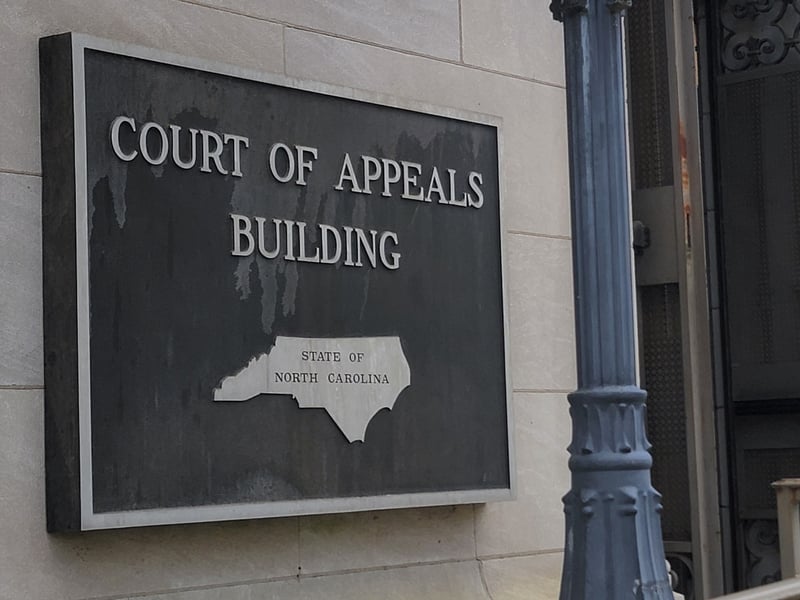
RALEIGH, N.C. (CN) — Attorneys for North Carolina’s Governor Josh Stein and Republican leadership argued before the state court of appeals Tuesday over whether the state constitution protects Stein’s ability to fill appellate court vacancies with a judge of his choosing.
Republican leadership passed a bill last December that prevents Stein from filling Supreme Court and Court of Appeals vacancies with a judge from his political party, instead requiring him to select a nominee from a list of three individuals provided by the political party of the judge or justice departing the seat.
Stein filed suit against Speaker of the House Destin Hall and President Pro Tempore Phil Berger in February, challenging the statute and calling it a violation of the state constitution. He was exclusively granted the ability to fulfill judicial vacancies, Stein said, and the legislature doesn’t have the power to place restrictions, qualifications or limitations on that power.
The legislature’s interference is a violation of the separation of powers, he said.
A panel of Raleigh judges agreed in June, finding that the ability to fill judicial appointments is constitutionally delegated to the governor. Stein had also challenged changes to his appointment ability on the North Carolina Utilities Commission and building code council, which the panel found were not constitutionally delegated, upholding the legislative defendants’ changes to the boards’ makeup.
“The question before this court is whether the General Assembly can create political qualifications for judicial vacancy appointees. And the answer is yes,” D. Martin Warf, counsel for legislative defendants, told the panel.
Stein still retains the power of appointment when selecting from recommended nominees, Warf said, and there is no language in the constitution directing Stein to choose the nominees. The state’s legislature has the power to act unless it is constitutionally barred, he said, and the constitution does not explicitly bar the legislature from changing the nominee process.
North Carolina Court of Appeals Judge Allegra Collins didn’t appear fully convinced.
“The appointment isn’t that important unless you have the ability to choose who fills it,” she said.
“It is a legislative attempt to expand power beyond what the constitution permits,” attorney Daniel F. E. Smith, counsel for Stein, argued. “This is not a question of legislative policy. It’s a question of constitutional balance of powers.”
The General Assembly is trying to change by statute the governor’s ability to fill appointments, Smith said, and providing him with a limited pool of nominees targets his power of appointment. The state constitution limits the legislature, he said, because the constitution says “unless otherwise provided in this article” that the governor shall fill vacancies, giving him unfettered power to select judicial replacements, barring a constitutional amendment.
“The state constitution has always recognized the governor’s constitutional power,” Smith said. In 2018, voters shot down a constitutional amendment for a judicial commission that would submit judicial nominees to the General Assembly, which would then recommend appointees to the governor.
“More than two-thirds of North Carolina voters said we want the governor to have sole appointment power,” Smith said. “To continue to have the same power he’s had for 150 years.”
“Under the challenged statute here, which the trial court correctly adjoined and held unconstitutional, the ultimate appointee — if this is allowed to take effect — will be someone partisan insiders have chosen,” Smith said. “And that’s not something that the people want. The people were presented with this choice seven years ago, and they said no, we want the governor to have the sole appointment power.”
The problem, Smith said, isn’t the source of the nomination being a private or political party but that the legislature is getting involved.
“Impartiality is important,” he said. “Article 4 of our constitution is very precise and very clear and does not leave room for the legislature.”
“The ability to appoint someone is not an inherently executive role,” Warf contested, and Stein will still be the person making the appointment.
Stein’s ability to appoint a commissioner to the North Carolina Utilities Commission was given to State Treasurer Bradford Briner, and Stein is no longer able to select the commission’s chair. Six of the members of the North Carolina Building Code Council will now be appointed by the legislative defendants; Stein previously could appoint all members. Smith argued the governor needs to have enough control over the boards to ensure they are faithfully executing the law.
Warf asked for the panel to reverse the lower court’s finding on judicial vacancies but uphold its decision over the utilities commission, while Smith asked for the judicial vacancy issue to be upheld and the Raleigh court’s finding on the boards to be reversed.
In their brief, Berger and Hall argued the General Assembly has the authority to organize state agencies and assign duties to members of the council of state, which doesn’t violate the separation of powers.
The governor and members of the council of state have core constitutional duties that the legislature cannot take away, Stein said in his brief, and the state constitution requires that the executive branch, led by the governor, control enforcement of the state’s laws.
A representative for the governor’s office did not reply to a request for comment after the hearing. Craig Schauer, who also represented the legislative defendants, said he believed the hearing went well.
“I thought the judges had a lot of good questions for both sides,” he said. “I do think, in light of the previous decision from the court of appeals, it seems that they’re leading to affirming the three-judge panel as to the utilities commission and building code council, but we’ll see. The questions show that they are still considering the outcome of this case.”
Judges John Tyson and Valerie Zachary also served on the panel.
 Follow @SKHaulenbeek
 Follow @shaulenbeek.bsky.social
Subscribe to our free newsletters
Our weekly newsletter Closing Arguments offers the latest about ongoing trials, major litigation and rulings in courthouses around the U.S. and the world, while the monthly Under the Lights dishes the legal dirt from Hollywood, sports, Big Tech and the arts.