
 Search Articles


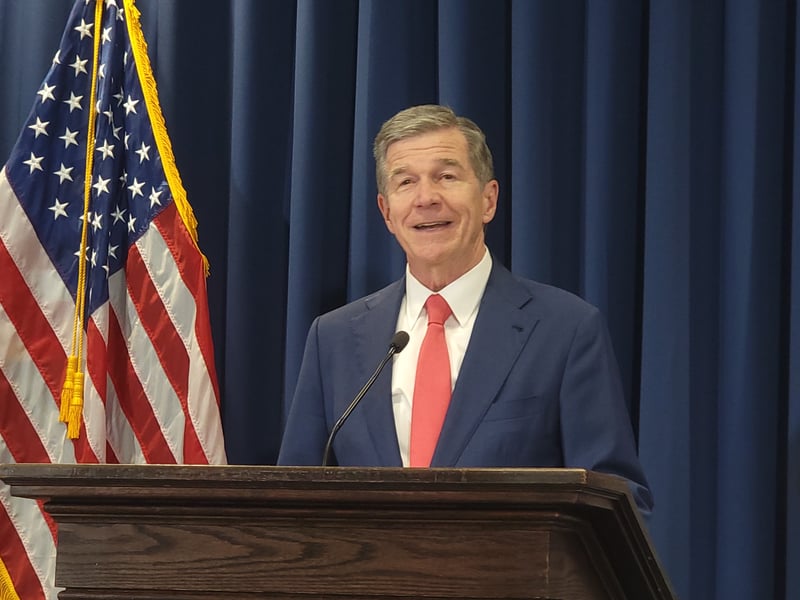
RALEIGH, N.C. (CN) — North Carolina Governor Roy Cooper and Governor-elect Josh Stein filed a lawsuit Monday over a bill that stripped appointment abilities from the state’s highest seat.
Opponents heavily protested the bill, which lawmakers originally advertised as targeting disaster relief. It removed the governor’s ability to fill seats on the North Carolina State Board of Elections, instead administratively transferring the board to the state auditor’s office. The bill gives incoming Republican Auditor Dave Boliek the task of appointing members and filling vacancies. Boliek also gained the ability to appoint members to county election boards, and choose the board chair.
The change violates the separation of powers in the state Constitution, the plaintiffs claim, and keeps the governor from being able to ensure laws be faithfully executed, which he is constitutionally required to do.
“We have had the same structure for our State Board of Elections for nearly a century and it has served North Carolina well, with fair and secure elections across our state through every cycle,” Cooper said. “These blatantly partisan efforts to give control over elections boards to a newly elected Republican will create distrust in our elections process and serve no legitimate purpose.”
Lawmakers have tried to challenge the governor’s appointment ability over the elections board several times, the plaintiffs say, despite voters shooting down such efforts when faced with a ballot initiative that attempted to split the board’s seats equally between Republicans and Democrats.
“In recent years, these legislative leaders have repeatedly tried and failed to seize control of the State Board of Elections for their own partisan gain,” Stein said in a statement. “This latest move insults the voters who rejected their power grab, violates our Constitution, and must not stand.”
Republicans have persisted, saying that the election board should be evenly split between parties.
“I simply disagree with the way that the current state board of elections has handled things,” Representative Destin Hall, the incoming speaker of the state House, told reporters earlier in the month.
“In a perfect world, I wish we could have equal numbers of folks from each party on each side of the board, the way the Federal Elections Commission does it, the way many states across our country do that,” he continued. “And we got that passed, and unfortunately it’s tied up in the courts. And so this body decided to go a different direction.”
The governor and governor-election sued over a separate part of the bill earlier this month, pointing to a change that emancipates the state highway patrol and legislatively appoints a specific highway patrol commander until 2030. The governor no longer has removal or supervisory control over the commander, the plaintiffs claim, and the legislature lacked a specific public interest in granting the commander special privileges.
When lawmakers passed Senate Bill 382, the bill at the heart of the issue, they did so amidst significant pushback. The bill never had a public hearing, and lawmakers first introduced it the House floor for votes with no forewarning to Democrats, who voted against the measure in both the House and Senate. Cooper vetoed the bill, but the Republican supermarjority overrode it in both chambers, despite a few Republicans originally opposing the measure.
The bill followed down-the-ballot losses for Republicans, who lost the governor’s seat, the lieutenant governor’s race, and the attorney general position, and who — if current election results stand — have now lost their supermajority in the General Assembly.
The governor and governor-elect filed the complaint as a supplement to a previous lawsuit Cooper filed over a change the General Assembly made to his appointment abilities, where lawmakers increased the number of seats on the State Board of Elections, and granted themselves the ability to appoint members.
Cooper had success in the case in a Raleigh court, where a panel of three judges unanimously found that changes to the elections board were unconstitutional.
The case was pending before the state’s court of appeals, but legal representation for Republican leaders withdrew the case on Friday, claiming it was moot due to Senate Bill 382.
The supplemental complaint must approved by the court to proceed.
Cooper and Stein are asking the court to grant them approval to file the supplemental complaint, and to also grant a permanent injunction in their favor, finding sections of Senate Bill 382 that pertain to the appointment changes unconstitutional.
Representatives for Senate President Pro Tempore Phil Berger and outgoing Speaker of the House Tim Moore, who are defendants, did not immediately respond to a request for comment Monday evening.
 Follow @SKHaulenbeek
 Follow @shaulenbeek.bsky.social
Subscribe to our free newsletters
Our weekly newsletter Closing Arguments offers the latest about ongoing trials, major litigation and rulings in courthouses around the U.S. and the world, while the monthly Under the Lights dishes the legal dirt from Hollywood, sports, Big Tech and the arts.