Search Articles


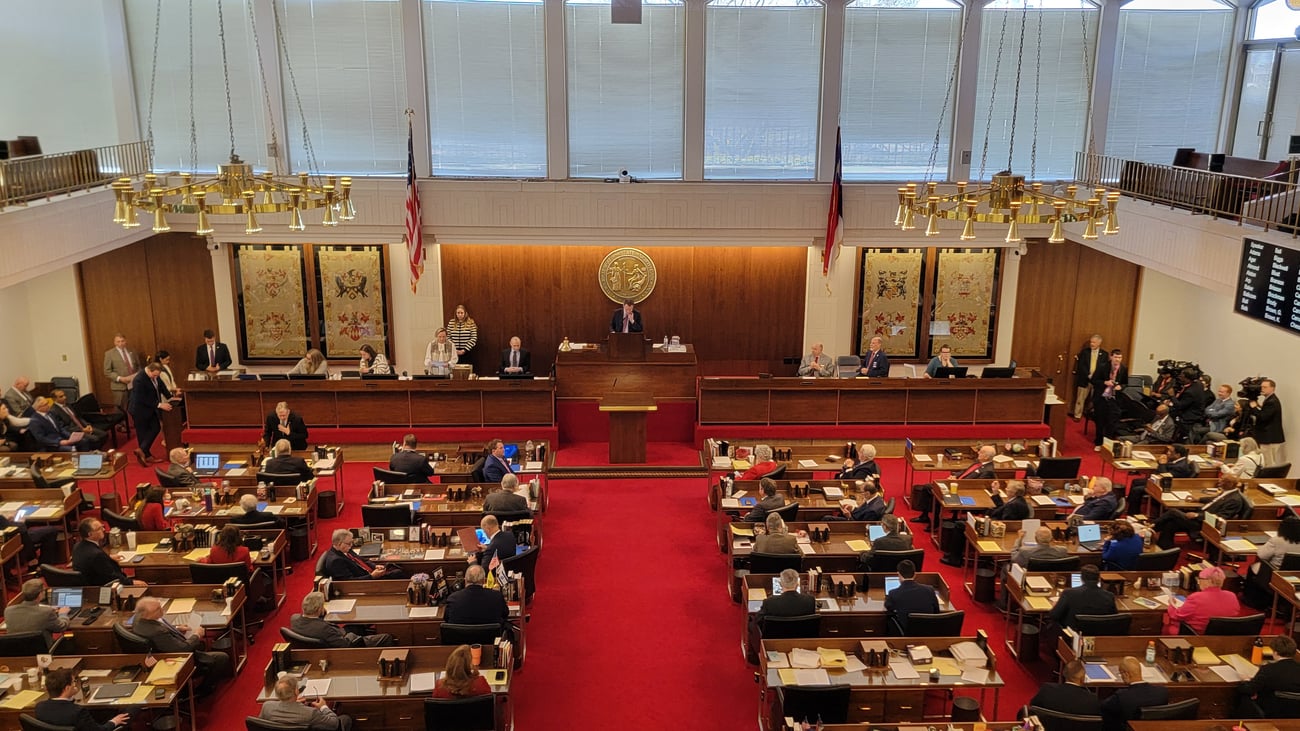
RALEIGH, N.C. (CN) — North Carolina lawmakers sent the governor a budget Thursday, after a frustrating process that has dragged on for over a year.
The state, which has biennial budgets, normally passes them in odd years. However, 2025 came and went without a compromise on the 2025-26 budget between the two Republican-controlled chambers after failed attempts to approve additional budget funds in 2024.
The last time the state passed a budget was in 2023, and Democrats — largely left out of the drafting process — have condemned the majority party for taking more than 1,000 days to secure a new fiscal plan.
Nevertheless, the budget was sent to Democratic Governor Josh Stein Thursday after swiftly moving through the state’s General Assembly. The final draft of the bill was given to lawmakers Tuesday morning, and votes began Wednesday on the 634-page bill.
It makes changes to North Carolina’s program awarding grants from interest on lawyers’ trust accounts, which helps to provide legal aid for low income residents. It diverts funding from legal aid grants for a year, instead redirecting up to $15 million to criminal indigent services.
The grants had previously been frozen for a year by a public safety bill passed in 2025, which has already caused significant shortfalls for civil legal aid programs and nonprofit legal organizations, said Peter Bolac, the executive director of the North Carolina State Bar. A reduction in funds for civil legal services may increase administrative burdens on the court system, Bolac said.
Leadership for both the state bar and its philanthropic program North Carolina Interest on Lawyers’ Trust Accounts has voiced opposition to the provision.
“This loss of funding will prove devastating to the tens of thousands of low-income North Carolinians facing legal concerns that threaten their housing stability, income, access to health care and benefits, and safety from domestic violence and human trafficking,” Bolac said in a statement.
Legal Aid of North Carolina, a nonprofit firm that provides free legal assistance, closed nine offices after last year’s grant funding freeze, which caused a $6 million budget deficit. The state bar reported reductions in staff and services in grant recipients are expected to begin immediately.
“These numbers translate to thousands of North Carolinians — families, seniors, veterans, children, people with disabilities — without access to legal aid to secure and protect their fundamental needs such as housing, health care, employment and safety from violence in 2026,” said Mary Irvine, executive director for the trust account program. “That’s a significant step backward in the journey toward fulfilling America’s promise of ‘justice for all.’”
If passed into law, North Carolina will be the only state in the nation to use interest on attorneys’ trust accounts to fund criminal defense instead of civil legal aid.
The consequences of freezing these funds will be real and severe, said Democratic state Representative Laura Budd, as the funds help to benefit victims of scams and domestic violence.
“We cannot sit here and say that we give a damn about affordable housing, homelessness, veterans, victims of domestic violence, and the list goes on and on, while we actively destroy the very system that helps provide the support and the resources for them, so that they can be their very best,” she said in advance of votes on Wednesday.
If passed, the budget would also prevent grants from being awarded to any entity that provides representation, assistance or any advocacy related to federal immigration law, including visa, asylum and naturalization applications. Grants could also not be awarded to law firms or legal entities that provide representation or services related to surgical gender transition procedures, or puberty-blocking drugs or hormones for minors.
Grants from the fund are also limited to firms that do not send out any communication encouraging the public to contact public officials in response to proposed legislation, unless they have to advocate for their own funding. The bill also prevents prospective grant recipients from participating in marches, rallies, fundraising drives and any lobbying campaigns to influence legislation.
Speaker of the House Destin Hall said Republicans felt the money was being granted to groups that “crossed the line” into politics.
“It’s a better use of the money at the end of the day,” he said, to give the money to criminal defense.
The grant program has been in place since 1983, established by the state bar and the North Carolina Supreme Court. It has awarded over $134 million to organizations that provide legal aid to indigent individuals, families and children.
The $34 million budget looks forward to the 2026-27 fiscal years, rather than backdating funds for 2025.
It also earmarks over $700 million in Hurricane Helene relief, which decimated mountainous western North Carolina in 2024, causing over $50 billion in damages. The funds will help match needs for FEMA reimbursements and supply grants to local governments, fire departments and rescue squads. Funds will also go to rebuilding privately owned roads and bridges, supporting wildfire preparedness — as the hard-hit area has struggled with a drastic increase in wildfires, compounded by hurricane-felled trees — and boosting tourism in the area.
It also resolves a Medicaid funding shortfall, appropriating more than a billion dollars. The Republican state auditor, who has been emboldened with new responsibilities and privileges since elected in 2024, will receive $2.5 million to investigate waste and abuse in Medicaid. More than $9 million will also go to maintain SNAP in the state, after Trump increased states’ percentage contribution for the food assistance program last summer.
The budget never had a public hearing and was introduced and passed within a week after months of stalled compromises between the Republican leaders in the state House and Senate.
It will now go to Stein’s desk. The governor has not indicated if he plans to sign the budget, but has sent several proposed fiscal plans to the General Assembly over the past year, pushing them to pass a comprehensive plan.
 Follow @SKHaulenbeek
 Follow @shaulenbeek.bsky.social
Subscribe to our free newsletters
Our weekly newsletter Closing Arguments offers the latest about ongoing trials, major litigation and rulings in courthouses around the U.S. and the world, while the monthly Under the Lights dishes the legal dirt from Hollywood, sports, Big Tech and the arts.