
 Search Articles


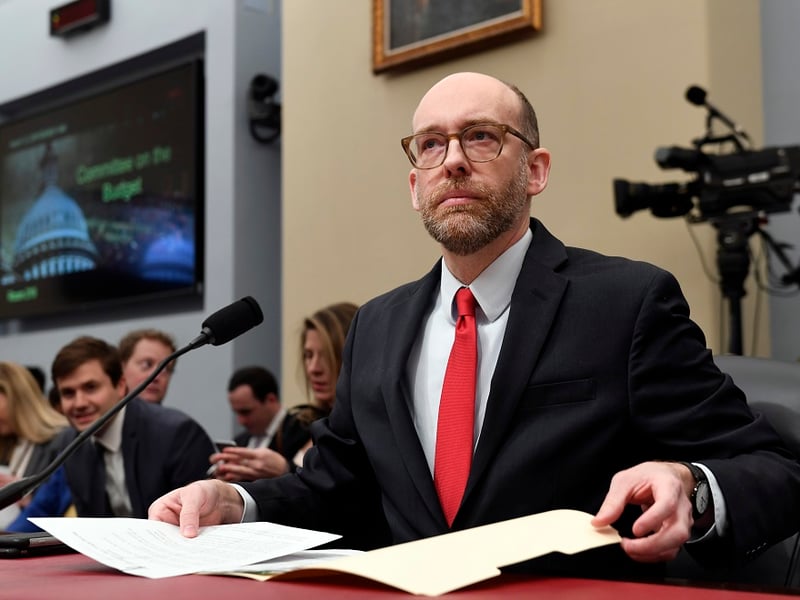
WASHINGTON (CN) — A federal judge on Thursday expressed doubt that the White House’s Office of Management and Budget’s attempt to freeze up to $3 trillion in federal funding was within the agency’s constitutional authority.
In a memo leaked on Jan. 27, former Acting Office of Management and Budget Director Matthew Vaeth directed federal agencies to pause activities that might implicate President Donald Trump’s executive orders related to foreign aid, nongovernmental organizations, DEI policies, “woke gender ideology” and the Green New Deal. The agency rescinded the memo on Jan. 29 after U.S. District Judge Loren AliKhan issued an administrative stay. The Joe Biden appointee then issued a temporary restraining order on Feb. 3 to maintain the status quo.
Thursday’s hearing centered on a nonprofit coalition’s motion for a preliminary injunction to bar any additional blanket funding freezes.
Justice Department attorney Daniel Schwei said any continued relief was unnecessary because the directive was no longer in place, and argued that the office was merely following the example of former President Joe Biden when he canceled funding for construction of a wall on the Southern border.
“If it’s irrational for this administration to pause funding related to Green New Deal, then it was also irrational to pause border wall funding,” Schwei said.
AliKhan pointed out that Biden acted via presidential proclamation while Trump’s funding freeze came from the Office of Management and Budget. She said Scwhei’s comparison could be true only if the memo, or any forthcoming one, cited specific executive orders, rather than issuing an across-the-board freeze to align with all of Trump’s orders.
Kevin Friedl of Democracy Forward represented the National Council of Nonprofits, American Public Health Association, Main Street Alliance and LGBTQ care group SAGE. He argued that a preliminary injunction was necessary to continue the temporary restraining order’s effects.
While some nonprofits had difficulty unfreezing their funds, they’ve generally been successful in doing so, Friedl said.
The attorney warned that without the court’s additional intervention, the Office of Management and Budget would quickly return to its “freeze first, ask questions later” method. That would force organizations to “bring themselves in line” with Trump’s ideology, a violation of their First Amendment rights, according to Friedl.
In the now-rescinded memo Vaeth told agencies to submit reports by Feb. 10 detailing each program affected by the pause and not to issue any new grants, disburse federal funds under active grants, or take any “relevant agency actions” that may be implicated by Trump’s executive orders.
“The use of federal resources to advance Marxist equity, transgenderism, and Green New Deal social engineering policies is a waste of taxpayer dollars that does not improve the day-to-day lives of those we serve,” Vaeth wrote.
Friedl suggested that the wide-reaching effects of the funding freeze could implicate the Supreme Court’s major questions doctrine.
The made-up doctrine is a principle of statutory interpretation the high court has recently adopted, which says Congress does not grant executive agencies the authority to decide issues of major political and economic significance.
AliKhan seemed receptive to the argument.
“Do you think Congress gave such authority to shut off trillions of dollars on its own?” AliKhan asked Schwei.
Schwei said the major questions doctrine should not apply and the Office of Management and Budget had the authority to issue its directives. Further, he said a preliminary injunction would have far-reaching consequences across the executive branch.
“It would be a remarkable assertion to say OMB can’t help agencies manage their budgets,” Schwei said.
AliKhan also pushed Schwei on the request for bond if she issued an injunction, which Schwei wrote in an opposition brief was necessary to compensate the Office of Management and Budget and its now-director Russell Vought for “material damage” caused by the injunction.
Rarely had AliKhan heard of a case in which the executive branch sought damages, she said, and asked Schwei for specifics, which he did not provide. However, Scwhei said the dollar amount would relate to the breadth of AliKhan’s order.
The judge did not indicate when she would issue a decision.
In Rhode Island, U.S. District Judge Jack McConnell scheduled a preliminary injunction hearing for Friday in a parallel case brought by 23 state attorneys general also challenging the Office of Management and Budget’s late January funding freeze.
 Follow @Ryan_Knappy
Subscribe to our free newsletters
Our weekly newsletter Closing Arguments offers the latest about ongoing trials, major litigation and rulings in courthouses around the U.S. and the world, while the monthly Under the Lights dishes the legal dirt from Hollywood, sports, Big Tech and the arts.