
 Search Articles


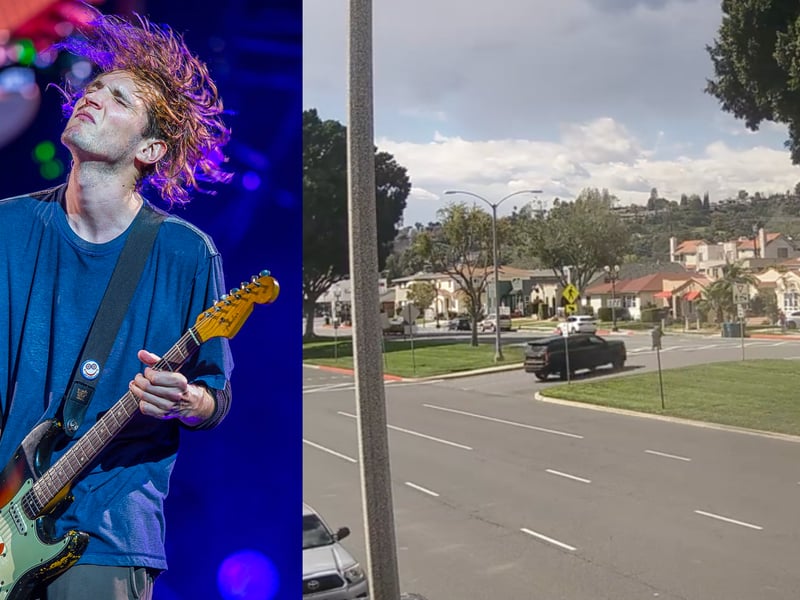
LOS ANGELES (CN) — The family of a man who was hit and killed by a car driven by guitarist Josh Klinghoffer can’t seek punitive damages in their lawsuit against him, after a Superior Court judge ruled Wednesday to strike major portions of their complaint.
A key part of his ruling: Texting and driving is not “despicable conduct,” which is what a plaintiff must show to claim punitive damages.
“This was a tragic event with heartbreaking consequences,” Los Angeles County Superior Court Judge Ian Fusselman wrote in his tentative ruling, later adopted as final. “At most, these allegations support a finding of negligence or gross negligence or perhaps even recklessness. However… recklessness alone is insufficient to support a punitive damages claim. Plaintiff must also allege ultimate facts that evidence ‘despicable’ conduct ‘with a willful and conscious disregard of the rights or safety of others.’”
The family has said Klinghoffer was using his cellphone to send or receive text messages while he was driving his Black GMC Yukon when he hit and killed 47-year-old Israel Sanchez, who was crossing the street at a painted crosswalk. Klinghoffer has admitted to driving the car and to causing Sanchez’s death, but not to being on his phone at the time of the crash. He has been charged with vehicular manslaughter without gross negligence, a misdemeanor, and has pleaded not guilty.
“After Josh struck this pedestrian in the intersection, he immediately pulled over, stopped the car, called 911 and waited until police and the ambulance arrived,” Klinghoffer’s attorney told the news site TMZ in July. “This was purely a tragic accident.”
In their lawsuit, filed July 2024, Sanchez’s family said that Klinghoffer “was using a device mere seconds before he crashed into the decedent,” and that he had “10 seconds of time to see a pedestrian lawfully using a marked crosswalk in a residential neighborhood and adjust his speed or course accordingly, had defendant merely been attentive to his surroundings.” Fusselman already tossed sections of the suit this past October, though he gave the family the opportunity to refile an amended version of their lawsuit.
The new complaint included the assertion that Klinghoffer had a history of distracted driving, and included as an example the claim that Klinghoffer once gave a 32-minute radio interview using his phone while driving in 2021. Klinghoffer, the family says, “was more focused on his personal business than on acting as a responsible driver.”
In his most recent motion to strike portions of the complaint, Klinghoffer said that claim and many others were “irrelevant and immaterial,” and were conclusions rather than factual assertions.
Fusselman noted that while texting and driving is illegal in California, the punishment for it is a mere $20 for the first offense. The law, Fusselman wrote, “does not suggest in any way that the Legislature deemed using a mobile device while driving, by itself, to be ‘despicable’ conduct.”
Fusselman’s ruling does not allow the Sanchez family to amend their complaint. While their complaint is still live, the possible award they could obtain from Klinghoffer is now fairly limited. And with criminal proceedings ongoing, Kilnghoffer also seeks to stay the civil case against him, placing it in further peril.
Lawyers for both parties, who appeared for Wednesday’s hearing remotely, did not respond to phone calls or emails requesting a comment on the ruling.
 Follow @hillelaron
Subscribe to our free newsletters
Our weekly newsletter Closing Arguments offers the latest about ongoing trials, major litigation and rulings in courthouses around the U.S. and the world, while the monthly Under the Lights dishes the legal dirt from Hollywood, sports, Big Tech and the arts.