
 Search Articles


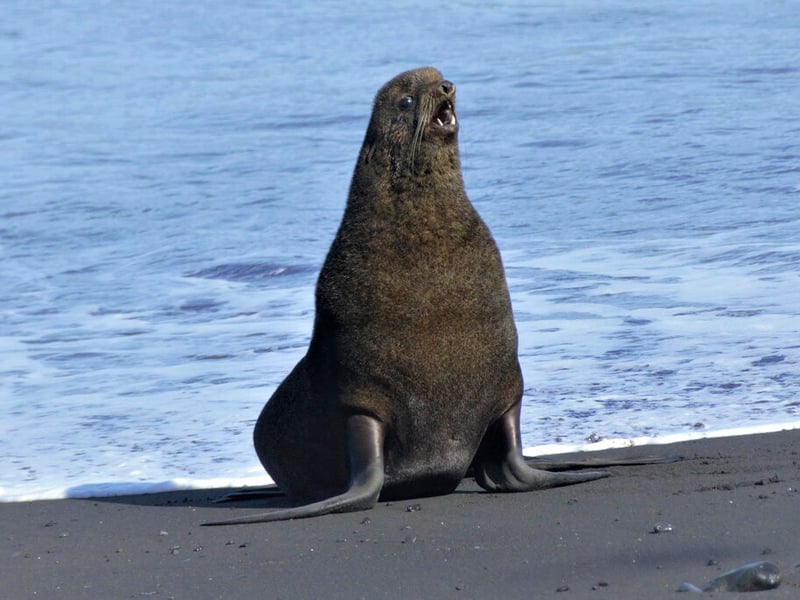
HONOLULU (CN) — A Ninth Circuit panel spent much of a Thursday hearing debating whether they should even be hearing a case over if the federal government overstepped its authority in designating more than 160 million acres of Alaskan waters as critical habitat for threatened Arctic seals.
The three-judge panel appeared divided on a threshold jurisdictional question: whether a lower court’s remand order was final enough to allow an immediate appeal, or whether the parties must wait for the National Marine Fisheries Service to complete new habitat designations before challenging them in court.
“We’re in a situation right where last time they needed to have a court order to actually do this,” U.S. Circuit Judges Michelle Friedland said. “I mean, will this never happen?”
The case stems from a 2024 federal court ruling that sided with Alaska in its challenge to the fisheries service’s 2022 critical habitat designations for ringed and bearded seals. U.S. District Judge Sharon Gleason found then that the agency violated the Endangered Species Act by failing to explain why such vast areas were “necessary” or “indispensable” to the seals’ survival and recovery.
Attorney Kristen Monsell, representing the Center for Biological Diversity — which brought the appeal as an intervenor to support the habitat designations — argued the appeal court does have jurisdiction because the federal court imposed new substantive requirements on the agency.
“The district court’s order means that a future critical habitat designation must apply the standard for unoccupied critical habitat in designating occupied critical habitat,” she said.
Friedland, a Barack Obama appointee, questioned why the environmental group couldn’t simply wait and appeal later if the agency issues a narrower designation.
Monsell responded that waiting five or 10 years to challenge the same legal interpretations would be inefficient and would prevent the court from addressing fundamental statutory questions that affect protections for many species.
Gleason’s ruling left the seals without designated critical habitat protections while the agency develops new rules.
Attorney Jacob Ecker, arguing for the federal government, urged dismissal for lack of jurisdiction, citing the court’s precedent in Alsea Valley Alliance v. Department of Commerce.
“The district court’s remand order is a general one that allows the agency to potentially reach the same outcome,” he told the panel.
But the judges pressed Ecker on whether the government could maintain that position.
“I have a question about how to read the district court’s remand order,” Friedland said. “It seems possible to read it as actually precluding the service from designating the same territory again on remand.”
Senior U.S. Circuit Judge M. Margaret McKeown, a Bill Clinton appointee, raised concerns about whether the government’s current interpretation of the remand order would bind the agency.
“Can the service go back and say you must do this?” she asked. “You cannot designate nearly all of the seals’ habitat.”
Ecker acknowledged he couldn’t guarantee the agency’s approach.
“I can’t provide a guarantee on that front, right? And I think that’s part of why Alsea Valley supports dismissal, because I can’t predict the agency’s outcome at this point,” he said.
Attorney Norman James, arguing for Alaska, sidestepped the jurisdictional debate but emphasized the lower court’s concerns about the designation’s size.
“We don’t think Judge Gleason was trying to create new requirements and impose them on the agency. We think what the judge said was that these are unusually large. That doesn’t mean that they’re per se invalid, but you have to provide a credible explanation for why you’re designating such an enormous area.”
The fisheries service listed both the Arctic ringed seals and the Beringia distinct population segment of bearded seals as threatened under the Endangered Species Act in 2012. The designations covered enormous swaths of water spanning from the Alaska shoreline to the international dateline in much of the Bering Sea, as well as the shelf of the Beaufort Sea and all of the Chukchi Sea.
Both seal species depend on sea ice for breeding, molting and resting. Scientists have documented significant declines in Arctic sea ice extent and thickness in recent decades due to climate change.
Alaska argues the designations impose burdensome requirements on oil and gas development and other commercial activities without clear conservation benefits, particularly since the seals already receive protections under their threatened species listing and the Marine Mammal Protection Act.
The panel — rounded out by U.S. Circuit Judge Jennifer Sung, also an Obama appointee — did not indicate when they would rule.
 Follow @JeremyYurow
Subscribe to our free newsletters
Our weekly newsletter Closing Arguments offers the latest about ongoing trials, major litigation and rulings in courthouses around the U.S. and the world, while the monthly Under the Lights dishes the legal dirt from Hollywood, sports, Big Tech and the arts.