
 Search Articles


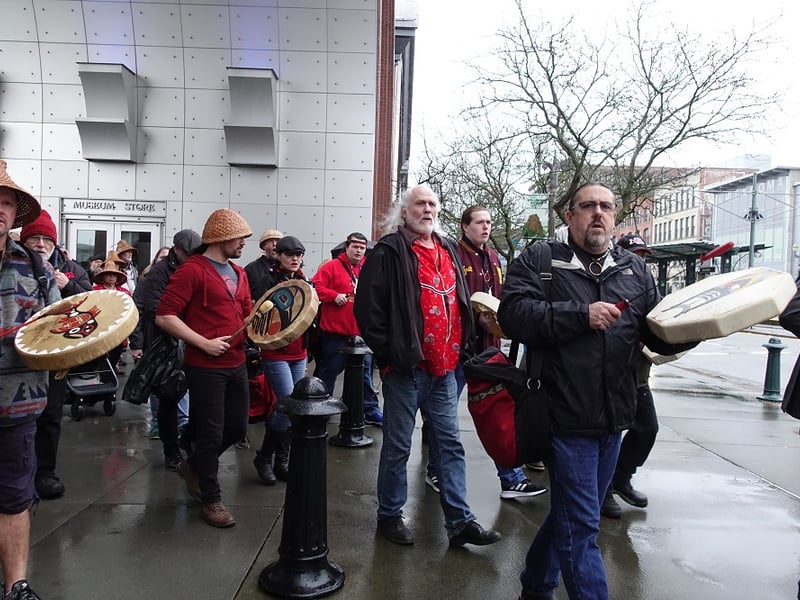
(CN) — A Ninth Circuit panel of judges on Tuesday heard an appeal from the Chinook Indian Nation in Washington state asking them to reconsider a lower court ruling declining federal recognition as an Indian tribe.
The tribe, which has been fighting the government on the issue for decades, claims that a lower court incorrectly ruled it didn’t have the power to recognize an Indian tribe, explaining that courts must defer to Congress or the executive branch on such matters.
“The question before the court on this appeal is whether a federal court has jurisdiction to declare them a recognized tribe,” attorney James Coon, who represented the Chinook Indian Nation, told the three-judge panel.
The Chinook sued the Secretary and Department of Interior for federal recognition as an Indian tribe in 2017, but a lower court dismissed the claims in May 2024, stating that such recognition is more a political question than one for the courts. Now, the Chinook are asking the Ninth Circuit to reverse the decision and send it back to the lower court for further proceedings.
Although most Indian tribes recognized by the federal government today received their status through treaties, the Chinook argued in the courtroom that the Federally Recognized Indian Tribe List Act of 1994, or the “List Act,” also allows for recognition “by decision of a United States court.”
This, they argued, provides them the right to sue the government for that recognition and all the benefits that come with it.
It was a bold gambit. The judges acknowledged that while the argument was limited in its scope, it required them to exercise a significant amount of their judicial authority.
“There is no court case that has interpreted the List Act language in the way that you’re asking us to interpret it?” asked Johnnie B. Rawlinson, a Bill Clinton appointee.
“Not that particular finding,” Coon said.
U.S. Circuit Judge Patrick J. Bumatay, a Donald Trump appointee, called it an “odd way” to read the List Act and pressed the Chinook for further textual analysis, to which the tribe simply responded that the text of the law was sufficient enough.
Bumatay said that the argument would give the panel the jurisdiction to interpret the act, but it could still backfire on the plaintiffs.
“So if we do, and we just disagree with you that the List Act does not provide a cause of action, then you lose, correct?” Bumatay clarified.
“That’s correct,” Coon said.
The Department of the Interior argued that the case was correctly dismissed by the lower court for lack of jurisdiction and urged the panel not to overstep its authority.
“Issues of federal tribal recognition are quintessential political questions that are committed to the executive and the legislative branches,” attorney Ezekiel Peterson, who represented the department, told the panel.
The Department of the Interior also opposed the Chinook’s position that the List Act provided a right to sue for federal recognition, although the panel seemed skeptical that the matter was as settled as the government claimed.
“Right, but he’s making a very narrow claim that the List Act provides a cause of action. We may agree or disagree, but that’s not something as to a political question or juris doctrine, right?” Bumatay asked. “That’s something that federal courts do all the time — interpret a federal statute.”
The Chinook may be the most recognized tribe in the American West that is not federally recognized.
Despite thousands of years of history that includes receiving Lewis and Clark when they arrived at the Pacific and many convoluted legal entanglements with the United States, the government has never formally recognized the Chinook Indian Nation. As a result, this means it doesn’t have a reservation or access to health care under Indian Health Services.
“We’ve inherited every problem that exists in Indian country: unemployment, drug and alcohol use, but we have no means of dealing with it like every other reservation does,” Tribal Chairman Tony Johnson told Courthouse News in a 2015 interview.
There is no official Chinook territory — at least not according to the federal government, which refuses to recognize the 3,000-member nation as a sovereign entity, including in legal battles stretching back 164 years.
The Chinook have escalated their fight for federal recognition over the last few decades, even briefly gaining the elusive status in 2001 before it was revoked by the George W. Bush administration a year later.
After its case was dismissed in May 2024, the Chinook appealed the decision to the Ninth Circuit and filed its opening brief in September 2024.
Attorneys for both sides did not immediately respond to a request for comment.
The panel, which also included Trump-appointed U.S. Circuit Judge Daniel Bress, did not indicate when it would issue a ruling.
Oral arguments were heard at the William K. Nakamura Courthouse in Seattle, Washington.
This case was originally filed in the Western District of Washington.
Subscribe to our free newsletters
Our weekly newsletter Closing Arguments offers the latest about ongoing trials, major litigation and rulings in courthouses around the U.S. and the world, while the monthly Under the Lights dishes the legal dirt from Hollywood, sports, Big Tech and the arts.