
 Search Articles


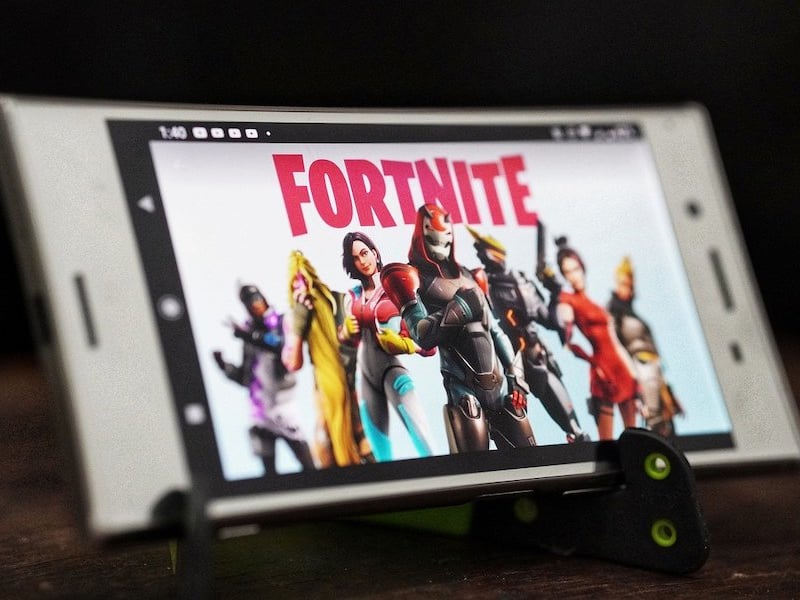
SAN FRANCISCO (CN) — A Ninth Circuit judge describing Fortnite is something you must read to believe.
A Ninth Circuit panel of judges on Thursday upheld a 2023 trial decision and court order in favor of Epic Games over its antitrust lawsuit against Google, affirming that Google Play app store and its billing services constituted an illegal monopoly.
In its 67-page order, the panel held that the injunction levied against Google was supported by both the jury’s verdict and the lower court’s findings.
“These remedies and their scope are supported by the record and the nature of the market, and we uphold them along with the liability verdict and the entire injunction.” U.S. Circuit Judge Mary Margaret McKeown, a Bill Clinton appointee, wrote for the panel.
The panel said its decision couldn’t be further from the chaotic, fast-paced gameplay of Epic’s star game, Fortnite.
“In the world of adrenaline-fueled survival that epitomizes the video game Fortnite, winners are decided in blazes of destruction and glory,” McKeown said.
“By contrast, the outcome of this case — centered on Fortnite’s developer, Epic Games, and the Google Android platform — turns on longstanding principles of trial procedure, antitrust and injunctive remedies.”
The panel said Google “misses the mark” by challenging Epic Games’ standing to request nationwide injunctive relief, criticizing it as an attempt to cash in on the current controversy surrounding nationwide injunctions recently addressed by the Supreme Court.
“Google’s framing departs from the case law, and the scope of a permanent injunction following a finding of antitrust liability is hardly comparable to that of a preliminary injunction on a constitutional question,” McKeown said.
The panel also rejected Google’s claims that a decision in Epic Games’ lawsuit against Apple should have prevented Epic from defining the market differently in this case, saying the issues weren’t identical, nor was it decided in the Apple case.
“The difference in the market-definition issues is the death knell for Google’s argument,” McKeown said.
The panel ultimately confirmed the lower court did not abuse its discretion in proceeding with a single jury trial in 2023 on Epic’s equitable claims and Google’s damages counterclaims. Nor, it said, did the district court commit any errors in the way it gave jury instructions at trial.
Epic Games CEO Tim Sweeney celebrated the panel’s decision on X after its announcement.
“Total victory in the Epic v Google appeal!” Sweeney tweeted.
Thanks to the decision, the CEO said the Epic Games Store for Android will be coming to the Google Play Store soon, although he didn’t provide an exact date.
Meanwhile, Google said the decision will “significantly harm user safety, limit choice, and undermine the innovation that has always been central to the Android ecosystem.”
“Our top priority remains protecting our users, developers and partners, and maintaining a secure platform as we continue our appeal,” Lee-Anne Mulholland, Google’s vice president of regulatory affairs, said in a statement.
Epic’s lawsuit was filed in response to Google’s removal of Epic’s Fortnite video game from the Google Play Store for noncompliance with its terms of service.
Epic Games sued the tech giant in 2020 after Google removed Epic’s hit game Fortnite from the Google Play Store after Epic coded the game to bypass Google’s billing services for in-game purchases. Google said this violated an agreement Epic had with Google to use its billing services for in-app purchases.
During the trial in the Northern District of California, Epic’s lawyers admitted the company broke those rules on purpose to prove a point and inspire others to defy Google’s rules.
In the end, the jury found that Google violated both federal and California antitrust laws by willfully acquiring or maintaining monopoly power in the app market. It also found that Google established a coercive tie between its app store and its billing services, forcing developers to use Google billing if they wanted their apps to be on Google Play.
In October 2024, the lower court entered a three-year injunction prohibiting Google from providing certain benefits to app distributors, developers, original equipment manufacturers or carriers in exchange for favoring the Play Store. It also required that Google allow developers with apps on the Play Store to provide users with access to alternative app billing, pricing and distribution channels.
Google appealed both the liability verdict and the injunction in January 2025. Oral arguments before a Ninth Circuit panel of judges took place Feb. 3.
The panel of judges was rounded out by U.S. Circuit Judges Danielle J. Forrest, a Donald Trump appointee, and Gabriel P. Sanchez, a Joe Biden appointee.
Google Play is the largest app store in the world by number of downloads and apps, and it accounts for roughly half of all app downloads in the world.
Subscribe to our free newsletters
Our weekly newsletter Closing Arguments offers the latest about ongoing trials, major litigation and rulings in courthouses around the U.S. and the world, while the monthly Under the Lights dishes the legal dirt from Hollywood, sports, Big Tech and the arts.