
 Search Articles


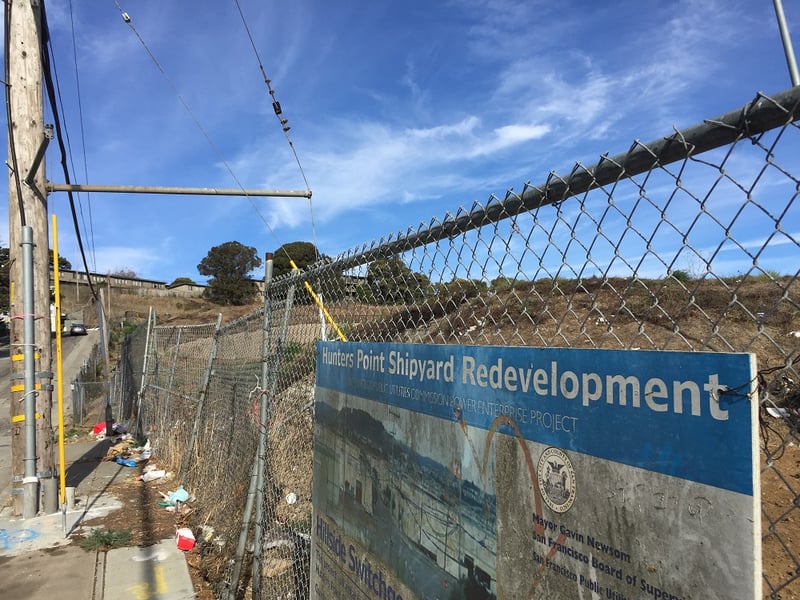
SAN FRANCISCO (CN) — A Ninth Circuit panel affirmed dismissal of a Federal Tort Claims Act action brought by a class of current and former San Francisco Police Department employees who claim the United States misled the department about the safety of a contaminated former Naval shipyard.
San Francisco Police Department officers claim they were exposed to radioactive contamination while working at the Hunters Point Naval Shipyard, which the department leased from the government. They sued in 2020, claiming the Navy did not do enough to monitor a contractor’s cleanup of the shipyard, which had operated as a top-secret radiological test site from 1946 to 1969.
That contractor, Tetra Tech EC, was paid more than $250 million by the U.S. Navy from 2006 to 2012 to clean up the site. Whistleblowers came forward with accusations the contractor had falsified reports during that period, and the U.S. Environmental Protection Agency released a review finding that 90% to 97% of soil samples in two areas of the site were potentially compromised or purposefully falsified. Land developers and homeowners sued Tetra Tech EC, with a $6.3 million settlement in 2021 resolving some of the claims. Neither Tetra Tech EC nor the city and county of San Francisco are parties in the officers’ action
A federal judge dismissed the officers’ lawsuit in 2023, finding the government had immunity because the officers’ claims were based on a misrepresentation by a government contractor. The officers told a Ninth Circuit panel in May that the misrepresentation exception should not apply because the officers had not relied on misrepresentations but rather the transfer of the Hunters Point property from the Navy to the city of San Francisco, and what happened afterwards.
A three-judge Ninth Circuit panel agreed with the dismissal, ruling Tuesday morning that the misrepresentation exception applied.
“We hold that the FTCA’s misrepresentation exception to the sovereign immunity waiver applies because it precludes any claims ‘arising out of’ a misrepresentation. And in our case, the plaintiffs’ claims ‘arise’ out of the Navy’s alleged misrepresentations, even if the Navy did not directly make them to the plaintiffs," U.S. Circuit Judge Kenneth Lee, a Donald Trump appointee, wrote for the panel. “Our precedent — which directs courts to look at the ‘gravamen’ of the complaint —confirms our reading of the FTCA’s misrepresentation exception.”
The panel also rejected the officers’ argument that the Comprehensive Environmental Response, Compensation, and Liability Act (CERCLA) implicitly limited or suspended the misrepresentation exception. The act gives the federal government the authority to respond to hazardous substance releases into the environment. Its goals are to protect human health and the environment, make responsible parties pay for cleanups and return contaminated sites to productive use.
“While CERCLA imposes a duty of disclosure about environmental health hazards on federally owned property, neither the statutory text nor canons of statutory construction suggest that Congress intended CERCLA to override the FTCA’s misrepresentation exception,” Lee wrote. “We thus affirm the district court’s dismissal of the lawsuit for lack of subject matter jurisdiction.”
The parties’ attorneys did not reply to requests for comment by press time.
“We do not diminish the gravity of Navy’s supposed negligence in failing to disclose the environmental health hazards at the shipyard. But we are not at liberty to ‘ignore the plain words Congress has used in limiting the scope of the government’s tort liability,’” Lee wrote.
Subscribe to our free newsletters
Our weekly newsletter Closing Arguments offers the latest about ongoing trials, major litigation and rulings in courthouses around the U.S. and the world, while the monthly Under the Lights dishes the legal dirt from Hollywood, sports, Big Tech and the arts.