
 Search Articles


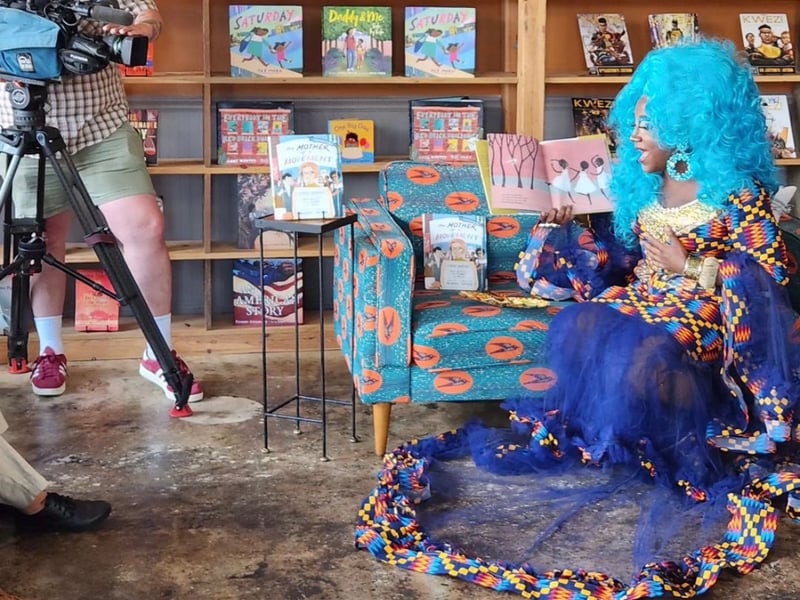
(CN) — An appeals panel upheld a decision on Friday that blocked the Montana attorney general and superintendent of public education from enforcing a ban on drag story hours and sexually oriented performances.
The ruling stems from Montana House Bill 359, signed by Governor Greg Gianforte in 2023, that restricts drag performers from reading books to children. The bill also banned minors from attending what it described as sexually explicit shows.
A three-judge panel of the Ninth Circuit, in a 97-page opinion authored by U.S. Circuit Judge Jennifer Sung, said the legislation’s drag story hour restrictions are content-based limits on “purely expressive activity.”
“Reading a book out loud is purely expressive activity,” the Joe Biden appointee wrote. “Performing or expressing a particular persona is indistinguishable from performing a character in a play or film or competing in a beauty pageant, all of which is undoubtedly purely expressive activity. Performing a male or feminine persona that expresses a view about masculinity or femininity is also expressive activity. Applying these precedents, we have no trouble concluding that drag story hours, as defined by HB 359, are purely expressive activity, not conduct.”
U.S. District Judge Brian Morris, a Barack Obama appointee, had previously ruled for the plaintiffs, a group of businesses, nonprofits and performers who say the bill targets their First Amendment rights, and blocked Montana from enforcing it.
The plaintiffs argued the bill is a content-based restriction on protected speech that must be subject to a high level of scrutiny. The government countered that the bill regulates performers’ conduct, which they say is not inherently expressive speech.
“Montanans believe in freedom, privacy and independent thinking,” Upper Seven Law Director Rylee Sommers-Flanagan, who represented the plaintiffs, said in a statement. “We will not stand for government interference in the exercise of free speech. We will always stand with and for the rule of law, it’s equal application to all people, and with costumes, drag and joy.
Additionally, the panel found that the government’s restrictions were not narrowly tailored to the government’s interest.
“The readings, personas, and costumes restricted by the drag-story-hour provision have no apparent relationship to the historical understanding of ‘indecent speech,’” Sung wrote. “Defendants provide no evidence of a historic understanding that flamboyant or parodic expressions of male or female personas, or glamorous or exaggerated costumes and makeup, are ‘indecent’ generally, or for children specifically.”
Citing Brown v. Entertainment Merchants Association, where the Supreme Court found no longstanding tradition of restricting minors’ access to violent video games, the panel said Montana likewise could not restrict drag performances simply because lawmakers considered them inappropriate for children.
“As in Brown, defendants fail to show that the flamboyant or parodic expression of a gendered persona falls within the historical ambit of speech that may be restricted with respect to minors,” Sung wrote.
Additionally, Sung wrote that the plaintiffs had legal standing to challenge the law because they faced credible threats of penalties and fines and had already begun altering their activities to avoid them.
In the panel’s ruling, Sung wrote that the plaintiff Imperial Sovereign Court of the State of Montana, a drag performance and LGBTQ advocacy group, has self-censored by limiting advertisements, restricting costumes and modifying performances. She also noted that event organizers have canceled shows, put them on indefinite hold or required changes to performances.
The Montana Attorney General’s Office had strong words about Friday’s opinion.
“We are disappointed the court ruled in favor of leftists who would rather prioritize sexual grooming in schools and libraries than protect children, which is exactly what HB 359 intended to do,” Amanda Braynack, a spokesperson for Montana Attorney General Austin Knudsen, told Courthouse News. “At this time, we are still reviewing the opinion and determining our options.”
H.B. 359 imposes steep fines for violations. Owners, managers and employees involved in drag performances could face fines of $1,000 to $10,000 and potentially lose their business licenses. Educators and librarians could have their teaching or administrative certificates permanently revoked. The bill also allows parents of minors who attended a show to sue anyone who knowingly performed in or promoted a show for up to 10 years after the event.
Sung was joined on the panel by U.S. Circuit Judge Danielle Forrest, a Donald Trump appointee, and U.S. Circuit Judge Johnnie Rawlinson, a Bill Clinton appointee who wrote a concurring opinion.
Subscribe to our free newsletters
Our weekly newsletter Closing Arguments offers the latest about ongoing trials, major litigation and rulings in courthouses around the U.S. and the world, while the monthly Under the Lights dishes the legal dirt from Hollywood, sports, Big Tech and the arts.