
 Search Articles


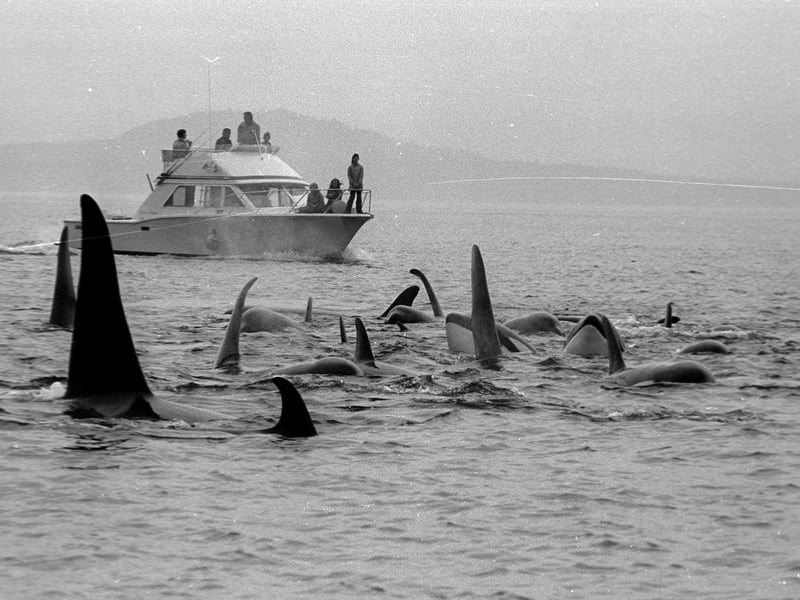
(CN) — The Ninth Circuit Court of Appeals is weighing how effective its opinion will be in a lawsuit over how Chinook salmon fishing affects Southern Resident killer whales — and judges on Thursday wondered whether the effort would be rendered moot by a pending government agency action.
The Wild Fish Conservancy sued the National Marine Fisheries Service in 2020, accusing the agency of violating the Endangered Species Act and the National Environmental Policy Act in its 2019 Southeast Alaska Biological Opinion and incidental take statement by bypassing public notice and opportunity to comment on the actions.
Alaska and the Alaska Trollers Association, a representative of the commercial fishing industry in the state, intervened as codefendants.
Chinook salmon are the primary food source for Southern Resident killer whales, which were placed on the endangered species list in 2005.
U.S. District Judge Richard Jones remanded the biological opinion and vacated the portions of it that authorized commercial harvest of Chinook salmon during winter and summer seasons. The ruling would have prevented Southeast Alaskan trollers from fishing for Chinook salmon, but the Ninth Circuit issued a stay, allowing commercial fisheries to continue harvest while the parties appealed.
To comply with the remand, the National Marine Fisheries Service has been working on a new biological opinion which it expects to be complete by the end of November, leaving the three-judge panel questioning how effective its opinion may be.
“What are we to do about the two twists since the remedial decision?” asked U.S. Circuit Judge Anthony Johnstone, who was appointed by President Joe Biden.
The first twist being the court’s stay on the incidental take statement — the second being the National Marine Fisheries’ commitment to issuing a new biological opinion in a matter of months.
“The government, the service, has represented that within four months time, all this may be moot since we’ll have a new biological opinion that will at least restart any controversy, if not cure the issue,” Johnstone said.
U.S. Circuit Judge Milan Smith Jr., a George W. Bush appointee, agreed that the timeline for the case could be tricky.
“You’re just an eyelash away from a new report that moots the whole thing. What’s the point of us deciding this matter in this short interim period?” Smith asked.
Thekla Hansen-Young, an attorney for the National Marine Fisheries Service, told the court the case is not moot until the agency issues the new biological opinion and said it was likely the Wild Fish Conservancy would find fault with the new opinion when it is issued.
“The same equities will arise,” Hansen-Young said.
The Wild Fish Conservancy expressed doubt the agency would issue the new biological opinion on its projected timeline.
“We do not share the confidence that the government has that new decisions will be out in November. Our preference would be to provide prey to Southern Residents as soon as possible,” Brian Knutsen, attorney for the conservancy, told the panel.
The National Marine Fisheries Service had included a prey increase program in the original biological opinion, which included federal funding for hatchery Chinook production involving the release of hatchery-raised fish.
In its cross-appeal, the conservancy group emphasized its argument that the agency violated federal requirements by relying on “wholly undeveloped mitigation” to authorize large harvests, or takes, of Chinook salmon, and didn’t consider the impact Chinook hatcheries would have on the wild population.
Fish hatcheries are harmful to wild fish populations because hatchery fish are less fit to survive in the wild and pass those genes along when mating with wild fish, reducing the population’s productivity, the conservancy argued.
The National Marine Fisheries Service argued in its own cross-appeal that the lower court overstepped when it vacated the biological opinion. The agency said the impact of shutting down the trolling farms in the state would outweigh the “incremental benefits.” It estimated the decision would cost the industry around $29 million in losses each year and pit fisheries against conservation groups.
The panel gave consideration to the economic impact facing fishing communities in Alaska.
“There is a lot of uncertainty around everything here in terms of, ‘Is it going to help the whales? Is it going to hurt the whales?’” said U.S. Circuit Judge Mark Bennett, who was appointed by Donald Trump. “All we know for sure, I think, is that closing some of the fisheries is absolutely going to cause harm to inhabitants of Alaska and their various subsistence and cultural practices.”
Subscribe to our free newsletters
Our weekly newsletter Closing Arguments offers the latest about ongoing trials, major litigation and rulings in courthouses around the U.S. and the world, while the monthly Under the Lights dishes the legal dirt from Hollywood, sports, Big Tech and the arts.