
 Search Articles


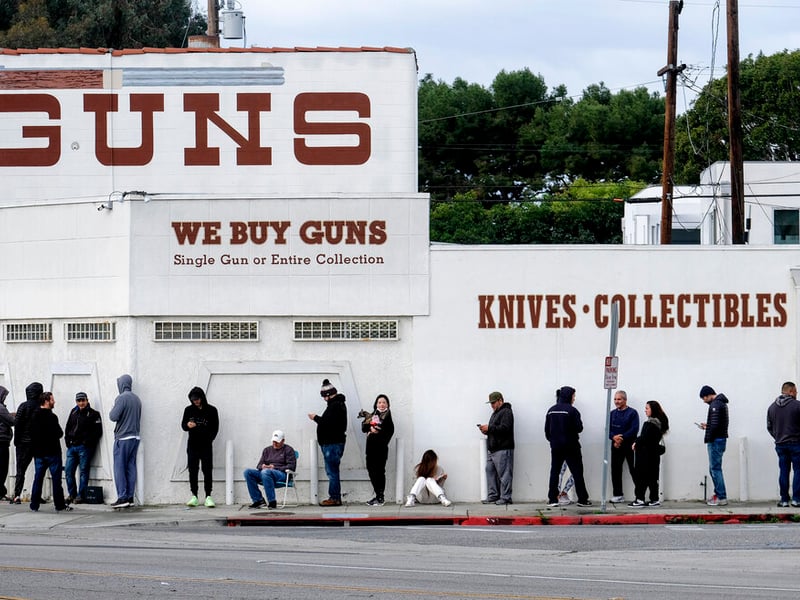
(CN) — A Ninth Circuit panel on Monday questioned the need for continuous audio surveillance of firearm transactions as required by California to aid law enforcement investigations.
Gun dealers and the Second Amendment Foundation are aiming to revive their challenge to a part of California’s penal code that forces licensed firearm dealers to maintain digital audio and visual surveillance on the premises. They claim the statues violate First, Fourth and Fifth Amendment rights, saying the surveillance amounts to “a continuous warrantless search without probable cause.”
“This case is not whether the government may regulate a licensed entity,” appellants’ attorney Anna Barvir told the three-judge panel. “It is about whether the government may require private parties to carry out a suspicionless government surveillance program."
Barvir argued the constant recording of conversations and movements during firearm transactions chilled speech. And U.S. Circuit Judge Kenneth Lee seemed to agree.
“The audio is troubling, because I don’t think you need that information,” said Lee, a Donald Trump appointee. “There is a lot of core political speech … and it will have a chilling effect if they think the government can have a year’s worth of everything you say, you will be deterred from saying things.”
Deputy Attorney General Anne Bellows insisted the audio recordings are necessary to assist government investigations of gun thefts, straw purchases and illegal arms trafficking. She also noted there are “very strict limits on access” to the recordings, and the audio would “have to show an objective circumstance that would lead someone to believe that there could be a harm that resulted from their speech.”
“The Legislature made the judgment that audio would further efforts to fight and deter some of the crimes that are at issue,” Bellows said.
In her rebuttal, Barvir said the requirement to record overextends beyond purchase and business transactions and is only in place to make criminal investigations “more convenient.”
“You can’t have probable cause against a single industry in perpetuity,” she said.
Under California statutes that took effect in 2024, licensed firearm dealers are required to have a digital surveillance system that records all hours of the day and could be subject to inspection. The recordings must show where the firearms are displayed, all points of sale or transfer, all entry and exits points, with a date and time clearly displayed and all recordings must be kept for three years.
While California cannabis dealers are also required to record and keep visual transaction records, gun dealers are additionally required to keep audio recordings.
Bellows said a diminished expectation of privacy is part of the regulatory system of firearm purchases and told the panel that investigations “can sometimes turn on what representations or statements were made” in the recordings.
A pair of Joe Biden appointees, U.S. Circuit Judges Ana de Alba and Lucy Koh, rounded out the panel along with Lee.
Senior U.S. District Judge James Selna, a George W. Bush appointee, dismissed the claims in October 2024, prompting the appeal to the Ninth Circuit.
Subscribe to our free newsletters
Our weekly newsletter Closing Arguments offers the latest about ongoing trials, major litigation and rulings in courthouses around the U.S. and the world, while the monthly Under the Lights dishes the legal dirt from Hollywood, sports, Big Tech and the arts.