
 Search Articles


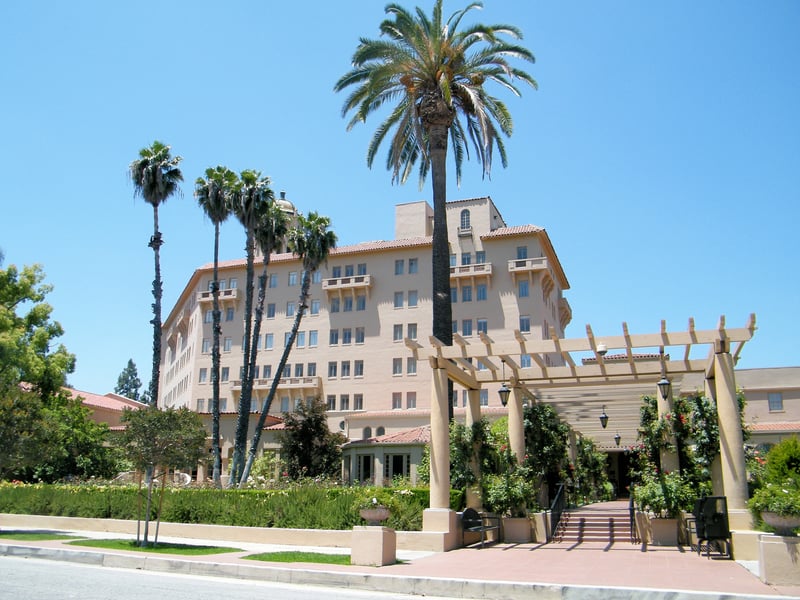
PASADENA, Calif. (CN) — A panel of Ninth Circuit judges on Wednesday sounded suspicious of the Department of Homeland Security’s bid to terminate the temporary protected status for almost 350,000 Venezuelan migrants living in the United States, citing the lack of precedent for the action.
“Counsel, has any administration ever, since the enactment of the statute, done exactly what this administration has done, which is take away a prior designation of TPS status?” U.S. Circuit Judge Salvador Mendoza Jr. asked the government.
Although the department conceded that no administration had carried out actions specifically like this one, it argued that any review of the executive’s foreign policy determinations by domestic courts would be inappropriate under the separation of powers doctrine.
It also argued that it was completely justified in reversing a Biden-era decision to extend temporary status protections for Venezuelans, saying that agencies are allowed to change their minds on specific issues.
“I think what we have here is you have a background principle of administrative law that everyone acknowledges that as a general matter, agencies have authority to reconsider their decisions as long as they do so in a timely manner,” Drew C. Ensign of the U.S. Department of Justice, who represented the DHS, told the panel. “And timeliness is not remotely contested here, or frankly contestable.”
Before leaving office, former President Joe Biden issued an 18-month extension of TPS for Venezuelans. In February, Secretary of Homeland Security Kristi Noem revoked the extension, ending TPS status for the almost 350,000 migrants.
The panel also noted that Noem made the decision only about two weeks after she was confirmed to her position. U.S. Circuit Judge Kim McLane Wardlaw called the timeline of the decision “troubling.”
“I mean, how can the conditions — country conditions — have changed so drastically in that two-week period? Or the review by the new administration have been done so quickly?” the Bill Clinton appointee asked.
“Administrations have different priorities, and they are allowed to weigh evidence differently,” Ensign said.
The National TPS Alliance, which brought the lawsuit, countered that although agencies are allowed to change their minds, their actions are bound by their relevant policy frameworks.
“Agencies aren’t given authority sort of by some magical common law. All agencies are creatures of statute,” Ahilan Arulanantham of the UCLA School of Law’s Center for Immigration Law and Policy, who represented the National TPS Alliance, told the panel.
The panel also addressed statements made by Noem in a Fox News interview shortly after her decision, where she called Venezuelan immigrants “dirtbags” and insinuated they were members of criminal gangs.
Mendoza Jr., a Joe Biden appointee, called Noem’s statements “arguably racist,” and the alliance agreed, calling it a “classic example" of racism.
The lawsuit sits in an interesting position, legally. Although the Supreme Court previously blocked a lower court ruling postponing the action, the higher court’s lack of explanation for its decision prompted arguments that the Ninth Circuit could still have jurisdiction.
“If we’re playing this game of reading tea leaves out of two paragraphs where there’s no law in it, I wouldn’t think that the answer would be that we should lose on subject matter jurisdiction because of that second paragraph,” Arulanantham said.
The government itself did not challenge the Ninth Circuit’s jurisdiction, saying it didn’t think that such an argument would align with the higher court’s previous decisions.
“The Supreme Court also seemingly didn’t think so. And that’s not a court that’s insensitive to jurisdictional obstacles,” Ensign said.
In recent years, the high court has both affirmed rulings after staying them and reversed rulings it declined to stay.
The panel did not indicate when it would issue a ruling.
The Justice Department accused a San Francisco judge of intruding into the nation’s immigration policy after Senior U.S. District Judge Edward Chen, a Barack Obama appointee, blocked DHS from stripping safeguards from Venezuelan migrants in March.
The Department of Homeland Security appealed the lower court decision in early April.
Temporary Protected Status is a designation applied to nationals of certain countries where violence or economic duress makes deportation difficult or unsafe. Venezuelans make up the largest number of such status holders in the nation.
Venezuela migrants and the National TPS Alliance, an immigrant advocacy group, sued the administration in February, claiming that Noem’s actions were unlawful and motivated by racial animus.
Chen said that Noem’s comments and en masse actions against all beneficiaries made it evident that she made sweeping negative generalizations about Venezuelan TPS holders.
The National TPS Alliance acknowledged via court filings that its appeal arises “in an unusual posture,” seeing as how the Supreme Court stayed the lower court’s order after the Department of Homeland Security filed its opening brief.
Attorneys for National TPS Alliance did not immediately respond to a request for comment.
A spokesperson for the U.S. Department of Justice declined to comment.
The panel was rounded out by U.S. Circuit Judge Anthony Johnstone, a Joe Biden appointee.
Subscribe to our free newsletters
Our weekly newsletter Closing Arguments offers the latest about ongoing trials, major litigation and rulings in courthouses around the U.S. and the world, while the monthly Under the Lights dishes the legal dirt from Hollywood, sports, Big Tech and the arts.