
 Search Articles


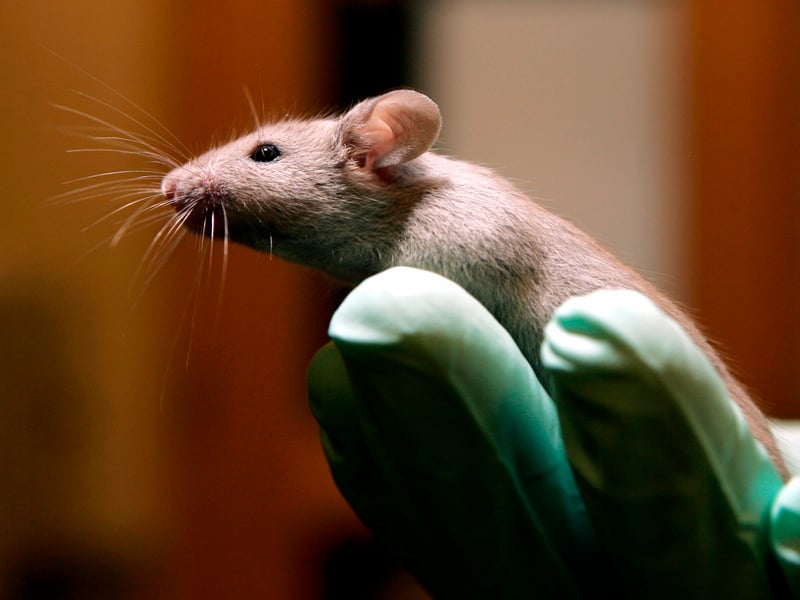
(CN) — A Ninth Circuit Court of Appeals panel ruled in favor of nonprofit group People for the Ethical Treatment of Animals on Wednesday in a dispute with the University of Washington over the names of members of a committee that oversees animal welfare in the university’s research labs.
The three-judge panel overturned a preliminary injunction issued by a federal court, which barred the university from revealing the identities of current and former members of the Institutional Animal Care and Use Committee, a volunteer group that monitors the use of animals for medical research on campus.
“Basic ‘biographical data,’ including a person’s ’name, address, identification, place of birth, telephone number, occupation, sex, description, and legal aliases,’ is not highly sensitive personal information, and thus categorically does not ‘implicate the right to privacy,” the panel wrote in its five-page, unanimous ruling responding to the committee member’s lawsuit to prevent their names from subject to a public records request.
“The fact that the [unnamed plaintiffs] are members of a ‘committee formed by the government to discharge an official purpose’ is also not highly sensitive personal information,” the panel added.
The Institutional Animal Care and Use Committee holds public meetings, though the identities of its members are kept private. During those public meetings, animal rights groups sometimes make public comment — according to the committee members’ lawsuit, the activists have regularly compared the university to Auschwitz, and the animal researchers and the Animal Care and Use Committee to Nazis.
In 2021, one activist filed a public records act request for “copies of all of the Institutional Animal Care and Use Committee appointment letters that institutional officials have created or produced.”
The next year, committee chair Jane Sullivan and a class of 75 anonymous committee members sued the school to stop their names from being divulged. A federal judge agreed, and granted a preliminary injunction.
PETA then filed a motion to intervene, arguing that the committee members were public employees, and not entitled to anonymity. The Ninth Circuit initially agreed with PETA then, finding that Sullivan and other class members lacked standing because their names were already known to the public.
The class members sued once more in 2024, this time without Sullivan. PETA again intervened, and the federal court again granted a preliminary injunction to block the release of the names. PETA appealed to the Ninth Circuit — again.
PETA Deputy General Counsel and Director of Litigation Asher Smith, in a written statement, called the ruling “a major victory for transparency and a blow to all institutions that take taxpayer money for experiments on animals but try to shirk their accountability to taxpayers.”
He added: “Who sits on these committees in publicly funded laboratories and what they do is everyone’s business, and these individuals cannot simply choose to operate in secrecy. As PETA explained to the 9th Circuit, access to [committee] member identities is vital in allowing the public to investigate serious concerns about potentially illegal conflicts of interest: If the oversight body is improperly constituted, it is operating illegally and should have no authority to approve animal experiments.”
During oral arguments in November, the panel then appeared to lean in favor of allowing the university to release the names.
The committee members, said U.S. Circuit Judge Kenneth Lee, a Donald Trump appointee, “are playing a role in public policy a little bit, and with that comes some criticism.”
Lee was joined in the opinion by U.S. Circuit Judges Ronald M. Gould, a Bill Clinton appointee, and Holly A. Thomas, a Joe Biden appointee.
In their ruling, the three judges wrote that the plaintiffs’ “basic biographical data and identities… are far from the heartland of information that we have held implicates the constitutional right to informational privacy, such as a person’s medical or sexual history.”
The case is now remanded to the lower court, with the preliminary injunction dissolved, meaning that the university is free to fulfill the public records request.
The plaintiffs’ attorney, Darwin Roberts of Goldfarb & Huck, said in a written statement, “My clients are volunteer committee members who help ensure that the University of Washington’s scientific research involving animals is conducted humanely. They should be able to do that without receiving threats and harassment in their personal lives and at their homes.”
“We’re considering our options, but regardless, we hope relief will still be available on alternative grounds. We’ve been fighting this battle for nearly three years and we will not give up,” he added.
 Follow @hillelaron
Subscribe to our free newsletters
Our weekly newsletter Closing Arguments offers the latest about ongoing trials, major litigation and rulings in courthouses around the U.S. and the world, while the monthly Under the Lights dishes the legal dirt from Hollywood, sports, Big Tech and the arts.