Search Articles


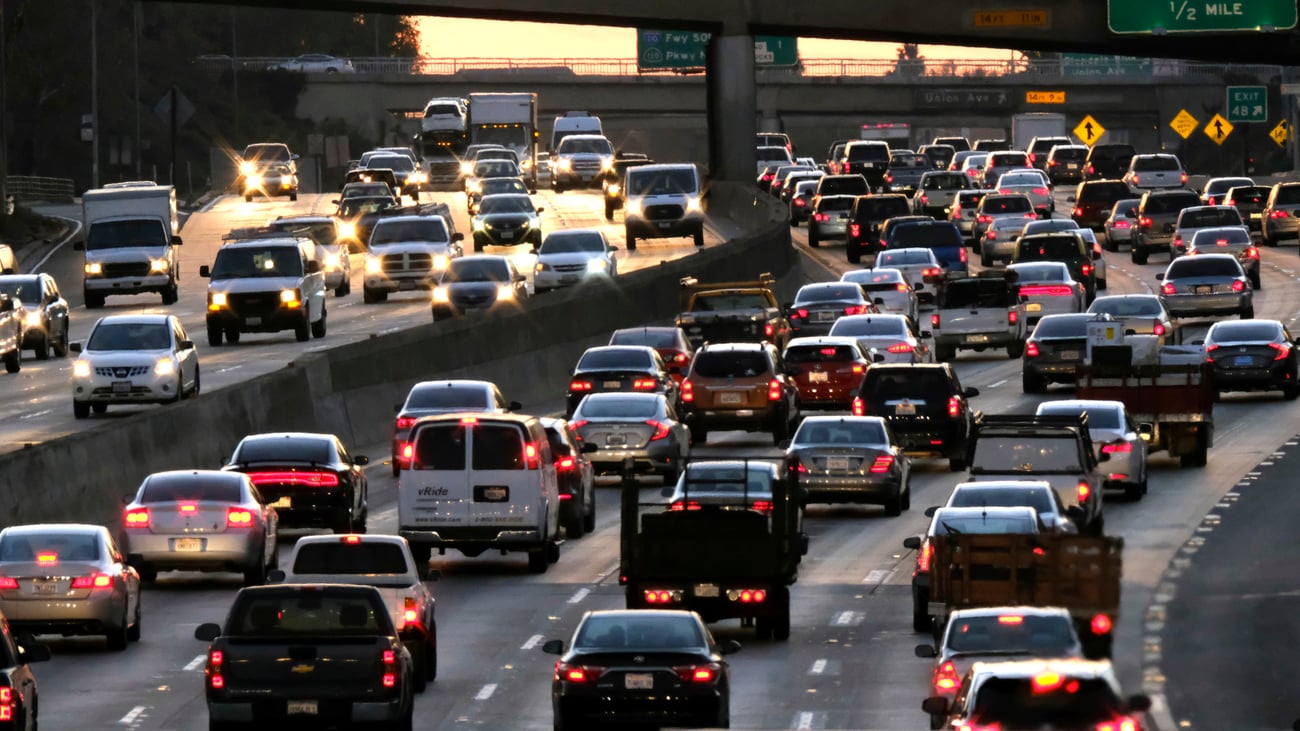
SAN FRANCISCO (CN) — California hit a red light Thursday in its attempt to get the Ninth Circuit to review the federal government’s decision that its own rules for bus drivers preempt the state’s regulations.
California has its own rules for when bus drivers must take mid-shift breaks — which clashed with the Federal Motor Carrier Safety Administration. The administration in 2020 decided that its rules preempted the state’s labor laws, which led California to take the issue to the appeals court.
On Thursday, U.S. Circuit Judge Holly Thomas denied the state’s request for a review of the administration’s determination that its rules preempt California. California opted for rules stricter than the administration, but that doesn’t mean they’re outside of the federal government’s authority, Thomas wrote.
Writing for a three-judge panel, the Joe Biden appointee pointed to her court’s 2021 ruling, International Brotherhood of Teamsters v. Federal Motor Carrier Safety Administration. That ruling focused on truckers’ meal-and-rest breaks, stating federal law did preempt California’s rules for them.
“The secretary’s power to preempt a state law or regulation arises if the secretary determines that the state law or regulation ‘is additional to or more stringent than’ a federal regulation,” Thomas wrote.
California argued the administration lacked authority to preempt its rules for bus drivers. The state said that authority is limited to rules “on commercial motor vehicle safety.” The word “on” is key, as it’s focused on safety, not general applicability.
That argument failed, as the appeals court in Teamsters held that California’s regulations on truckers fell within commercial motor vehicle safety. Congress intended to have uniformity in its regulations, and an agency could determine a state law disrupts that even if it’s not specifically targeting commercial motor vehicle safety, Thomas wrote.
California also posited that the administration can’t preempt its mid-shift break rules for bus drivers, as it never issued its own regulations for them.
Thomas wrote that the state pointed to Teamsters, which noted that the administration had “issued particularized regulations that govern break times for drivers of property-carrying commercial motor vehicles.”
“Petitioners read Teamsters too narrowly,” Thomas wrote, adding: “Although it is true that federal [hours-of-service] regulations do not require that drivers of passenger-carrying commercial motor vehicles take a mid-shift break, they still dictate how long a driver may remain on duty before a mandatory off-duty period. The state and federal regulations therefore share the same purpose of mandating off-duty periods as a form of ensuring commercial motor vehicle safety through fatigue management.”
The state also claimed the administration was arbitrary and capricious in deciding that California’s meal-and-rest break rules would create an unreasonable burden on interstate commerce.
The appeals panel disagreed. Thomas wrote that the court record supports the administration’s decision that California’s rules create a major burden on operators of passenger-carrying commercial motor vehicles.
“The administrative record is replete with commentary about the negative effects of California’s MRB rules upon passenger-carrying commercial motor vehicle operations,” Thomas added. “These include comments about the disruptive and costly nature of complying with California’s MRB rules, as well as the difficulty of maintaining scheduled operations.”
Thomas noted that a driver stopping at inopportune times and places to comply with a state-mandated break would become untenable. Public commenters said state rules gave much less flexibility to set those breaks, as well as significant cost increases because of less productivity and a need for more drivers.
Pointing to the California Supreme Court, Thomas wrote the state’s high court has stated employees must be free to leave their workplace for the entirety of their 30-minute meal break. On-duty meal periods are allowed only when the job requires them and the employee agrees to them — an agreement the employee can revoke anytime.
“These requirements underline the reasonableness of the FMCSA’s conclusion that California’s MRB rules unduly burden interstate commerce,” Thomas added. “That petitioners may disagree with this conclusion does not make it arbitrary.”
The appeals panel was rounded out by U.S. Circuit Judge Consuelo Callahan, a George W. Bush appointee; and U.S. Circuit Judge Anthony Johnstone, a Biden appointee.
“The California Department of Industrial Relations is aware of today’s Ninth Circuit ruling and is currently reviewing the decision and evaluating its implications for California workers, employers, and enforcement efforts,” the department said in a statement to Courthouse News. “California has long been a national leader in workplace safety, and DIR remains committed to ensuring workers have the protections they need to stay safe on the job.”
The federal administration couldn’t be reached for comment.
Subscribe to our free newsletters
Our weekly newsletter Closing Arguments offers the latest about ongoing trials, major litigation and rulings in courthouses around the U.S. and the world, while the monthly Under the Lights dishes the legal dirt from Hollywood, sports, Big Tech and the arts.