
 Search Articles


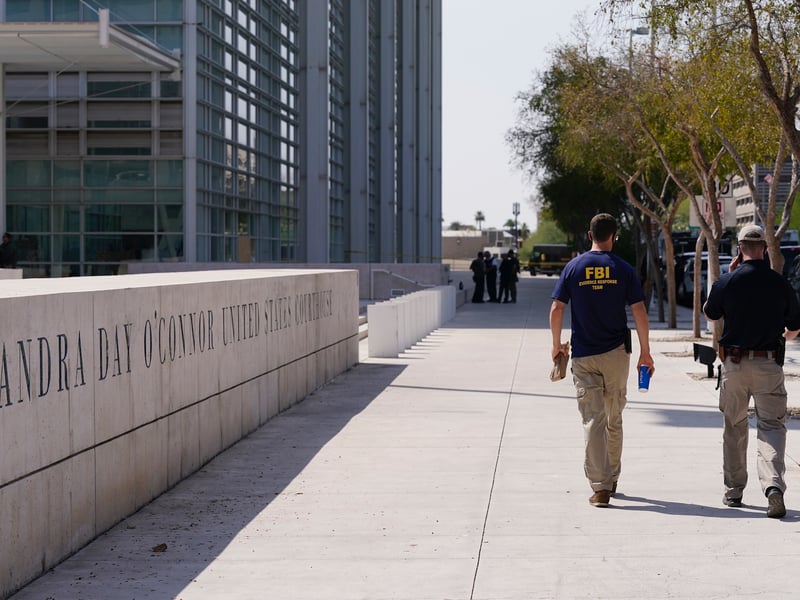
PHOENIX (CN) — The Ninth Circuit reinstated a law preventing Arizona defense attorneys from contacting crime victims without seeking permission from the state prosecutor’s office.
Though the collective Arizona Attorneys for Criminal Justice says the law violates defense attorneys’ First Amendment right to free speech, a three-judge panel reversed a lower court’s injunction in an opinion filed Thursday morning, declining to rule on the law’s constitutionality and instead rejecting the plaintiffs’ facial challenge as insubstantial.
“Considering the full scope of the victim contact limit against the limited contacts here challenged, its assumedly unconstitutional applications are insubstantial relative to its assumedly valid ones,” U.S. Circuit Judge Anthony Johnstone wrote in an 18-page opinion.
The law requires defense attorneys to funnel all correspondences with victims through the prosecutor’s office, which then notifies the victim of the request and reminds them of their right to decline an interview. It doesn’t require that the prosecutor forward any correspondence from the defendant or defense attorney to the victim.
The defense attorneys sued the state in 2017 and succeeded at trial in 2022, resulting in a permanent injunction against the law’s enforcement.
The Attorney General’s office argued in an appeal hearing last year that the procedure upholds victims’ rights and prevents defense attorneys from catching them off guard when they may not know they’re allowed to deny an interview request.
Arizona Criminal Procedures Rule 39 already requires defense attorneys to funnel requests for formal interviews seeking exculpatory information through the prosecutor, and the plaintiffs don’t challenge that aspect of the law. Instead, they say the rule shouldn’t extend to informal, non-interview contacts defense attorneys might want with a victim, including general requests for information.
Jared Keenan, legal director for the American Civil Liberties Union and lead attorney for the plaintiffs, said the court assumed the constitutionality of Rule 39 because the plaintiffs didn’t challenge it, leaving open the option to challenge Rule 39 alongside the statute at question in future proceedings.
For now, though, the court didn’t find enough cause to keep the law off the books.
“Victim-interview requests are the law’s primary applications,” wrote Johnstone, a Joe Biden appointee. “So even if we assume the challenged applications of the law are unconstitutional, they are not substantial relative to the unchallenged applications. Therefore, the attorneys’ facial challenge to the victim contact limit, as they have framed it, must fail.”
Panel members seemed unconvinced by the attorney general’s arguments last year, asking the defendant why the law allows for disparate treatment of defense attorneys and prosecutors, who need to seek no such permission to communicate with victims at their leisure. U.S. Circuit Judge Marsha Berzon, a Bill Clinton appointee, suggested to the attorney general that the law stifles the speech of one party while allowing the speech of another.
But the case isn’t about equal protection, Deputy Solicitor General Alexander Samuels countered. And it doesn’t stifle free speech because it still allows for communication, he added, albeit through the proper legal channels.
But the panel reversed course in the 11 months since. To prove that a law is unconstitutional on its face, the plaintiffs had to have proven that the unconstitutional applications are “substantially disproportionate to the statute’s lawful sweep.”
“Instead, the attorneys direct their challenge to the edges of the victim contact limit: initiating contact for the defense team’s ‘conversations’ and ‘information sharing’ with victims,” Johnstone wrote.
Though the panel concluded that the plaintiffs’ challenge failed, it left the door open for future facial or as-applied challenges. Keenan said the plaintiffs may consider challenging the statute and Rule 39 as applied to their specific situation, rather than arguing that the rule and statute are unconstitutional on their faces.
“We’re digesting this opinion and considering what makes the most sense going forward,” he said.
Attorney General Kris Mayes didn’t reply to a request for comment.
 Follow @JournalistJoeAZ
Subscribe to our free newsletters
Our weekly newsletter Closing Arguments offers the latest about ongoing trials, major litigation and rulings in courthouses around the U.S. and the world, while the monthly Under the Lights dishes the legal dirt from Hollywood, sports, Big Tech and the arts.