
 Search Articles


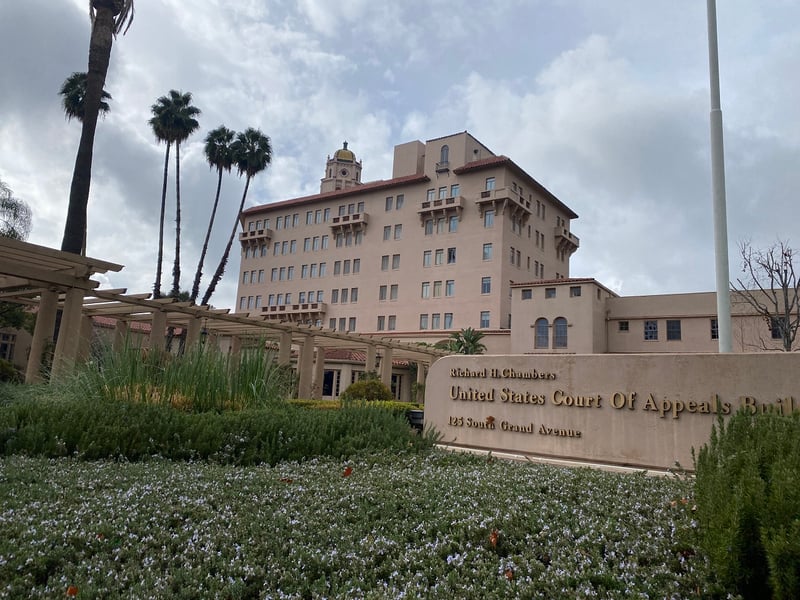
LOS ANGELES (CN) — The Ninth Circuit Court of Appeals on Tuesday reinstated customer claims that the maker of Banana Boat sunscreen failed to disclose that the product may contain trace amounts of benzene, a carcinogenic substance.
In a unanimous opinion, the appellate panel said the trial judge who threw out the case incorrectly concluded that the plaintiffs had no standing to sue because the Food and Drug Administration guidelines for the amount of benzene in sunscreen did not indicated that the Banana Boat products were unsafe.
In this regard, the panel said, the judge prematurely weighed in on the merits of the false advertising claims rather than, as required at this juncture, construe the disputed facts in favor of the plaintiff.
“First, the district court mistakenly required [Beth] Bowen to show that Banana Boat was noncompliant with FDA guidelines in order to establish injury under an economic-harm theory,” wrote U.S. Circuit Judge Salvador Mendoza Jr., a Joe Biden appointee. “Second, to reach the conclusion that 0.29 ppm of benzene in sunscreen is ‘safe,’ the district court improperly weighed disputed evidence.”
Joining in Mendoza’s conclusions were U.S. Circuit Judge Ronald Gould, a Bill Clinton appointee, and U.S. Circuit Judge Ronald Gilman, a judge from the Sixth Circuit Court of Appeals who sat on the panel by designation, and is also a Clinton appointee.
Bowen, a Southern California woman, sued Edgewell Personal Care on behalf of all California purchasers of Banana Boat sunscreen since May 25, 2017.
“No reasonable consumer, including plaintiff, is going to purchase a sunscreen product, or, alternatively, pay a premium for it, if they cannot know whether the product they pull off the shelf is one that is contaminated with a cancer-causing drug,” she wrote in the complaint. “A reasonable consumer such as plaintiff is not going to play Russian roulette with sunscreen products.”
Edgewell sought to throw out the complaint on the grounds that Bowen lacked standing since the bottle of BananaBoat Ultra Sport Sunscreen SPF 50 that she had tested contained just 0.29 ppm of benzene, which is well below the FDA’s 2 ppm benzene limit.
As such, the company argued, the “claims for economic injury are premised entirely on the speculative and hypothetical risk that such trace amounts of benzene are unsafe in sunscreen.”
Benzene can cause leukemia and other blood disorders, according to the FDA. Certain hand sanitizers and aerosol drug products have been recalled in recent years because of to benzene contamination.
This contamination, the FDA said last year, may come from inactive ingredients, such as thickening agents, spray propellants or other drug components made from hydrocarbons, that are used in the manufacturing process.
Edgewell voluntarily recalled batches of Banana Boat sunscreen sold in the United States that the it said contained “trace,” though undisclosed, amounts of benzene, the Ninth Circuit panel noted.
“The FDA is not stating, as defendants argue and the district court held, that products containing less than 2 ppm of benzene are safe, full stop,” the panel said. “Characterizing such products as safe runs counter to the agency’s caveat-laden guidance.”
“When consumers like Bowen enter the marketplace, they have options,” Mendoza concluded. “Faced with two sunscreens in the skincare aisle of a pharmacy — one with benzene, the other with no benzene — it is perfectly reasonable that the consumer would avoid the product containing benzene, as Bowen alleges that she would have absent defendants’ alleged false advertising.”
Representatives of Edgewell didn’t immediately respond to a request for comment on the decision.
 Follow @edpettersson
Subscribe to our free newsletters
Our weekly newsletter Closing Arguments offers the latest about ongoing trials, major litigation and rulings in courthouses around the U.S. and the world, while the monthly Under the Lights dishes the legal dirt from Hollywood, sports, Big Tech and the arts.