
 Search Articles


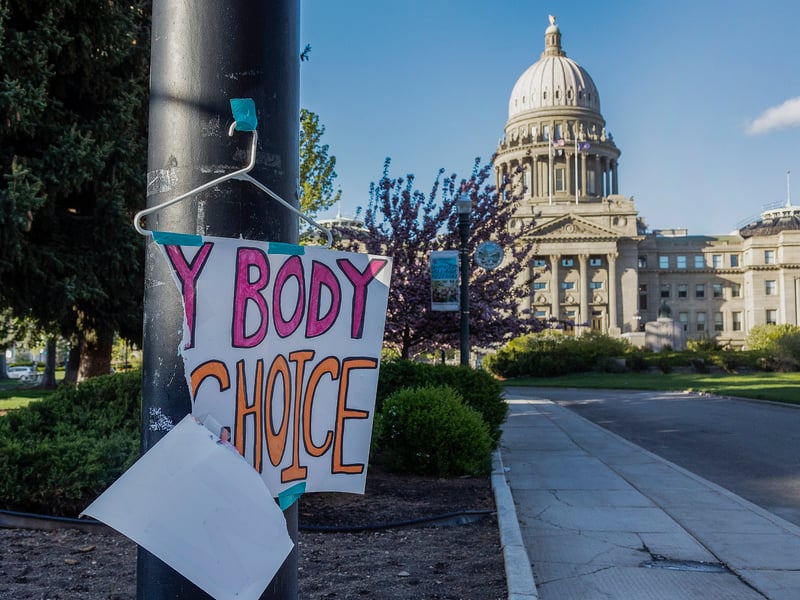
(CN) — A Ninth Circuit Court of Appeals panel on Monday mostly rejected a challenge to an Idaho law that makes it a crime for an adult to assist a minor in obtaining an abortion or abortion medication in another state without their parent’s consent.
In a split decision, the appellate panel reversed a trial judge’s finding that the law is too vague and couldn’t be enforced. The panel, however, agreed that the law’s provision that makes it a crime to “recruit” a minor, including by providing persuasive encouragement to seek an abortion, is barred by the First Amendment protection of free speech.
But since this provision can be enjoined without blocking enforcement of the entire law, the panel instructed the U.S. magistrate judge in Boise, Idaho to modify her preliminary injunction of the statute.
“In our view, the ‘recruiting’ prong of Section 18-623 is neither integral nor indispensable to the operation of the statute as the Idaho legislature intended and therefore may be severed from the rest of the law,” Senior U.S. Circuit Judge M. Margaret McKeown wrote for the majority.
“Without the ‘recruiting’ prong, the statute criminalizes ‘harboring’ or ’transporting’ a minor to procure an abortion with the intent to conceal the abortion from the parents or guardian of the minor — an intelligible crime that reaches the problems the legislature sought to rectify,” the a Bill Clinton appointee added.
McKeown, joined by Barack Obama appointee U.S. Circuit Judge John Owens in the majority’s opinion, noted that encouragement, counseling and emotional support are plainly protected speech under U.S. Supreme Court precedent, including when offered in the difficult context of deciding whether to have an abortion.
“If counseling those who are about to obtain abortions to instead carry their pregnancies to term is undoubtedly protected speech, then surely the opposite is true as well,” she said.
The majority also rejected the plaintiffs’ argument that the law violates their right to association under the First Amendment, observing that it doesn’t stop them from soliciting donations, requires them to identify their anonymous members or inhibits their general advocacy of the right to abortion in Idaho or elsewhere.
“This is a tremendous victory for Idaho and defending the rule of law as written by the people’s representatives,” Idaho Attorney General Raúl Labrador said in a statement. “Idaho’s laws were passed specifically to protect the life of the unborn and the life of the mother. Trafficking a minor child for an abortion without parental consent puts both in grave danger, and we will not stop protecting life in Idaho.”
While the Ninth Circuit panel ruled that plaintiffs have proper standing in the case, Labrador added, and that the specific language of “recruiting” minors for abortion is overly broad, the court ruled the balance of the statute addressing “harboring and transporting” minors can be enforced.
U.S. Circuit Judge Carlos Bea, a George W. Bush appointee, dissented in part because, he said, the plaintiffs — a group of individuals and organizations who assist pregnant women, including minors, in obtaining legal abortion care outside of Idaho— sued the wrong the defendant and as such lacked standing.
According to Bea, the Idaho attorney general, the named defendant, does not and can not enforce the state’s abortion trafficking law. That’s the job of county prosecutors, he said, and the preliminary injunction the U.S. magistrate judge issued last year against the attorney general doesn’t prevent these prosecutors from enforcing the statute.
“In other words, plaintiffs’ injuries are not traceable to the AG, and, for the same reasons, the injunction issued by the district court does not redress their alleged injuries,” Bea said.
Idaho already has one of the strictest abortion bans in the country, with exceptions only when the mother’s life is in danger. In April 2023, state lawmakers went even further and passed House Bill 242, which made it a crime for an adult to assist a minor in obtaining an abortion without their parent’s consent, by either “recruiting, harboring, or transporting the pregnant minor” within the state.
Violating the law carries a penalty of two to five years in prison and opens up the perpetrator to civil liability — that is, they can be sued by the minor’s parents. Either the county prosecutor or state attorney general can file the criminal charges.
Two groups — Northwest Abortion Access Fund and Indigenous Idaho Alliance — and lawyer Lourdes Matsumoto sued Labrador, claiming the new law was unconstitutionally vague and infringed on First Amendment rights to freedom of speech, assembly, association and petition.
Wendy Olsen, an attorney for the challengers, told the Ninth Circuit panel in May that the law “seeks to criminalize an unclear amount of undefined assistance to minors” and amounted to “content-based regulation of free speech and expression,” since it “prohibits plaintiffs from saying things that the state disagrees with.”
“This decision is a significant victory for the plaintiffs, as it frees Idahoans to talk with pregnant minors about abortion health care,” said Wendy Heipt, an attorney with Legal Voice, which also represents the organizations that help pregnant minors.
 Follow @edpettersson
Subscribe to our free newsletters
Our weekly newsletter Closing Arguments offers the latest about ongoing trials, major litigation and rulings in courthouses around the U.S. and the world, while the monthly Under the Lights dishes the legal dirt from Hollywood, sports, Big Tech and the arts.