
 Search Articles


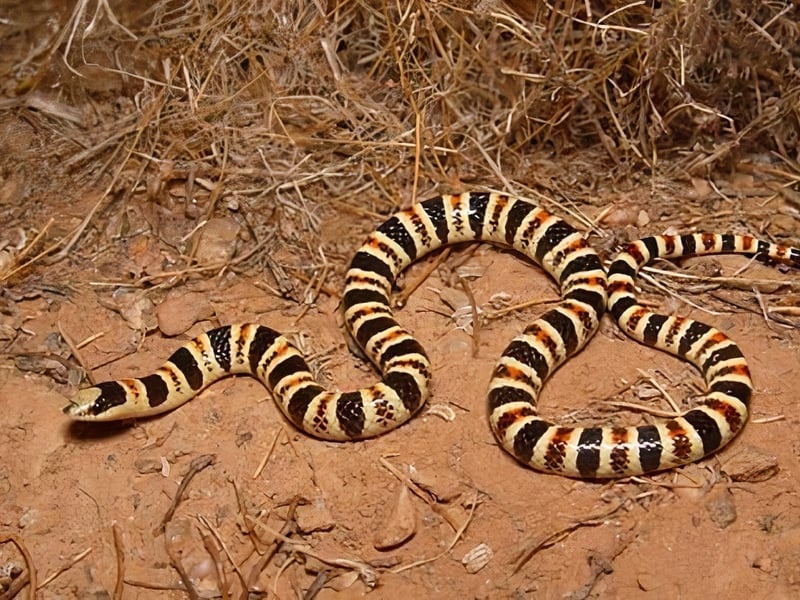
PHOENIX (CN) — A conservation group challenged denial of Endangered Species Act protections for an Arizona snake before a Ninth Circuit panel Friday.
The Center for Biological Diversity petitioned to list the Tucson shovel-nosed snake, subspecies of the western shovel-nosed snake known for its distinct red and black color pattern, as endangered in 2004, and again in 2020 after the U.S. Fish and Wildlife Service rejected the petition. The center claims at least 39% of the snake’s habitat, confined to Maricopa and Pinal counties in the northern Sonoran Desert of central Arizona, has been eliminated by agriculture and urban development with the rest likely to be developed in the near future, signaling impending doom for the subspecies.
But Fish and Wildlife, relying on a 2014 U.S. Geological Survey study of the western shovel-nosed snake, found that the Tucson shovel-nosed falls into the same subspecies category as a larger group — the Sonoran shovel-nosed — whose habitat range stretches 200 miles west to the California border and covers 2.4 times the land area previously thought by the center.
“When you define the snakes by genetics, which is the scientifically preferable way to do it, there are vast areas of range that are protected,” Justice Department attorney Joan Pepin told a three-judge panel in Phoenix on Friday morning. “So this snake is simply not in danger of becoming extinct, even if some of the areas of the extreme eastern portion of its range are developed.”
Fish and Wildlife agreed with the center when it first petitioned in 2004, and in 2008 placed the Tucson shovel-nosed on the waiting list for protections, prioritizing more jeopardized critters. After it reversed course in 2014, the center replied with a letter from the late Dr. Phil Rosen, a leading expert on western shovel-nosed snakes, laying out the errors in the service’s determination.
In 2020, the center filed a new petition, citing Rosen’s letter and a research article he co-authored separating the Tucson shovel-nosed from the larger Sonoran subspecies. Rosen’s main argument was the snake’s unique coloration, which he hypothesized is an evolutionary response to living in low desert, defines it better than genetics, which would include genetically similar snakes adapted to different environments.
He said the service’s defined habitat range included elevations impossible to be reached by the Tucson snakes, which prefer flat sandy desert, “swimming” through loose soil with their spade-shaped heads.
But the service rejected the petition again, reasoning that Rosen presented no new or substantial information, but instead proposed a new hypothesis based on existing data the service had already considered.
The center sued in 2022, but a federal judge in Arizona sided with the service, leading to Friday’s appeal.
Brian Segee, in-house counsel for the Center for Biological Diversity, told the judges that the service unfairly and arbitrarily disregarded the new information presented by Rosen, in violation of the Endangered Species Act and the Administrative Procedures Act. He characterized Rosen’s study as a “reinterpretation” of the information that the service was legally bound to consider.
The service rejected the petition after an initial 90-day consideration period, which Segee argued was too short a time to make a determination based on competing scientific research.
“They would have to say that what Rosen presented in his two documents was completely unscientific,” he said.
Instead, he continued, the service should have accepted the research as new scientific information, and used the 12-month period — the next step in the listing process — to delve deeper into the scientific debate.
For the service, Pepin said Rosen’s arguments didn’t justify why the service should consider coloration with higher regard than genetics.
“Conclusions without scientific backing are not considered new info,” Pepin said. Rosen’s “reinterpretation” wasn’t enough to be considered new info the service legally had to consider.
She told the judges that color pattern is an unreliable measure for the snakes because of their vast diversity in color and pattern.
U.S. District Judge Richard Seeborg, a Barack Obama appointee sitting with the panel by designation from the Northern District of California, asked Pepin how the service’s analysis could be sound if the habitat range includes elevations the Tucson snake can’t get to.
Pepin again emphasized that the Tucson snake is only a regional class of the Sonoron snake, and the defined habitat range covers the larger subspecies.
U.S. Circuit Judges Richard Paez and John Owens, appointed by Bill Clinton and Obama, respectively, rounded out the panel.
 Follow @JournalistJoeAZ
Subscribe to our free newsletters
Our weekly newsletter Closing Arguments offers the latest about ongoing trials, major litigation and rulings in courthouses around the U.S. and the world, while the monthly Under the Lights dishes the legal dirt from Hollywood, sports, Big Tech and the arts.