
 Search Articles


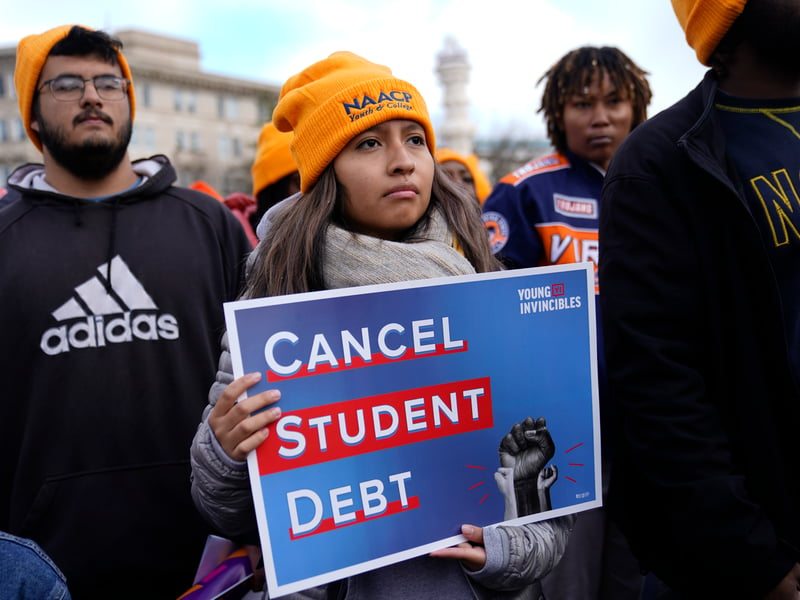
(CN) — The Department of Education on Friday asked the Ninth Circuit to pause a deadline that it already missed, arguing it would be forced to send over $11 billion in student loan debt refunds and discharges.
However, the Ninth Circuit panel was skeptical of that figure.
U.S. Circuit Judge John Owens, a Barack Obama appointee, noted that the government wouldn’t receive all $11 billion if it tried to sell the loans on the open market.
“I understand there is a technical number of 11 billion, but when you come out and say it’s 11 billion, it’s like $11 billion in coupons,” Owens said. “It’s not 11 billion in real money.”
Sean Janda, attorney with the Department of Justice, clarified that the figure is the combination of discharges and refunds.
In 2022, the Department of Education reached a settlement with a class of student loan borrowers who said they were defrauded by their schools.
The agreement also required the department to resolve forgiveness applications from non-class members by Jan. 28. Those applicants submitted claims during the roughly five-month period between the settlement’s execution and final approval in 2022.
However, the department missed the deadline, processing about 60,000 of more than 250,000 applications.
In November, the department asked a lower court to extend the deadline by 18 months so it could process the remaining applicants rather than issue automatic refunds and discharges, as stipulated in the agreement. The court declined to modify the deadline.
Congress appropriated additional funds to the department, but the federal government argued that it still didn’t have the resources to fulfill its obligations, yet the panel continued to press the government.
“Why did the district court, two district courts, abuse their discretion given just the fact that the government was aware for the whole period, really, that there was gonna be about 200,000-plus people in this post-class group?” asked U.S. Circuit Judge Daniel Bress, a Donald Trump appointee.
U.S. Circuit Judge Kim Wardlaw, a Bill Clinton appointee, noted that the government attorneys had continued to tell the lower courts it was on track to meet the deadline, but Janda pushed back.
“They are really not saying ‘We’re going to adjudicate the applications,’ they’re saying ‘We’re aware of our obligations,’” Janda argued.
Wardlaw also questioned how the Ninth Circuit could pause the already expired January deadline, saying it would effectively alter a term of the original settlement.
The government must notify borrowers by March 30 that it missed the deadline and then has one year to provide relief. Janda argued it will take the department the full year to process the volume of applications.
Under the settlement, the department must provide full relief after missing the deadline.
“Even if we were to do adjudications in the meantime and find that they were not meritorious applications, we would still be required to provide relief,” Janda said.
The class of borrowers contended that the government was too late to challenge the settlement terms.
“To begin with, the date has passed. It’s not clear how they can ask for a stay of something that’s already happened,” argued Rebecca Ellis, attorney with the Project on Predatory Student Lending.
She noted the deadline to appeal the final settlement agreement had lapsed in January 2023.
“The department did not appeal the judgment at the time,” Ellis said. ”They knew at that time how many post-class applicants there were, but they did not appeal the judgment.”
The borrowers argued the government was seeking extraordinary relief by asking the appeals court to rewrite the terms of the settlement. Ellis added that the settlement included a provision that addressed the very circumstance at issue.
“The contractual remedy absolutely was available; they just didn’t want to do it,” Ellis argued.
The panel questioned the government as to why it neglected to pursue relief under the provision. Janda argued there was no practical difference between seeking relief under the provision and appealing the lower court order.
The department contended it had done everything it could to secure the resources it needed to solve the problem ahead of the deadline, but hadn’t received sufficient funding in previous budget cycles.
“I don’t know it would have been better for anyone if the department had tried to get out of the settlement three and a half years ago rather than trying to get the money from Congress to allow it to adjudicate the claims,” Janda said.
The borrowers also argued the $11 billion figure is inaccurate.
“ But also, we do not agree that the number is relevant,” Ellis said. “The government agreed to this settlement three years ago. It is fair to hold them to their word.”
Plus, Ellis argued the government has pulled the rug out from under those who applied for relief back in 2022, some of whom have had their credit wrecked while their loans remain in forbearance.
The panel did not indicate when it would rule.
Subscribe to our free newsletters
Our weekly newsletter Closing Arguments offers the latest about ongoing trials, major litigation and rulings in courthouses around the U.S. and the world, while the monthly Under the Lights dishes the legal dirt from Hollywood, sports, Big Tech and the arts.