
 Search Articles


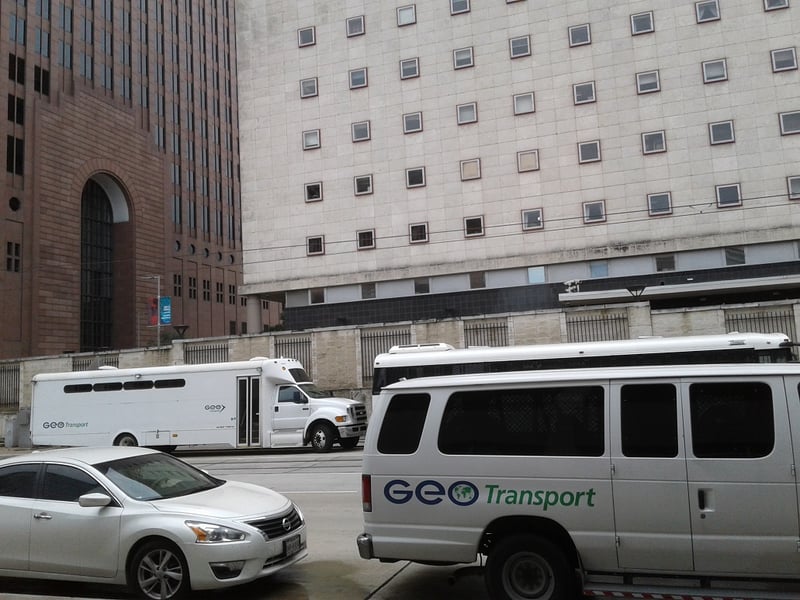
SEATTLE (CN) — Whether a case over state access to a private immigration detention facility in Washington state ends up back in state court will hinge on an evidentiary hearing, a three-member panel of the Ninth Circuit ruled Thursday.
The GEO Group operates the Northwest Immigration and Customs Enforcement Processing Center in Tacoma. The state Department of Health sued the group in state court after it denied department inspectors access to the facility.
The GEO Group removed the case to federal court, arguing that it met the benchmarks to do so as an entity acting under a federal agency. A lower court judge rejected GEO Group’s arguments and sent it back to state court, prompting the group to appeal.
A panel of three Bill Clinton-appointed judges found that the bulk of the Geo Group’s defenses “fail to clear the low bar of frivolity,” but ordered the lower court to hold an evidentiary hearing on whether the company should share the government’s immunity from liability and whether the denial was actually government regulation rather than private conduct.
GEO argued it has derivative sovereign immunity as a contractor of the federal government. Specifically, it argued that it has a policy document governing its relationship with ICE, a written contract with ICE and a verbal directive from an ICE employee.
The contract and policy document require the GEO Group to comply with state law, which mandates all facilities be open to the health department’s inspections. Both contradict the group’s argument that the federal government mandated the denial of entry.
“The ICE employee’s verbal directive, however, is a different story,” the panel wrote, noting that the record is unclear about whether the ICE employee authorized any of the GEO Group’s actions.
The health department argues the GEO Group and the ICE employee denied access together, or that the employee instructed the group to deny the department access. But GEO claimed it was solely the ICE employee who denied the department access.
“Even under the first version of events — which is, curiously, the department’s — it is also not clear whether the ICE employee was acting within the scope of ICE’s authority when he instructed GEO Group to deny access to department employees, or whether he was acting ultra vires, that is, beyond ‘the powers delegated to him by the sovereign,’” the panel wrote.
The panel — which included U.S. Circuit Judges Michael Hawkins, Kim Wardlaw and Margaret McKeown — noted that it also wasn’t clear what authority ICE gave up, kept or assigned.
“These uncertainties implicate both the derivative immunity and direct-regulation defenses,” the panel wrote, instructing the lower court to consider them on remand.
The lower court judge had concluded the case appears to focus on whether the conditions at the facility are a public health threat, making it a state issue.
Detainees have reported food contaminated with foreign items like plastic and metal string, along with blocked toilets and other unsanitary conditions.
Neither the GEO Group nor the state responded to requests for comment before press time.
It’s not the first time a dispute involving the GEO Group’s Tacoma facility has landed in court.
Also this year, a class of detainees secured a $23.2 million judgment after prevailing on their claims that they were underpaid when participating in a voluntary work program.
The GEO Group fought Washington state over rules directing state agencies to regulate private detention facilities the same way they regulate state prisons, but the Ninth Circuit sided with the state.
Subscribe to our free newsletters
Our weekly newsletter Closing Arguments offers the latest about ongoing trials, major litigation and rulings in courthouses around the U.S. and the world, while the monthly Under the Lights dishes the legal dirt from Hollywood, sports, Big Tech and the arts.