
 Search Articles


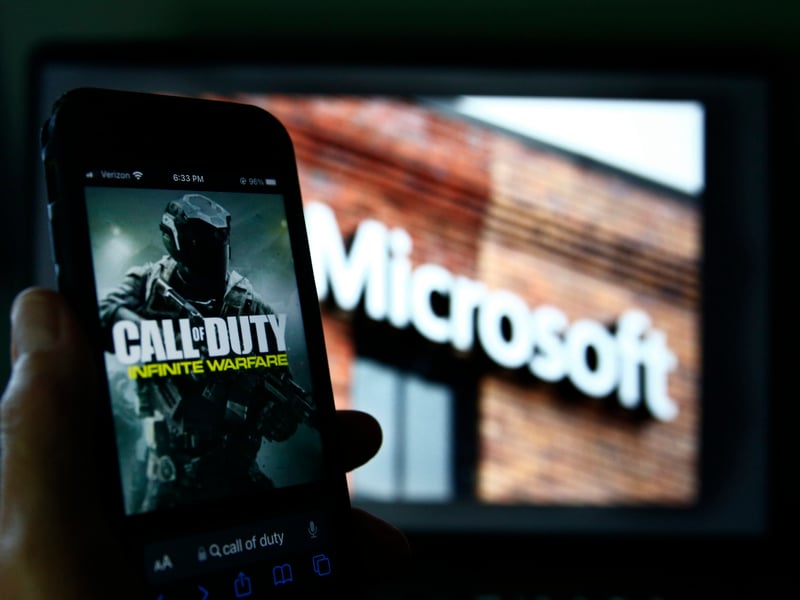
SAN FRANCISCO (CN) — Microsoft’s merger with gaming giant Activision Blizzard took a leap forward Wednesday after a Ninth Circuit panel ruled that a federal judge was correct in rejecting the Federal Trade Commission’s attempt to block the deal after a trial in 2023.
A three-judge panel unanimously rejected the FTC’s appeal and ruled the federal judge had applied the correct legal standards. The panel also found the FTC had not shown it was likely to succeed on its claims that the merger would restrict competition.
Activision Blizzard develops Call of Duty and several other video game franchises that sell millions of copies per year. The FTC argued at trial that the merger presented significant antitrust concerns, namely a substantial reduction in competition in several markets, but U.S. District Judge Jacqueline Scott Corley ruled Microsoft’s plans to release Activision titles like Call of Duty on the cloud and on other gaming platforms such as Nintendo Switch and PlayStation adequately addressed the FTC’s concerns.
On appeal by the FTC, U.S. Circuit Judge Daniel Collins, a Donald Trump appointee, wrote in a 40-page order that the FTC had failed to show that Microsoft intended to keep Call of Duty or other Activision titles exclusive to its Xbox platform.
“Reviewing the assembled record, the district court concluded that the evidence of Microsoft’s actions and internal discussions was all consistent with its stated intention to continue to make Call of Duty available on PlayStation,” Collins wrote. “In particular, the district court noted that Microsoft’s internal model evaluating the value of the Activision Blizzard purchase affirmatively ‘relied on PlayStation sales and other non-Microsoft platforms post-acquisition’ and did ‘not rely on increased sales of Xbox consoles for any reason, let alone caused by foreclosing Call of Duty from PlayStation.’”
Collins wrote that all of Microsoft’s behavior, statements and documents show it never intended to take Call of Duty away from other gaming platforms.
“We cannot say that the district court abused its discretion in concluding that, when considered together with the other record evidence, these internal documents and external statements provided further support to what the overwhelming weight of the evidence already showed— namely, that Microsoft lacked any incentive to remove Call of Duty from PlayStation,” Collins wrote.
Collins also found that Corley was correct when she ruled there was no evidence that Microsoft would disfavor PlayStation by releasing inferior versions of Call of Duty on the PlayStation platform or that Microsoft would release Call of Duty on Xbox before PlayStation.
“In particular, the district court noted that there was record evidence that no game developer had ever ‘intentionally developed a subpar game for one platform versus another,’ because it would lead to a significant loss of goodwill among gamers. The court also stated that ‘the record does not include any evidence Microsoft has engaged in such conduct in the past — even with Sony,’” Collins wrote. “Indeed, the court observed that even Sony’s CEO had testified that ‘publishers have every incentive to provide an equal gaming experience or as good a gaming experience as possible on all platforms.’”
Beyond Call of Duty, the FTC argued at trial that Microsoft would have an incentive to make other gaming franchises exclusive to Xbox, lessening competition. But the panel rejected the argument.
“The district court did not abuse its discretion in concluding that the FTC had failed to show that such exclusivity might substantially lessen competition in the console market. The mere fact that, after a vertical merger, a company might make some of its newly acquired intellectual property exclusive to its platforms does not, without more, show a substantial lessening of competition,” Collins wrote for the panel. “It is in the nature of intellectual property rights that the holder ultimately has exclusive control over them.”
Collins wrote that in the context of a vertical merger, the FTC needed to show more than merely stating the possibility that some of Activision’s non-Call of Duty games would become Xbox exclusives.
“On this record, the district court did not abuse its discretion in further holding that the FTC had not made a sufficient affirmative showing of a substantial lessening of competition with respect to the exclusivity of other titles in the console market,” Collins wrote.
The FTC originally sued Microsoft in 2022 seeking to freeze the merger, which is the largest-ever acquisition in the video game market at $75 billion.
A spokesperson for the FTC declined to comment. Microsoft did not immediately respond to a request for comment.
U.S. Circuit Judge Danielle Forrest, a Trump appointee, and U.S. Circuit Judge Jennifer Sung, a Joe Biden appointee, joined Collins’ opinion.
Subscribe to our free newsletters
Our weekly newsletter Closing Arguments offers the latest about ongoing trials, major litigation and rulings in courthouses around the U.S. and the world, while the monthly Under the Lights dishes the legal dirt from Hollywood, sports, Big Tech and the arts.