
 Search Articles


SAN FRANCISCO (CN) — A Ninth Circuit panel of judges on Monday nullified a lower court decision against a former Tesla engineer who claims she was fired after raising safety concerns, undoing a previous arbitration award favorable to Tesla and its CEO, Elon Musk.
In the order, the panel agreed with plaintiff Cristina Balan that the lower federal court lacked jurisdiction to confirm the award, which should have been heard in a state court, according to a 2022 Supreme Court decision.
“District courts are courts of limited jurisdiction, and that jurisdiction is defined by federal statute — subject, of course, to constitutional limitations,” U.S. Circuit Judge Lawrence VanDyke, a Donald Trump appointee, said in the ruling.
The panel vacated the lower court ruling and remanded Tesla’s case with directions to dismiss for lack of jurisdiction.
Balan and her attorney celebrated the decision, which will give the former Tesla engineer a new opportunity to raise procedural concerns to the court about the underlying arbitration and could even allow her another chance at the arbitration.
“This decision will likely have profound implications for arbitration practice by corporate entities moving forward, as they will need to confirm more awards in state courts,” her attorney, William Moran of Arthur William, told Courthouse News.
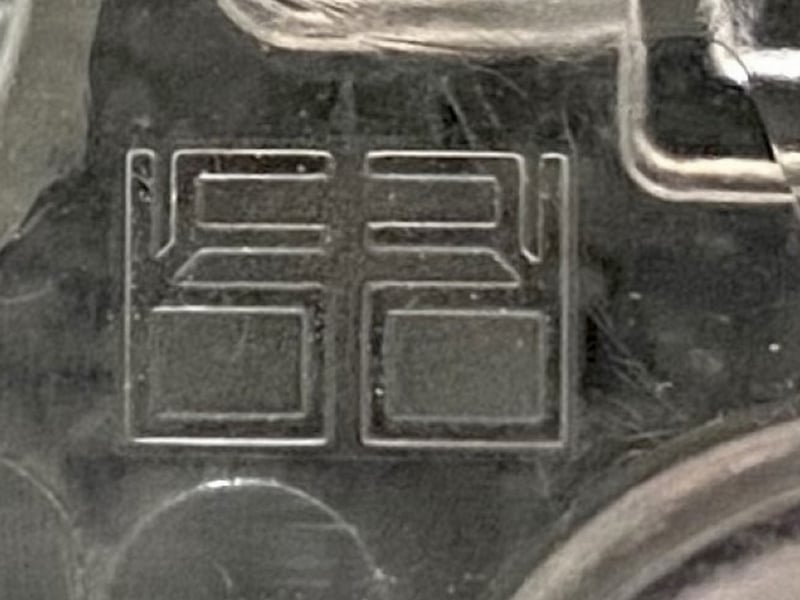
Before becoming Tesla’s legal rival, Balan was a rising star at the company — a prominent engineer whose initials were etched on the batteries of every vehicle the company built. However, she was fired in 2014, she claims, after she raised safety concerns about a design flaw that could impact the cars’ braking.
Tesla later went on to publicly accuse her of criminal activity in an article on an online news website, prompting her to file a defamation lawsuit in 2019. The former engineer claims the electric car company tarnished her reputation when it accused her of using its resources for a “secret project” during her employment — accusations that amount to embezzlement under U.S. law.
Balan’s legal battle with Tesla has had a long journey through the courts. After some success in federal court, the Ninth Circuit ruled that her suit was subject to an arbitration agreement she signed with Tesla. An arbitrator later found in favor of the company and dismissed her defamation claims. Tesla sued in the Northern District of California to confirm the award in late 2021, which a federal judge did the following year.
Balan later appealed this lawsuit against her and returned to the Ninth Circuit, claiming now that under the Federal Arbitration Act, her arbitration decision should have been confirmed in state court, not federal.
For the federal court to have jurisdiction over her arbitration, the panel said the suit must be between citizens of different states and the “amount in controversy” must be over $75,000. Specifically, the panel said it relied on Badgerow v. Walters for clarification that this $75,000 threshold must be “present on the face” of the petition to confirm the arbitration award.
The judges found Tesla did not satisfy this requirement because it went to the lower court to confirm a “zero-dollar award” that simply dismissed Balan’s libel claims.
“On its face, a petition to confirm a zero-dollar award cannot support the amount in controversy requirement,” the panel ruled.
The panel also rejected arguments by Tesla that it was entitled to return the entire matter to federal court because it asked the lower court to stay its suit against Balan instead of dismissing it, which it should have done under Section 3 of the Federal Arbitration Act. This, the company argues, entitles them to a “return ticket” to confirm the award in court under Section 9 of the same act.
The Federal Arbitration Act allows a party in an arbitration agreement to seek several kinds of assistance from a federal court, including either compelling parties to abide by the decision or vacating it completely.
But because Tesla didn’t contest the dismissal and never appealed the issue, the court said that the unappealed and now-binding judgment would remain a dismissal, not a stay.
“The upshot is that Tesla’s attempt to characterize this case as a Section 3 case involving a stay is simply incorrect,” the panel decided.
Balan told Courthouse News she was on “cloud nine” about the decision and that she looks forward to what her lawsuit can reveal about the inner workings of Musk and Tesla’s working environment.
“That’s the thing that I’m most happy about this, this appeal is that it will open a lot of, let’s say, ‘hidden facts’ that Musk and Tesla have tried to bury over the years. I have a lot of confidence this appeal opened the Pandora’s box as to the reality of what’s happening in Tesla,” Balan said.
The stakes are high for Balan, who told the Courthouse News this lawsuit may be her only chance at professional redemption. Since her firing, she claims her professional reputation has suffered so much that companies have refused to hire her for fear of being on Musk’s blacklist.
But more than her reputation, Balan said she’s doing it for her legacy. She is currently in remission after a stage 3B breast cancer diagnosis, which has required multiple deadline extensions in court and delayed proceedings. She doesn’t want her son to grow up thinking her mother was a thief.
The outlook appeared bleak for Balan, who planned on representing herself before the Ninth Circuit, as she had always done, until mid-2024, when she met her now-attorney Moran through a friend.
Her son, then 9, is now 15, and Balan said he understands the situation enough to talk about it with her. He even celebrated the ruling with her.
“He was like, ‘Mom, you won!’” she said gleefully.
If she could say one thing to her son about the case, she said it would be “never give up.”
And if she could say one thing to Elon Musk?
“Shame on you. I will never give up,” she stated.
A spokesperson for Tesla did not respond to a request for comment.
U.S. Circuit Judges Salvador Mendoza, a Joe Biden appointee, and Daniel P. Collins, a Trump appointee, rounded out the panel of judges.
Subscribe to our free newsletters
Our weekly newsletter Closing Arguments offers the latest about ongoing trials, major litigation and rulings in courthouses around the U.S. and the world, while the monthly Under the Lights dishes the legal dirt from Hollywood, sports, Big Tech and the arts.