
 Search Articles


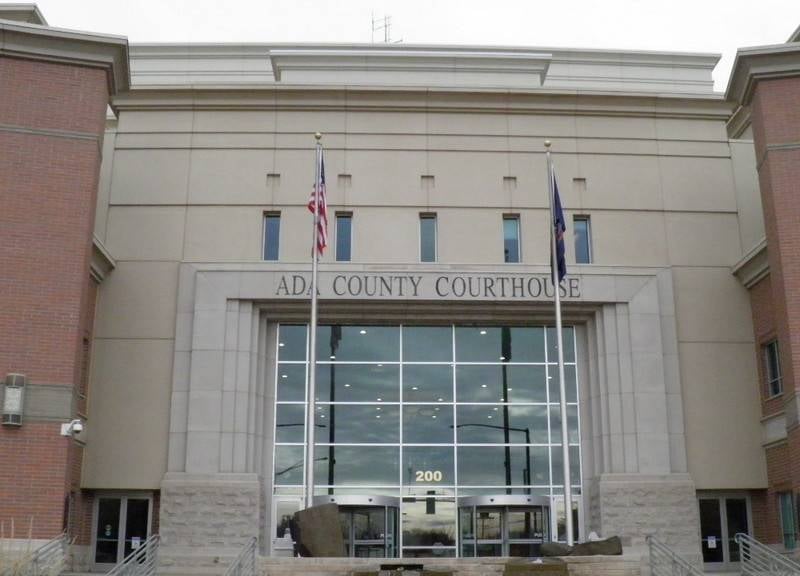
PORTLAND, Ore. (CN) — A First Amendment battle between this news service and the administrator for Idaho state courts landed at the Ninth Circuit on Wednesday, where a three-judge panel ripped the state over its refusal to allow timely public access of newly filed court documents.
The dispute centers on access to nonconfidential civil complaints and Idaho Courts’ policy of withholding access to complaints until they have been reviewed and accepted by clerks.
In 2021, Courthouse News sued Idaho Courts Administrative Director Sara Omundson, claiming the transition to e-filing resulted in ongoing and persistent access delays. U.S. District Judge David Nye, a Donald Trump appointee, ruled in the news service’s favor in 2024.
Nye found Courthouse News has a right under the First Amendment to access newly filed civil lawsuits without delay and declared the Idaho Courts policy unconstitutional. The Idaho ruling followed similar injunctions against withholding policies in Ohio, Vermont, Virginia, Illinois, New York, Texas and California.
As such, Nye permanently enjoined Omundson from continuing any process that denies access to new nonconfidential civil complaints.
On Wednesday morning, U.S. District Judge Sidney Fitzwater, a Ronald Reagan appointee sitting by designation from the Northern District of Texas, grilled the Idaho Courts administrator about that order.
“What do you think that means you’re required to do under the judgment?” Fitzwater asked.
Keely Duke, a Boise-based attorney representing Omundson, said, “I don’t know, your honor," adding it was an open-ended order.
But U.S. Circuit Judge M. Margaret McKeown noted that in federal courts and many others, cases become immediately available to the public and press once they are filed.
“I think it’s a little bit disingenuous to say, ‘Well, we don’t know what to do’ because the court isn’t telling you how to modify the systems, but you’ve already given the court various options that you have, so there would be access upon the filing,” McKeown said. “So I’m a little confused as to why you say you don’t know what you can do.”
According to Omundson, allowing access to complaints before a clerk has accepted them could allow accidental inclusions of private information to go unnoticed. It would also be inefficient and overwhelm court staff to keep up with the caseload, Duke argued.
“Isn’t that the responsibility of the filer to redact? It’s not the clerk of courts, it’s the filer,” McKeown noted. “All these filing errors, those can be fixed afterward.”
Between 7% and 11% of all complaints filed in the Idaho court system require issues that need to be corrected, Duke argued.
U.S. Circuit Judge Jennifer Sung, a Joe Biden appointee, noted that there is a persuasive argument that the filing of a complaint that is never accepted or later found defective can still be newsworthy.
“It’s newsworthy as of the time that it was lodged, and that’s the news argument, that’s not contingent on whether it’s ultimately dotted all of its I’s from the court’s perspective,” Sung said.
Omundson has also argued adhering to the injunction would require the state to overhaul its current system, which would take significant time and money. But to Courthouse News, the solution is not as complicated as Idaho makes it out to be.
“The injunction requires nothing more than to stop the policy that’s producing these delays,” Jon Fetterly, a San Francisco-based attorney representing Courthouse News, told the panel.
Between January 2021 and July 2022, Idaho Courts withheld nearly half of all e-filed civil complaints until the next day. Around 15% were unavailable for two days or longer, Courthouse News cited in its answering brief. The delays also vary from court to court.
“The district court correctly found that the administrator failed to establish a substantial probability that providing undelayed access to the complaints at issue would impair any of her asserted interest,” Fetterly said.
McKeown pressed him on whether he agreed there’s no First Amendment right to immediate access. Fetterly agreed, but argued that there is a qualified right.
Further, Courthouse News argued Omundson hasn’t justified the policy with an overriding government interest nor pointed to an instance of harm resulting from the public accessing an uncorrected complaint or harm from any of the other asserted interests, like protecting confidential information.
“The rules in Idaho expressly state that clerks will not look for information that was omitted or not redacted,” Fetterly said. And Omundson also failed to prove there are no reasonable alternatives.
“We do know there are reasonable alternatives because the record confirms that courts across the nation provide undelayed access to new complaints in various ways that are equally available to the administrator here in Idaho,” Fetterly said.
For instance, the administrator could allow the system to automatically accept new filings or create a digital press queue.
“The administrator’s lack of will does not establish a lack of reasonable alternatives,” Fetterly said.
But Duke argued Courthouse News misrepresented the response to the court order and that the case management system vendor hasn’t made it easy for the state court system to understand how it could change to comply with the injunction. And, she said, it is unclear what “timely access” means — further complicating the issue.
“This isn’t a lack of will, this isn’t a lack of respect for the First Amendment,” Duke said. “It’s the practicalities that exist with respect to managing judicial resources.”
The Ninth Circuit panel took the case under submission and did not indicate when it would rule. Duke did not respond to a request for comment by press time.
In an interview after oral arguments, Fetterly said the questions from the panel suggested a “strong appreciation of the First Amendment right of access."
Subscribe to our free newsletters
Our weekly newsletter Closing Arguments offers the latest about ongoing trials, major litigation and rulings in courthouses around the U.S. and the world, while the monthly Under the Lights dishes the legal dirt from Hollywood, sports, Big Tech and the arts.