
 Search Articles


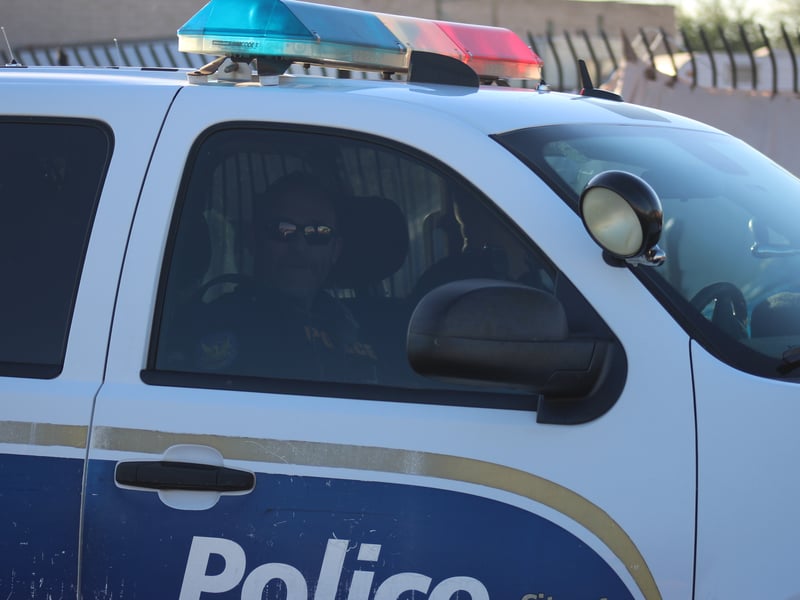
PHOENIX (CN) — The Ninth Circuit granted qualified immunity to Phoenix police officers accused of using excessive force to quell a protest outside a Donald Trump rally in 2017.
A federal judge granted partial summary judgment in 2022 to the Phoenix Police Department and the more than 20 officers named in a lawsuit filed by Puente, a nonprofit focused on issues in immigration and policing, on behalf of those in the crowd. U.S. District Judge John Tuchi ruled that the officers who dispersed the crowd with tear gas, flash-bang grenades and “other chemical irritants” were protected by qualified immunity because they acted reasonably under the raucous circumstances — protesters apparently attempted to breach a fence separating them from the rally — and didn’t violate the law by deploying the projectiles and irritants.
But Tuchi, a Barack Obama appointee, denied summary judgment to individual police officers accused of using excessive force against three specific plaintiffs.
The Ninth Circuit overruled that denial in an opinion issued Thursday morning, granting the officers qualified immunity and sending the decision on the remaining count back to Tuchi.
“Examining the totality of the circumstances, we conclude that, as a matter of law, defendants’ use of intermediate force against protesters was a reasonable response that was commensurate to the PPD’s strong interest in avoiding any breach of the fence,” U.S. Circuit Judge Daniel Collins wrote on behalf of a three-judge panel.
On behalf of the class, Puente claimed Phoenix police violated protesters’ First Amendment rights to freedom of speech and their 14th Amendment rights to due process and rights to equal protection by attacking the protesters with projectiles and chemical irritants without warning and without providing the crowd with a pathway to disperse.
The only claim that survived in federal court was a claim for excessive force against specific police officers whose actions left two hospitalized and two more injured. Protester Ira Yedlin inhaled pepper spray and was shot with unidentified projectiles five times in the legs, once in the back and once in the face. Other protesters Cynthia Guillen and Jacinta Goodman were gassed and shot with unidentified projectiles, as was a bystander who nearly photographed the protest from afar.
Phoenix police officers were later caught exchanging challenge coins depicting one protester who was shot in the groin with a rubber-tipped gas round, which later became subject to a Department of Justice investigation finding the department had a pattern of excessive force and civil rights abuses.
While Tuchi denied qualified immunity to the individual officers, the Ninth Circuit saw no distinction between their actions and the actions already protected by qualified immunity.
“The reasonableness analysis must further embody allowance for the fact that police officers are often forced to make split-second judgments — in circumstances that are tense, uncertain, and rapidly evolving — about the amount of force that is necessary in a particular situation,” Collins, a Donald Trump appointee, wrote for the panel.
Officers told the court that Yedlin was seen shaking the fence separating protesters from the rally both before and after they fired projectiles and chemical irritants into the crowd.
“The PPD had a very significant interest in avoiding any breach of the security fence separating the free speech zone from the public safety zone, because that would present an immediate and substantial threat to the safety of the officers, nearby members of the public, and potentially even the president’s motorcade," Collins continued. “By returning and vigorously shaking the fence just seconds after the PPD had repelled an apparent attempt to breach it, Yedlin posed an immediate threat to the PPD’s ability to maintain this boundary.”
He added that because Yedlin and others returned to the fence right after projectiles were first shot, the plaintiffs’ arguments that they weren’t warned held little merit.
The panel affirmed Tuchi’s ruling on the class claims for excessive force because there was no “seizure” of plaintiffs within the meaning of the Fourth Amendment, and the police actions weren’t intended to restrain class members.
“Because an objective intent to assert custody over a person, or to confine the person, was required for any form of arrest, the requisite intent to restrain is present only when the force applied objectively aims at detaining or confining the person,” Collins wrote.
The panel also affirmed Tuchi’s judgment on the First Amendment claim because the presence of agitators in the crowd, whom police identified as antifa, using gas and pyrotechnics established a clear and immediate danger to both the officers and the other protestors.
Finally, the panel affirmed Tuchi’s judgment clearing then-Police Chief Jeri Williams and the city of Phoenix of any liability for the conduct of individual officers.
Neither the plaintiffs nor the Phoenix Police Department replied to requests for comment by press time.
 Follow @JournalistJoeAZ
Subscribe to our free newsletters
Our weekly newsletter Closing Arguments offers the latest about ongoing trials, major litigation and rulings in courthouses around the U.S. and the world, while the monthly Under the Lights dishes the legal dirt from Hollywood, sports, Big Tech and the arts.