
 Search Articles


PASADENA, Calif. (CN) — The Ninth Circuit Court of Appeals on Tuesday took a skeptical view at the order last year by a trial judge directing the Veterans Affairs Department to build as many as 1,800 supportive housing units on its campus in West Los Angeles and cancel its third-party leases, including UCLA.
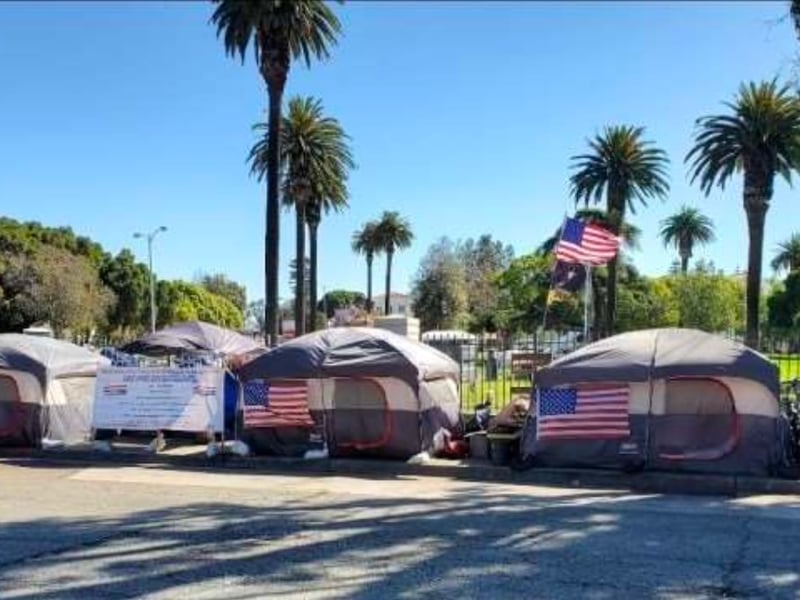
At a hearing in Pasadena, the three-judge appellate panel heard appeals of U.S. District Judge David Carter’s October ruling in the class action brought on behalf of disabled, homeless vets who suffer from mental illness and brain injuries. For years, they have been camping on the streets around the West LA campus to access the medical services there.
U.S. Circuit Judge Consuelo Callahan observed that Veterans Affairs historically has done a poor job caring for the thousands of vets who live on the streets of LA. But the George W. Bush appointee also wondered whether the solution was to have a federal trial judge put in charge of the campus.
“Judge Carter basically said he’s going to run the VA now because you’ve done such a bad job, right?” Callahan told Daniel Winik, a lawyer for the government. “The remedies here are what cause me concern.”
Carter, an 81-year-old Vietnam veteran appointed to the federal bench by Bill Clinton, has been assertive in recent years in addressing the homelessness crisis in Southern California that has been impacting many veterans.
Although based at the federal courthouse in Santa Ana, he has taken on the lawsuit over the VA campus in West LA as well as a massive lawsuit over the city and county of Los Angeles’s failure to deal with sprawling homeless camps around Skid Row in downtown LA.
In 2021, a Ninth Circuit panel overturned an equally sweeping injunction by Carter that had ordered the city and county to put $1 billion in escrow to address the homelessness crisis and to offer shelter or housing to all the unhoused individuals on Skid Row within 180 days.
At Tuesday’s hearing, Mark Rosenbaum, an attorney for the disabled vets, sought to downplay the scope of Carter’s injunction related to the VA campus.
According to Rosenbaum, the judge’s order calls for a “flexible and collaborative” process with the government to create a six-year plan to build as many as 1,800 supportive housing units, depending on the need for them.
“The judge has not ordered a single unit of construction of permanent supporting housing on those grounds until we have a plan and until we see if it’s actually needed,” Rosenbaum told the panel.
The panel wasn’t persuaded, however, that Carter would be taking a hands-off approach rather than micromanaging the construction operations of the campus. This would also include reviewing any new leases of the land by outside parties such as nearby UCLA.
“We can only give the power that Article III would entitle him to,” Callahan said, referring to the U.S. Constitution’s designation of judicial power to the courts. “What if he says I want to be God now? We have to look at the breadth of the injunction.”
The circuit judge also wondered what the U.S. Supreme Court would do if the panel were to uphold Carter’s injunction, suggesting that it’s too broad to survive review by the nation’s top court.
The potential degree of Carter’s involvement in securing supportive housing on the campus was also highlighted by the federal defendants.
“In an extraordinary series of hearings after its initial order, the court made clear how intrusively it intended to manage VA’s operations, opining about whether and where pickleball courts should be installed and whether certain housing units should be served by a sewer line, to name two examples of many,” the government said in its opening brief.
The government argued that the Veterans Judicial Review Act requires that claims related to VA’s provision of benefits be brought through an administrative process and reviewed by specialized courts, not by a federal district judge.
The government also maintains that Carter was incorrect in finding that the homeless vets have standing to enforce a trust — created by a deed in 1888 that granted 300 acres of land to the government for housing disabled veterans — because Congress never created judicially enforceable statutory obligations for VA under that trust.
Also appealing Carter’s injunction were the University of California, an oil company and a nearby Brentwood school whose agreements with VA to use parts of the West LA campus, including UCLA’s baseball’s stadium, were voided by the judge because they didn’t principally benefit veterans or their families.
The other judges on the panel were U.S. Circuit Judges Roopali Desai and Ana de Alba, both Joe Biden appointees.
 Follow @edpettersson
Subscribe to our free newsletters
Our weekly newsletter Closing Arguments offers the latest about ongoing trials, major litigation and rulings in courthouses around the U.S. and the world, while the monthly Under the Lights dishes the legal dirt from Hollywood, sports, Big Tech and the arts.