
 Search Articles


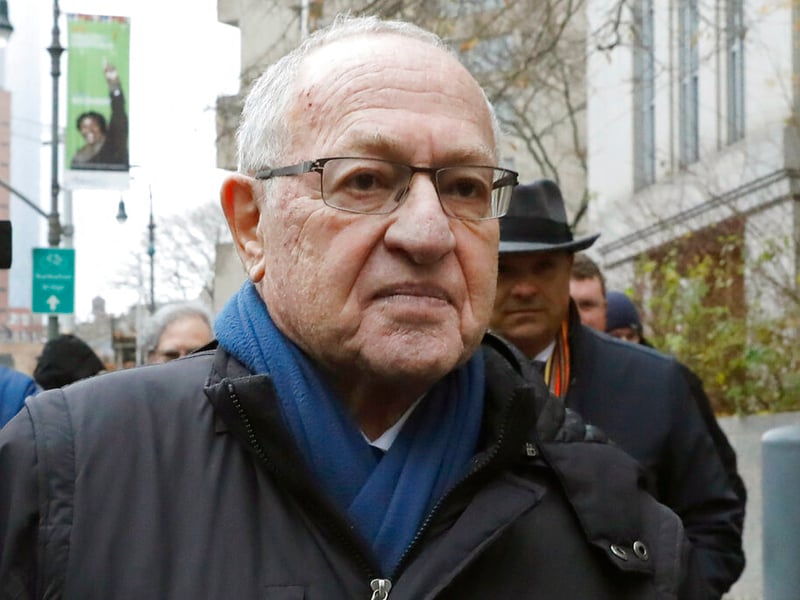
(CN) — The Ninth Circuit on Friday reversed a state court’s imposition of monetary sanctions against Alan Dershowitz for his role in one of Kari Lake’s many election-related lawsuits.
Though the three-judge panel rejected Dershowitz’s claim that the sanctions violated his First Amendment rights and affirmed the trial court’s right to impose sanctions in this case, the panel reversed the trial judge’s order because of a lack of precedent.
“Because the liability of ‘of counsel’ attorneys was not clearly stated in our previous case law, we decline to hold Dershowitz personally liable in this action,” U.S. Circuit Judge Ronald Gould wrote in a Friday morning opinion.
Lake sued the state leading up to her 2022 run for governor, claiming without evidence that electronic voting machines are too susceptible to remote hacking and therefore should be banned from use in Arizona. The voting machine companies declined to show the inner workings of their machines, claiming trade secrets. Dershowitz says he gave advice to Lake’s actual lead attorney, Andrew Parker, on the constitutionality of that matter alone.
U.S. District Judge John Tuchi dismissed Lake’s case in August 2022, deeming the claims “too speculative” to have legal standing.
Despite playing what Dershowitz described as an extremely limited role in Lake’s suit, Tuchi ordered him to pay $12,220 in attorney’s fees for breaking Rule 11, a federal law that holds attorneys accountable for making false or misleading allegations. Tuchi ordered sanctions against Parker and Lake attorney Kurt Olsen as well, which the Ninth Circuit upheld in a separate opinion filed Friday.
Dershowitz said in a May hearing that he spent only four hours on the case. He claims he mistakenly listed himself as “as counsel,” rather than “of counsel,” the latter of which would imply he served only an advisory role and did not represent the plaintiff.
The attorney claims that he didn’t know his name had been signed to every document, assuming it was only listed on the motions relevant to the First Amendment question.
The Ninth Circuit ruled that an attorney listed as “of counsel” may still be sanctioned for their albeit limited role in a case if they sign their name to a document they know is frivolous or not based in fact.
“Though Dershowitz’s limited role may impact what inquiry is ‘reasonable under the circumstances,’ nothing in the text of the rule indicates that appearing as “of counsel” relieves Dershowitz of the important responsibility of lawyers signing documents to perform a reasonable investigation of the facts,” Gould wrote in the 14-page opinion. “Dershowitz could have easily discovered the faults in the plaintiffs’ pleadings if he had conducted any investigation at all.”
The attorney argued before the Ninth Circuit in September that he should be spared from sanctions because the violations would have occurred whether he had anything to do with the case. The panel rejected this argument, saying it would be next to impossible to prove which attorneys wrote which briefings or crafted which arguments.
He also argued that the sanctions stifled his First Amendment right to give legal advice to other attorneys. The panel rejected that claim as well.
“The right to petition protected by the First Amendment does not include the right to maintain groundless proceedings,” the Bill Clinton appointee wrote.
However, because the circuit hasn’t established a precedent of sanctioning “of counsel” attorneys, the panel decided not to enforce the rule ex post facto.
“The liability of ‘of counsel’ attorneys under Rule 11 is a novel question for this circuit, and one that our appellate court has not previously addressed,” Gould wrote. “We have determined that our rule holding ‘of counsel’ lawyers liable for signing pleadings should not be applied retroactively to signatures on pleadings made before the publication of this opinion. Dershowitz, and other lawyers who are members of any bar association, however, are advised that we will apply our rule in the Ninth Circuit to any signed pleadings after the date of publication of this opinion.”
The same panel affirmed sanctions imposed against Parker and Olsen — Lake’s actual lead attorneys on the case.
Tuchi dismissed Lake’s claims that electronic voting machines were susceptible to hacking after her attorneys conceded in court that their claims were merely speculative, and none possessed evidence of the machines being hacked in the past.
“We conclude that the district court did not abuse its discretion in awarding attorneys’ fees under rule 11(c) because lead attorneys made false, misleading, and unsupported factual assertions in their first amended complaint and motion for preliminary injunction and did not undertake a reasonable pre-filing inquiry,” Gould wrote. “We further conclude that the district court’s determination that the lead attorneys acted in bad faith was not clearly erroneous, and that it therefore did not err by imposing sanctions.”
 Follow @JournalistJoeAZ
Subscribe to our free newsletters
Our weekly newsletter Closing Arguments offers the latest about ongoing trials, major litigation and rulings in courthouses around the U.S. and the world, while the monthly Under the Lights dishes the legal dirt from Hollywood, sports, Big Tech and the arts.