
 Search Articles


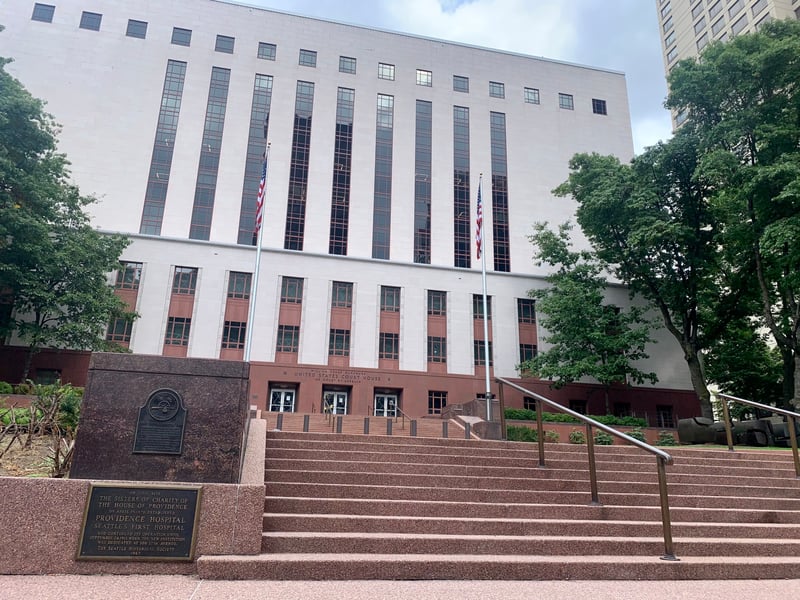
(CN) — The Ninth Circuit Court of Appeals ruled on Thursday that a Christian-owned traditional women-only Korean spa in Washington can’t sue the state on First Amendment grounds for forcing it to open its doors to transgender women.
“We first conclude that the spa’s religious expression is only incidentally burdened,” wrote U.S. Circuit Judge Margaret McKeown, a Bill Clinton appointee, in the opinion.
The judge suggested that the spa may have other legal options in its desire to remain reserved for biological women.
“We are not unmindful of the concerns and beliefs raised by the spa,” she wrote. “Indeed, the spa may have other avenues to challenge the enforcement action. But whatever recourse it may have, that relief cannot come from the First Amendment.”
The ruling spurred an especially bitter dissent from the Korean-born Circuit Judge Kenneth Lee, a Donald Trump appointee.
“The spa has maintained its entry policy for over twenty years without complaint,” Lee wrote in his dissent. “But when one person complained about the policy in early 2020, the government pounced.” He added that the regulatory agency that ordered the spa to include transgender women had “wielded its power to advance its own political agenda.”
Lee also suggested that the law had at least the effect of discriminating against Asian Americans — a group that, in the state, has “historically lacked political clout.”
Olympus Spa, with two locations in Washington state, is a traditional Korean spa with massages, body scrubs and hot tubs that require nudity. In 2020, the state’s Human Rights Commission issued a complaint after a transgender woman, who still had a penis, was denied entry. The spa then sued the Human Rights Commission on First Amendment grounds, arguing the state’s policy violated its right to free exercise of religion, freedom of speech and right of association.
“Since inception, Olympus Spa has served women in their intimate spaces in a private setting,” the business wrote in its complaint, filed in 2023. “The family run business is owned by Korean Christians who hold sincere faith-based convictions against allowing persons whose genitals are external (males) to be present with persons whose genitals are internal (females) while in a state of partial or full undress if such persons are not married to one another.” Should they be forced to allow transgender women with male genitalia to enter the spa, the plaintiffs wrote, “customers and employees have clearly communicated that they will not return under such circumstances, causing the business to spiral into bankruptcy.”
A federal judge dismissed the claim, finding that the “compelled speech” — that is, the forced alteration of a written policy — was incidental to the actual policy of banning trans women from the spa. She also found that “the relationship between the spa and its customers was not an intimate association giving rise to First Amendment freedom of association protection.”
On appeal, the spa’s attorney, Kevin Snider of the conservative Pacific Justice Institute, argued that “the women sharing in this cultural and spiritual experience have associational and free exercise rights.”
But Circuit Judges McKeown and Ronald Gould, another Clinton appointee, disagreed, finding that the enforcement of state law banning discrimination based on sexual orientation “does not prohibit the Spa from expressing its religious beliefs.”
“Without a doubt, nude spas raise unique privacy concerns absent in most other public spaces, but nudity alone does not transform a public place of business into an intimate association,” McKeown wrote, adding later: “The spa’s effort to transform the act of visiting a spa into the sharing of ‘ideals and beliefs’ within an expressive association would stretch the freedom of association beyond all existing bounds.”
In his dissent, Circuit Judge Lee offered a full-throated defense of Korean spas as an institution.
“Korean spas are not like spas at the Four Seasons or Ritz Carlton with their soothing ambient music and lavender aroma in private lounges,” he wrote. “Steeped in centuries-old tradition, Korean spas require their patrons to be fully naked, as they sit in communal saunas and undergo deep-tissue scrubbing of their entire bodies in an open area filled with other unclothed patrons.”
He added: “Now, under edict from the state, women — and even girls as young as 13 years old — must be nude alongside patrons with exposed male genitalia as they receive treatment. And female spa employees must provide full-body massages to naked pre-operative transgender women with intact male sexual organs.”
Lee also argued that prohibiting trans women isn’t barred by state law, which makes it illegal to discriminate based on sexual orientation.
“The spa’s entry policy focuses not on sexual orientation but on whether an individual has male genitalia,” Lee wrote.
In her majority opinion, McKeown responded to Lee’s dissent several times. She wrote that Washington has adopted an “expansive definition of sexual orientation,” which includes gender identity.
“The dissent endeavors to make this case about anything but the spa’s First Amendment claims, instead offering a political screed against the [Human Rights Commission’s] enforcement of the statute, which relies on an unargued — and unfounded — interpretation of [the law’s] plain language,” McKeown wrote. “But this case has nothing to do with President Trump or discrimination against Asian Americans. The spa simply did not challenge the statute itself, and it is not our role to rewrite the statute.”
 Follow @hillelaron
Subscribe to our free newsletters
Our weekly newsletter Closing Arguments offers the latest about ongoing trials, major litigation and rulings in courthouses around the U.S. and the world, while the monthly Under the Lights dishes the legal dirt from Hollywood, sports, Big Tech and the arts.