Search Articles


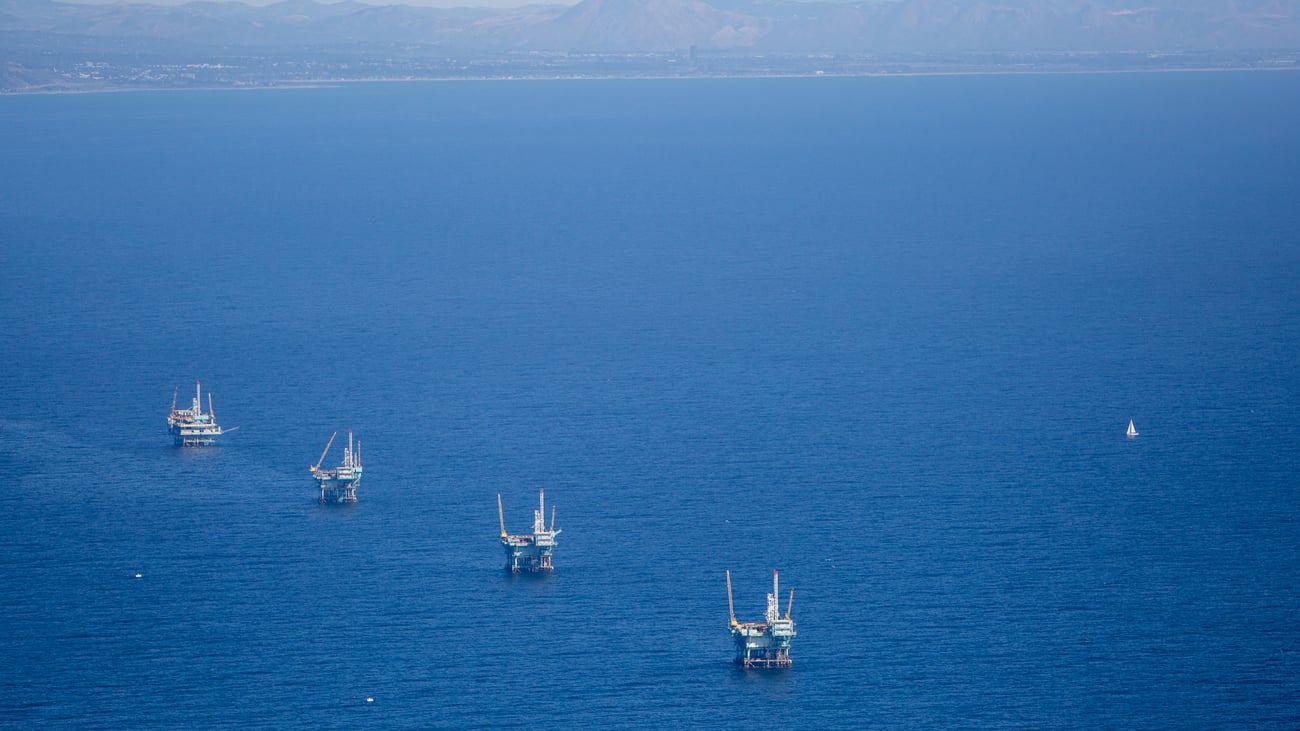
LOS ANGELES (CN) — Seven environmental groups and the state of California asked a Ninth Circuit panel on Tuesday to block the federal government’s approval of a pipeline that connects oil drilling operations off the coast of Santa Barbara with onshore oil processing facilities.
The line had been shut down for more than a decade, following the Refugio oil spill in 2015. It was abruptly restarted in March, thanks to intervention by the Trump administration and much to the dismay of environmental groups, who say the line didn’t complete the approval process and wasn’t fully repaired.
“The oil is flowing through the pipelines as of March 13,” attorney Jeremy Frankel, who represents the seven nonprofits, told the three-judge panel. “Every day, they become more and more dangerous, as they continue to corrode.”
But the central legal issue in the case is whether or not the underground, onshore pipeline qualifies as interstate commerce, and is thus subject to federal oversight, or if it simply delivers crude from one processing facility to another, and is thus only intrastate commerce.
The federal government has argued that the once-badly corroded pipeline is just a small piece of a large system responsible for transporting oil from the platforms in international waters all the way inland to be refined. The facility just off the coast — which removes water and gas from the crude oil before sending it to the next stop — is merely a “way station,” it says.
California Deputy Attorney General Michael Dorsi disagreed, arguing that the oil is fundamentally changed at the Las Flores Canyon oil processing facility, coming in as “crude crude oil” and coming out as “sweetened oil.”
“That facility is not pipeline transportation,” Dorsi said.
“Doesn’t it make it flow better, when heated?” U.S. Circuit Judge Richard Charles Tallman, a Bill Clinton appointee, asked, wondering if it isn’t the facility’s job to make sure the oil keeps moving.
“It probably does make it easier,” Dorsi said. But, he later added, “No court has ever ruled that you can have the same pipeline on both sides of a facility.”
The cases is just one of a complex thicket of federal lawsuits relating to the Santa Ynez Unit, comprising three offshore oil platforms off the coast of Santa Barbara, a long underwater pipeline that sends the crude oil ashore, the Las Flores Canyon oil processing facility, and the onshore pipeline at the heart of the case, which ruptured in 2015.
The disastrous spill sent than 100,000 gallons crude oil flowing through a drainage culvert, underneath Highway 101, onto Refugio State Beach and into the Pacific Ocean. The spill killed hundreds of birds and marine mammals and blackened miles of coastline.
Plains All American, the company which owned the pipeline, was convicted by a jury of one felony and eight misdemeanors, and was fined $3.3 million. It also agreed to pay $230 million to settle a class action, and in 2020 signed onto a consent decree, part of which laid out a plan to repair and restart the pipeline.
The oil rigs languished in non-operation for four years, until Sable Offshore purchased it — the platforms, the pipelines and a facility in between — in 2024. A year later, Sable applied for a permit to restart drilling, but the state fire marshal rejected it, finding that the company hadn’t made the pipeline thick enough.
Sable then asked the federal government to intervene. The Pipelines and Hazardous Materials Safety Administration only has jurisdiction over pipelines the go between different states, or that connect international waters and the mainland.
But Sable asked the agency to treat the entire system — that is, the offshore oil platforms, the underwater pipelines, an onshore facility and the newly repaired onshore pipelines — as one. Since the oil platforms are in international waters, that system would, in theory, be an international one, and subject to federal regulation.
The Pipelines and Hazardous Materials Safety Administration quickly agreed and — citing President Donald Trump’s executive order declaring an “energy emergency” in response to the closing of the Strait of Hormuz — allowed Sable to restart oil drilling operations.
A number of lawsuits were filed to block the flow of crude, one by a pair of nonprofits which was rejected for lack of standing, and one by the state of California.
California has asked the federal judge who has jurisdiction over the consent decree to shut down the oil drilling operation, while the federal government has asked the judge to vacate the consent decree. That case is still pending. In May, the judge declined the state’s request to issue a preliminary injunction.
The state also filed a petition for review, asking the appeals court to overturn the federal agency’s actions, which was the subject of Tuesday’s hearing. Dorsi suggested that the Ninth Circuit could use the consent decree as an “off-ramp,” an easy way to make a decision in the case without setting a precedent about interstate commerce.
“The United States lacks the power to contravene a consent decree,” Dorsi said. “They are therefore unlawful.”
U.S. Circuit Judge Richard Paez, another Clinton appointee, put that to U.S. Deputy Assistant Attorney General Robert Stander. “Why can’t I look at it and say, this violates the consent decree wholesale? It’s unlawful.”
That, Stander said, was an issue for U.S. District Judge Stephen Wilson, who oversees the consent decree. Paez pointed out that the federal government had already ignored Wilson once.
“You went ahead and just did what you thought you were going to do and then went to the district court,” Paez remarked.
“If that’s an issue, Judge Wilson has that before him,” Stander said. “He is deciding that as we speak. Judge Wilson perfectly capable of handling that on his own.”
The panel, rounded out by U.S. Circuit Court Judge Mark Bennett, took the case under advisement. They said they may ask for additional briefing, or possibly even wait for further developments in Wilson’s case, before issuing a ruling.
 Follow @hillelaron
Subscribe to our free newsletters
Our weekly newsletter Closing Arguments offers the latest about ongoing trials, major litigation and rulings in courthouses around the U.S. and the world, while the monthly Under the Lights dishes the legal dirt from Hollywood, sports, Big Tech and the arts.