
 Search Articles


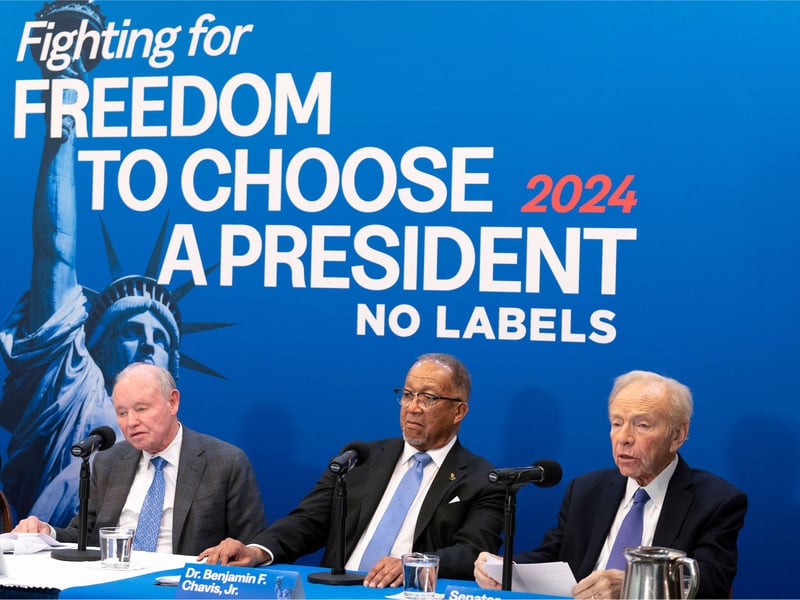
(CN) — The Arizona secretary of state’s office argued before the Ninth Circuit Monday that political parties don’t have the power to prevent candidates from running for certain offices if party leadership doesn’t want to support them.
In an appellate hearing before a three-judge panel in San Francisco, Kara Karlson from the state attorney general’s office said No Labels Arizona opened itself up to state laws by declaring itself a political party.
“This is a case about three people invoking the machinery of the state to obtain the benefits of a political party without following the laws of political parties in Arizona,” Karlson said.
But No Labels says it’s not seeking those benefits.
No Labels became an official Arizona political party in March 2023, and three months later its three leaders sent a letter to Secretary of State Adrian Fontes saying it would only run candidates for president and vice president in 2024, and nominate those candidates via committee, rather than holding a presidential primary.
Despite the stated mission of the party — to provide American voters with an alternative presidential option to what was anticipated to be Donald Trump vs. Joe Biden — five people filed notices of interest to run under the No Labels party in non-presidential races in Arizona.
Party officials sued in October 2023 saying Arizona Secretary of State Adrian Fontes violated state law and the party’s First Amendment right of association by refusing to prevent those candidates from running under the party against its wishes.
A federal judge blocked Fontes from recognizing those candidates in January 2024, and Fontes appealed. He warned that the ruling could keep the nearly 19,000 members of the No Labels party from voting in a primary, and the precedent could allow party bosses to decide who can run for office from any party.
At the Monday hearing, U.S. Circuit Judge Anthony Johnstone called No Labels’ decision not to run down ballot candidates a “bait and switch of the voters.”
“You gathered 50,000 signatures promising the voters a primary, and then you didn’t give them a primary,” the Biden appointee said.
Andrew Pappas, an attorney with Osborn Maledon in Pennsylvania, said the party never promised anything and no state laws dictate whether or how a party communicates with its voters. He said party leadership has the right to create and abide by its own bylaws, however unique they may be.
“The state simply doesn’t get to micromanage that process,” Pappas said.
U.S. Circuit Judge Holly Thomas, also appointed by Biden, countered that it isn’t the state forcing candidates upon it, but rather its own party members choosing to run for office under its title.
Pappas said those five don’t get to make unilateral decisions on behalf of party leadership. He argued that being forced to other candidates would detract from the party’s stated goals and require reallocation of resources.
U.S. Circuit Judge Salvador Mendoza Jr. suggested that the party simply denounce any other candidates and distance itself from them, but Pappas argued that would still create a split message, and violate the party’s right to associate or avoid association with whom it pleases.
Karlson said allowing No Labels to block certain candidates could turn detrimental for No Labels voters. In the 2024 primaries, some party members received ballots with city races but no No Labels candidates, and others received completely blank ballots, she said. Mendoza, a third Biden appointee, asked whether Arizona’s election laws could leave some voters ineligible if they can’t vote in the next two elections.
Karlson said it’s possible but uncertain.
“The answer is to not become a political party,” Karlson said. Instead, the party should run candidates independently to avoid others using the party label to run in down ballot races. Pappas argued that running without a party backing would only leave a candidate dead in the water.
It’s unclear how soon the panel will rule.
 Follow @JournalistJoeAZ
Subscribe to our free newsletters
Our weekly newsletter Closing Arguments offers the latest about ongoing trials, major litigation and rulings in courthouses around the U.S. and the world, while the monthly Under the Lights dishes the legal dirt from Hollywood, sports, Big Tech and the arts.