
 Search Articles


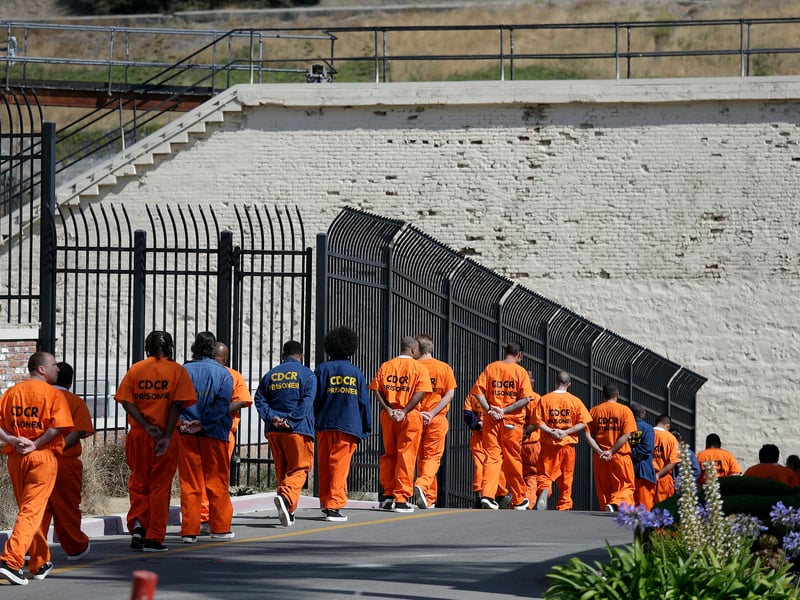
SAN FRANCISCO (CN) — A Ninth Circuit panel on Friday affirmed a lower court’s decision in a decadeslong California case over mental health treatment for prisoners, ruling that 20 hours of treatment per week is appropriate.
The state had argued earlier this month that U.S. District Court Chief Judge Kimberly Mueller erred when she ordered the 20-hour minimum. Mueller didn’t comply with the Prison Litigation Reform Act of 1995, the state said, because she didn’t make certain findings that the relief granted goes no further than needed and is the least intrusive.
The appeals panel pointed to two other arguments made by the state: That the lower court had no evidence to support the 20-hour dictate, and that the judge shouldn’t have rejected its psychiatric inpatient program treatment plan.
“None of defendants’ contentions is persuasive,” the appeals panel wrote in a 6-page unpublished opinion. “The district court cited the [reform act] in its order and recognized that the act requires that prospective relief be narrowly drawn based on ‘need-narrowness-intrusiveness’ findings. The August 2023 order proceeds to explain why defendants’ proposed plan ‘does not satisfy the requirements that have long been in place in this case.’”
The appellate decision is the latest in a long line of legal struggles in the class action of Coleman v. Newsom . The Ninth Circuit panel heard two appeals on Aug. 12 stemming from Coleman: the 20-hour minimum argument and a push by the state to have the issue of telepsychiatry, and restrictions on it, remanded to a lower court.
The latter issue hasn’t yet been decided by the appeals court.
The panel pointed to reports written by a special master in the case — an arm of the court appointed by Mueller — who determined the state wasn’t giving prisoners a minimum level of mental health care. Five reports since 2013 detail inadequate levels of care. No one objected to the reports, including one from last year that showed “ongoing constitutional violations.”
Additionally, the 20-hour requirement came from the state, the panel wrote. In 2017, the lower court in an order noted that the state’s Department of State Hospitals had developed an improvement process for the inpatient programs it had. That existing improvement process stated that patients would be offered 20 hours of treatment each week.
However, last year the state proposed a plan that had no minimum hours set for treatment. Instead, it left treatment decisions to clinical assessments and treatment teams. Mueller rejected the plan because it had no minimum time requirement for treatment.
The Department of State Hospitals, in its improvement process, listed a 20-hour minimum. The lower court determined the California Department of Corrections and Rehabilitation should have the same standard, the panel wrote.
“At oral argument, counsel essentially admitted that the district court was basically presented with the options of either requiring 20 hours a week or requiring no hours at all,” it added.
Mueller’s order wasn’t erroneous or an abuse of her discretion, the panel concluded. It was supported by the special master’s reports, which detailed prisoners being denied a minimum treatment level. The 20-hour minimum came from a state department, and the state offered no alternative that required fewer hours.
Attorney Lisa Ells, who represents the Coleman class, praised the appeals court ruling in an email to Courthouse News.
“The court’s order, which the Ninth Circuit upheld today, requires [the state corrections department] to offer its hospitalized patients the same minimum treatment levels as what is provided to the same group of incarcerated patients by the Department of State Hospitals,” Ells said. “We are hopeful that this affirmance and the establishment of a minimum number of treatment hours will lead to improved care for this very sick group of people so they can function safely in lower treatment settings and ultimately in society.”
A spokesperson for the corrections department couldn’t be reached for comment.
The appeals panel was comprised of U.S. Circuit Judges Consuelo Callahan, a George W. Bush appointee; Susan Graber, a Bill Clinton appointee; and Lucy Koh, a Joe Biden appointee.
Subscribe to our free newsletters
Our weekly newsletter Closing Arguments offers the latest about ongoing trials, major litigation and rulings in courthouses around the U.S. and the world, while the monthly Under the Lights dishes the legal dirt from Hollywood, sports, Big Tech and the arts.