
 Search Articles


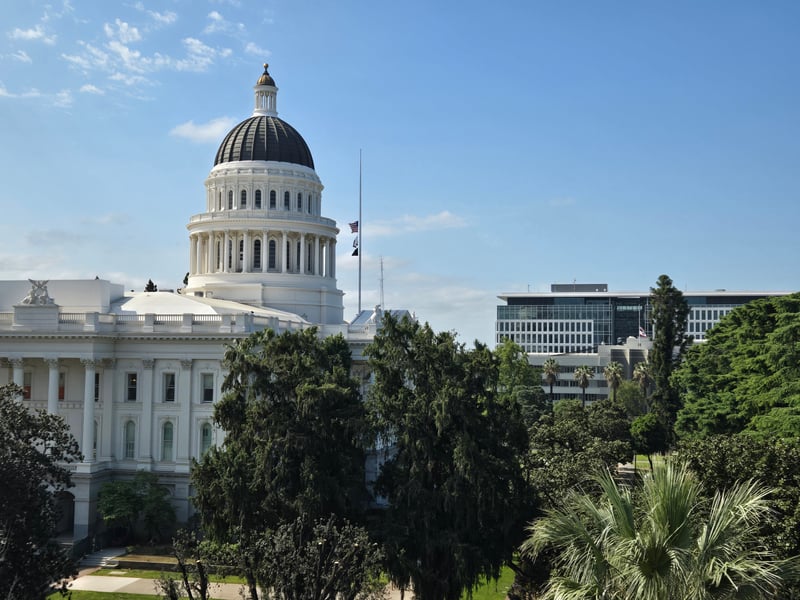
SACRAMENTO, Calif. (CN) — California’s Democratic supermajority on Thursday secured the two-thirds vote needed to put the question of whether new congressional lines should drawn for the 2026 midterms up to voters in a November special election.
Governor Gavin Newsom has championed the effort and signed the bills shortly after they passed the Legislature. He slammed President Donald Trump, laying the reason for the special election at the president’s door.
“He’s trying to rig the election,” Newsom said. “He’s trying to set up the conditions where he can claim the election was not won fair and square.”
The legislative package — called the Election Rigging Response Act — will give Californians the choice on Nov. 4 whether to keep existing maps or use new districts that favor Democrats. Golden State Democrats have argued new lines are needed in response to Trump seeking new Texas districts favoring Republicans. Republicans have accused Democrats of setting aside the state’s independent citizens redistricting commission to favor progressives in an opaque process.
Republicans attempted a series of parliamentary moves Thursday to derail the bills or amend them, all of which were pushed aside by the Democratic supermajority.
Starting that morning and extending into the afternoon, lawmakers debated the three bills that put the election on the ballot, fund it and include the proposed maps.
“We need to put our faith in the voters to do the right thing,” said Senate President pro Tempore Mike McGuire.
The legislative package has three parts. Assembly Constitutional Amendment 8 would put the issue before voters. Senate Bill 280 makes timelines and procedures, as well as allocates money for it. Assembly Bill 604 is the vehicle for the new maps.
The new maps would remain in effect through the 2030 election, when the independent commission would return.
The constitutional amendment initially had a trigger — California’s maps wouldn’t be used unless Texas or another state redrew their congressional districts mid-decade. That trigger was removed Thursday.
Democrats have called the process transparent, noting the proposed maps became public last week and that voters will have until Nov. 4 to examine them. Texas lawmakers pushed through their new maps with no vote of the people. In California, voters can submit comments online. The Legislature has received over 10,000 comments.
Republicans pushed back on those claims.
Assemblymember Laurie Davies, a Laguna Niguel Republican, asked who had read the comments. Others tried to have the comments read aloud at hearings earlier this week, a parliamentary move that failed.
Republicans also pointed to their counterparts’ inability to say who drew the proposed maps and who funded that effort. In comparison, the independent redistricting commission draws its maps publicly.
“We know that these maps were drawn behind closed doors by political consultants,” said Assemblymember Carl DeMaio, a San Diego Republican.
State Senator Tony Strickland, a Huntington Beach Republican, echoed that argument. He said California has the gold standard in its existing independent redistricting method. Democratic lawmakers now want to exchange that for one he said was influenced by politicians and drawn by unknown hands.
Assemblymember Cecilia Aguiar-Curry, a Winters Democrat and majority leader, said the maps were drawn by legislative leaders and their teams, congressional members, independent redistricting experts and legal counsel.
State Senator Shannon Grove, a Bakersfield Republican, also questioned claims of transparency. The bills appeared Monday and received quick votes in policy committees Tuesday — a process other states will follow and, ultimately, hurt California.
“I’m telling you, you have not thought this all the way through,” Grove said, arguing that other blue states don’t have the leeway the Golden State does in favoring Democrats through redistricting. “This is not going to go well for your side in the midterm elections.”
Republicans also questioned the fiscal wisdom of spending over $200 million for a special election when the state faces anticipated deficits in the tens of billions of dollars over the next few years.
State Senator Brian Jones, a San Diego Republican and minority leader, argued the issue would fail at the ballot. He said the only upside to the measure was, for Democrats, getting Newsom headlines to help his potential presidential run.
Democrats in both houses laid the need for the public vote at Trump’s feet. Without his request of Texas Governor Greg Abbott to redraw that state’s congressional maps to favor Republicans, California wouldn’t need to act.
Texas lawmakers are redrawing their maps, said Assemblymember Isaac Bryan, a Los Angeles Democrat. In California, voters will decide whether they want new congressional districts.
Assemblymember Jesse Gabriel, an Encino Democrat, said in California the final decision lies with voters.
“Let’s let democracy decide,” he added. “That, to me, is what makes this the right approach.”
Subscribe to our free newsletters
Our weekly newsletter Closing Arguments offers the latest about ongoing trials, major litigation and rulings in courthouses around the U.S. and the world, while the monthly Under the Lights dishes the legal dirt from Hollywood, sports, Big Tech and the arts.