
 Search Articles


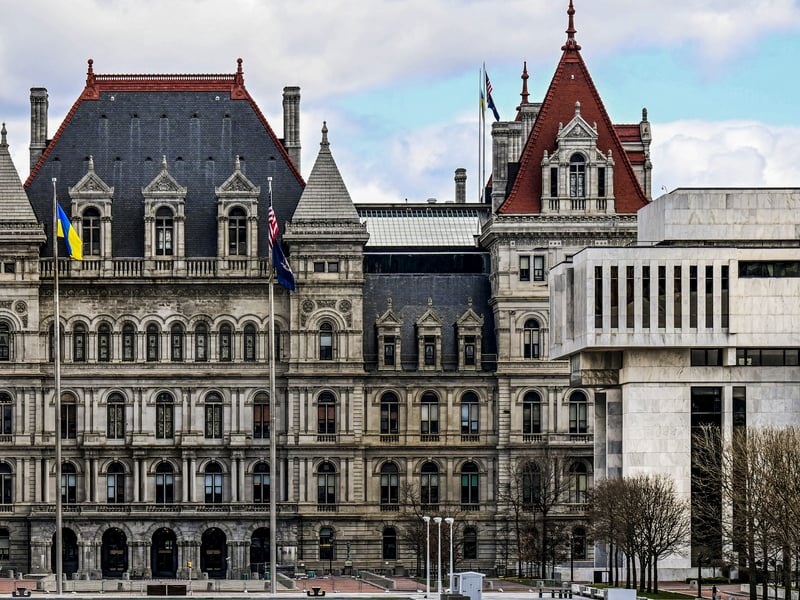
ALBANY (CN) — The New York Court of Appeals, the highest court in the state, blocked a 2021 law on Thursday passed by the New York City Council that authorized noncitizens in the U.S. legally to vote in local elections.
“Whatever the future may bring, the New York Constitution as it stands today draws a firm line restricting voting to citizens,” Chief Judge of the Court of Appeals Rowan D. Wilson wrote in the court’s majority opinion. “Accordingly, the order of the Appellate Division insofar as appealed from should be modified, without costs, in accordance with this opinion and, as so modified, affirmed.”
The law — which did not grant noncitizens the right to vote in presidential, congressional or state elections — allowed green-card holders and individuals with work permits who have lived in the city for at least a month to vote in municipal elections.
The Republican National Committee, the New York Republican State Committee, and a group of voters and elected officials challenged the statute in 2022. New York’s state constitution specifies that “every citizen shall be entitled to vote,” and the Republican challengers argued that definition can’t be extended to include noncitizens as well.
The lower court struck down the law on summary judgment, permanently enjoining it.
The City Council appealed the judgment to the state’s top court in in a bid to revive noncitizen voting in upcoming local elections at a moment when the city’s handling of immigration holds as a hot button political issue.
On Thursday morning, the progressive majority of seven-judge Court of Appeals resolutely sided 6-to-1 with New York Republicans, affirming that the text of the New York Constitution limits voting to citizens.
“Reading Article II as a whole, it is facially clear that only citizens may vote in elections within the state of New York,” Wilson wrote in the majority opinion.
Judge Jenny Rivera, a Democrat appointed by Gov. Andrew Cuomo in 2013, penned a dissent, arguing Article IX of the New York State Constitution and the Municipal Home Rule Law grant localities broad authority to structure their own governments and elections to enhance accountability and serve the unique needs of their residents.
“The majority’s holding relies on a reading of Article II, section 1 that ignores its plain text,” she wrote. “That provision guarantees that ‘every citizen shall be entitled to vote’ if they meet certain age and residency requirements. It is a declaration of an affirmative right that does not prohibit localities from exercising their home rule authority to enfranchise noncitizens.”
Rivera found Article II “works seamlessly” with Article IX to allow localities to expand the franchise to noncitizen members of their communities to vote on local matters.
Murad Awawdeh, President and CEO, New York Immigration Coalition, called the ruling “a devastating setback for voting rights” which disenfranchises “the communities that help keep New York City running.”
“We strongly disagree with the court’s decision, which undermines the very principles of inclusion that make our democracy strong,” he wrote in an NYIC statement Thursday. “Denying New Yorkers with legal permanent residency or work authorization the right to vote in local elections is a grave injustice, stripping them of the ability to influence the policies that govern their daily lives.”
The Court of Appeals heard the City Council’s arguments in February, where Justice Michael Garcia questioned if allowing this statute would give local governments too much reach in deciding who could or who could not vote in elections, including noncitizens who don’t meet the qualifications currently outlined in the statute.
This case before New York’s highest court represented the latest fight over immigrants’ right to vote, which President Donald Trump fiercely railed against during his campaign for the presidency. Trump and other Republicans touted unsubstantiated claims that noncitizens were illegally voting in large numbers, and eight states passed measures banning noncitizen voting.
New York City isn’t the first governmental body that has passed such a law, with the District of Columbia and Burlington, Vermont, passing similar measures in 2022 and 2023, respectively.
 Follow @jruss_jruss
Subscribe to our free newsletters
Our weekly newsletter Closing Arguments offers the latest about ongoing trials, major litigation and rulings in courthouses around the U.S. and the world, while the monthly Under the Lights dishes the legal dirt from Hollywood, sports, Big Tech and the arts.